
Player habits

Designing a game for the life players actually have
Why “gaming life fit” is a better design question than chasing a bigger hours-played number.
The OutBrick Journal
How games fit into real lives, why a tiny rule can carry a whole world, and what we are learning while we build a puzzle out of brick. Every research claim links to its source.
Loading…
Lead story
A research-backed look at competence, attention, and the small satisfactions that make a short OutBrick session worth returning to.


Why “gaming life fit” is a better design question than chasing a bigger hours-played number.
Rovio’s own history is a useful reminder that iconic games are often the visible tip of a much longer practice.
The shelves
How play fits a real day: sleep, attention, rituals and the decision to stop.
Read an iPhone puzzle game’s privacy label, distinguish linked data from tracking, compare the policy, and find the controls that affect your choices.
Use iOS 27 Screen Time to set Games allowances and scheduled access, check which apps count, and make a practical stopping plan for puzzle play.
Compare OutBrick, Block Buster - No Timer and Color Block Jam by their published constraints. Learn what untimed play does and does not promise.
Nagging pop-ups, confusing currencies, offers timed for your worst moment: what research says about manipulative design in games, and a checklist to spot it.
In-game mood reports, logged play time and a console lottery: what the newest studies say about gaming and mood, and why hours matter less than fit.
Detachment, relaxation, mastery and control: what recovery research says about unwinding after work, and where a casual game fits in.
Not 21 days. What real-world habit studies found about timing, missed days and cues, and why your phone and its games should not own your habits.
Why rewards can crowd out the fun they were meant to boost, why a broken streak makes people quit, and how to keep incentives on your side.
Attention restoration theory says nature rests a tired mind. What the evidence supports, why pictures are not parks, and what a calm game can borrow.
Quitting your phone for a week sounds healthy, but trials of digital detoxes point in different directions. What helps, what does not, and why.
Is screen time really harming teenagers? What studies of hundreds of thousands of young people found, why self-reports mislead, and what matters more.
Why the best puzzle sessions feel effortless, what Tetris experiments reveal about flow, and how to find your own sweet spot of challenge.
A meta-analysis says ten-minute breaks lift energy but barely touch output. Where a short game fits, where it does not, and how to take a better break.
Does a game at night wreck your sleep? What sleep-lab experiments, big surveys and bedtime procrastination research show, and what to try tonight.
What to look for in a puzzle game for the Tube, a train or a flight: real offline play, one-handed controls, short boards and a light touch on battery.
A practical, research-aware look at the loops that bring players back—and the design choices that keep returning voluntary.
What location-based play reveals about movement, social connection, and turning the world outside the screen into part of the game.
A candid guide to fitting games around sleep, attention, and the rest of a real day.
Daily play can be a welcome rhythm when it invites attention without turning absence into failure.
Why “gaming life fit” is a better design question than chasing a bigger hours-played number.
A research-backed look at competence, attention, and the small satisfactions that make a short OutBrick session worth returning to.
Games that made the medium feel larger, read from their own records.
Puzzles have outlasted every craze around them. What research on crossword solvers, jigsaw puzzlers and the aha moment says about why they stay with us.
Why the games of your childhood still pull at you, what nostalgia research says it does for mood and connection, and why remakes and retro play keep selling.
Points, badges and leaderboards were meant to make everything engaging. Here is what reviews of hundreds of studies found, and where the evidence runs thin.
A long-running success story about player authorship, playful resistance, and the value of a game that does not write every line for you.
What Supergiant’s Early Access success teaches about iteration, narrative momentum, and making another attempt feel meaningfully different.
A success story about patient craft, visible progress, and why a game can feel generous without becoming frictionless.
How an open-ended beginning grew through creation, survival, crafting, multiplayer, and platform expansion.
A closer look at ustwo’s “less game, more experience” idea—and what OutBrick borrows from it.
Rovio’s own history is a useful reminder that iconic games are often the visible tip of a much longer practice.
Rules, friction and difficulty, from the bench.
Learn how Sokoban pushing differs from glide-to-stop block puzzles, with practical examples of corners, access routes and temporary stopping points.
Compare Block Blast!+ and OutBrick by their actual mechanics: placing shapes to clear lines, sliding bricks to exits, and choosing how to pay.
Would you want OutBrick adapted for iPhone Duo? Explore possible inner and outer screen experiences, then tell us what would make play worthwhile.
A pathfinding result is only the beginning. Here is how we replayed a clear for every OutBrick board against the same rules the game uses.
A post office in New York, an 1880 craze, a famous puzzler’s false claim and a parking-lot puzzle from Tokyo: how sliding blocks became a classic.
What colour psychology can and cannot tell game designers, why contrast matters more than hue, and how to make coloured pieces readable for everyone.
Players admire, worry about and miss game characters. Research on attachment, parasocial bonds and cuteness explains why, and what designers owe players.
Loot box spending is consistently linked to problem gambling. What the studies show, what makes monetisation predatory, and a fair test for any game.
Sound changes how immersed, tense and competent players feel, and music can even bend their sense of time. What the research shows, and how to design for mute.
A study of 45,000 players found tutorials only paid off in complex games. What research says about teaching through play, hints and the first hour.
Many games quietly tune themselves to your skill. What studies say about adaptive difficulty, why it can leave players overconfident, and the case for asking.
Procedural generation can make endless puzzles, but a board that is merely solvable is not a good one. How generators work, and where they fall short.
Juice is the extra feedback that makes a tap feel good. Studies with thousands of players show it helps, up to a point, and then starts to hurt.
Hard is not the same as unfair. What research on challenge and failure says about the puzzles players trust, and the ones they quit in frustration.
Simple rules, a board you can read, fair difficulty and a short loop: what makes block puzzles endure, and how to judge any game like Tetris.
Comfort, gaze and pinch, windows versus immersion, seated play and legible pieces: what makes a puzzle game work well on Apple Vision Pro.
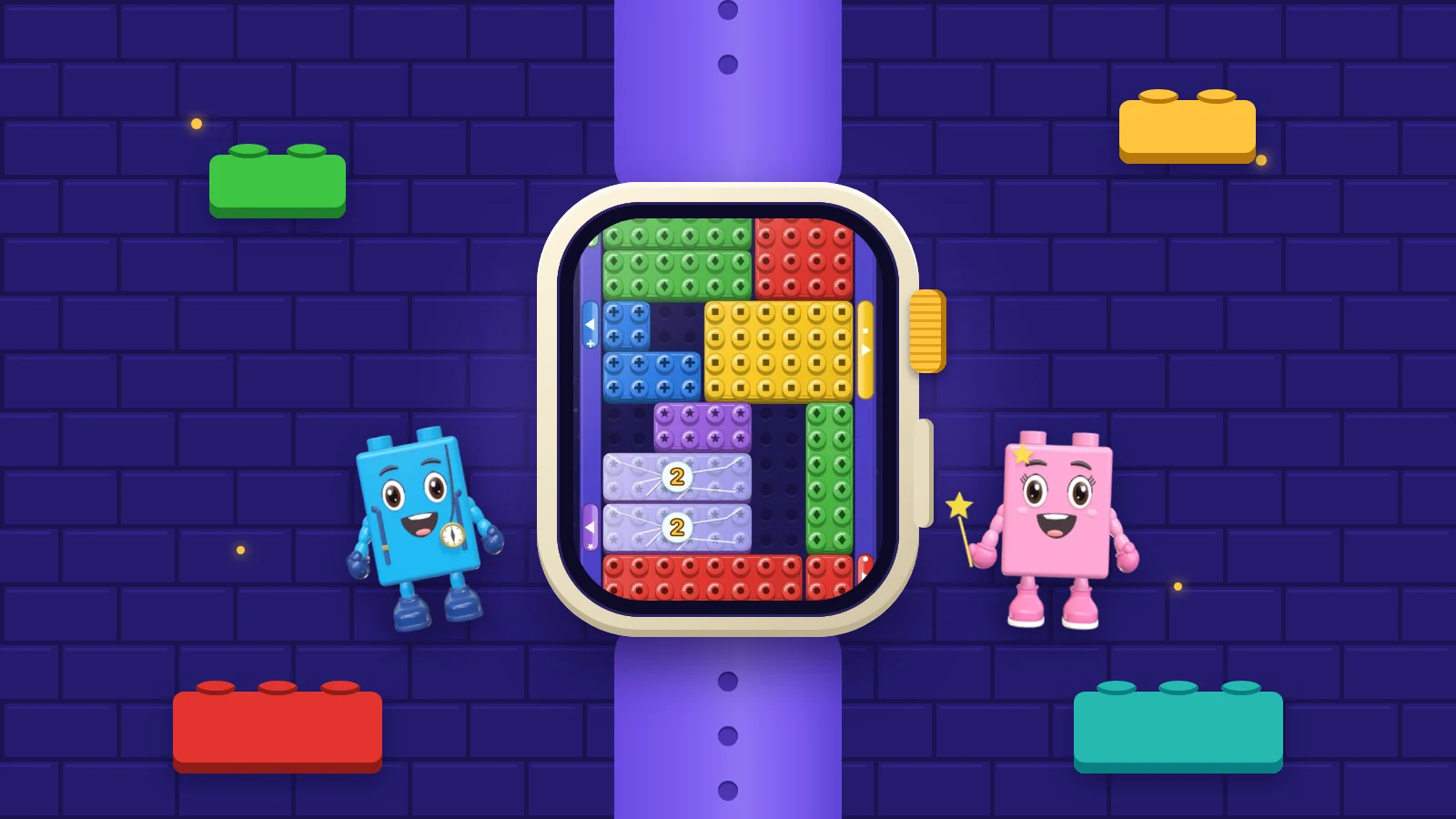
Glanceable boards, fingertip-sized pieces, the Digital Crown, haptics and standalone play: what makes a puzzle game work on Apple Watch.
Soft colours are not enough. Move limits versus clocks, fair lives, and games that never interrupt you: how to tell if a puzzle game will stay calm.
Work backwards from the exit, find the move that makes space, count before you commit. A designer’s method for sliding block puzzles that look impossible.
How a game can turn a repetitive action into a moral question—and why the best friction asks the player to decide, not simply to wait.
Challenge should stretch the player’s attention without making the relationship with the game feel brittle.
A look at constraint, rhythm, and the endless variety inside a very small ruleset.
Widening the route into a challenge without shrinking the challenge.
From shop buttons and frozen gates to mission credit and Italian support: how AppleVis feedback is helping us improve the whole OutBrick session.
Learn OutBrick’s four slide directions, matching gates and slide distances, with VoiceOver action guidance and the promised teaching changes.
Build a clearer picture of OutBrick’s board with VoiceOver: explore bricks, gates and empty space, and understand the fixes promised next.
What our commitment to blind players means: listening to real play, describing current limits honestly, and making accessibility part of OutBrick.
Considering OutBrick as a Color Block Jam alternative? Compare documented VoiceOver, colour-glyph and motion support, then use a practical checklist.
Readable text, generous buttons, no clock and colours you can tell apart: a practical checklist for choosing a puzzle game at 50, 70 or 90.
Many autistic and neurodivergent players are sensitive to sound, light and surprise. What research says, and how predictable, quiet, low-pressure design helps.
How vision, touch and reaction time change with age, what that means for contrast, targets and pace, and design principles for games that stay friendly at 80.
Do dyslexia fonts work? What eye-tracking and reading studies say about typefaces, size, letter spacing and wording, and how to make game text easier to read.
Why screen motion makes some players dizzy or queasy, who is most susceptible, and how the Reduce Motion setting and careful animation make games comfortable.
What research on touchscreens and motor impairments says about target size, gestures and errors, plus the iPhone settings that make one-handed play easier.
How blind and low-vision players use VoiceOver to play on iPhone, what research with blind gamers has found, and what makes a game playable by ear.
About one man in twelve of European descent has red–green colour deficiency. What that means at the controls, and the settings and design choices that help.
Optional support can preserve the heart of a challenge while giving more players a route into it.
The case for pairing colour with shape, text, and other signals—so a readable board stays readable for more players.
Curiosity before explanation.
Puzzles are often sold as brain training. Here is what the studies actually show about memory, ageing and mood, and what nobody can honestly promise.
Most apps young children play use manipulative design. A research-based checklist for spotting pressure, adverts and lures, and choosing calmer games.
Research on intergenerational play finds real benefits for both generations when the game is chosen well. What the studies show, and how to make it work.
Executive function underpins planning and self-control. What studies say puzzles and games can and cannot do for children, and how to play in ways that help.
Struggle that ends in a solution teaches more than an easy win. What research on desirable difficulties, effort and productive failure says about hard puzzles.
The sudden click of a solved puzzle has a signature in the brain. What research says about insight, why aha answers are usually right, and when they are not.
A hard board is often a memory problem in disguise. How working memory and cognitive load shape puzzle difficulty, and practical ways to lighten the load.
Spatial skills can be trained, but games are a narrower route than often claimed. What the meta-analyses say about spatial training, Tetris and transfer.
Why an unsolved puzzle often cracks after a break, what a meta-analysis of incubation studies found, and how to take the kind of break that helps.
Chess masters remember boards by the pattern, not the piece. What chunking research shows about expert perception, and how to build chunks of your own.
Mistakes you can take back are some of the best teachers a puzzle has. What research on errors and planning says about using undo well, and when to hold back.
How interactive systems can invite experimentation, and what MIT’s maker-learning work suggests about putting agency before explanation.
Shared time, even when players are apart.
Share a puzzle without stealing the next move: agree roles, explain predictions, offer small hints and make room for different solving styles.
Ask for and give useful puzzle hints without revealing the whole answer: agree on boundaries, share one clue at a time and keep the solver in charge.
Competing with friends can be fun or quietly corrosive. What motivation research says about winners, losers and teams, and how to keep a challenge friendly.
The same puzzle for everyone, once a day: what research on rituals, shared attention and sharing emotions says about why daily games bring people together.
Leaderboards can lift effort like a hard goal, or quietly drain motivation from people near the bottom. What experiments show, and how to use one well.
What surveys and interviews from the COVID-19 lockdowns found about games, loneliness and families, and what they suggest for social play now.
Why routines, roles, and custom play can make a digital place feel socially present even when players are apart.
Notes on how the game itself is made.
AppleVis players asked for time to explore and a gentler start. How OutBrick’s move limits, untimed play and planned teaching changes fit together.
Before copying another move, check the game, version, mode and starting layout. Learn why a level number alone cannot identify a puzzle solution.
Try OutBrick’s browser boards without installing an app. Learn the controls, daily-board rotation, scoring and differences from the full game.
Compare water-sort capacity puzzles with sliding-block routes, using concrete examples, practical selection tips and clear limits to the research.
Compare OutBrick and Grand Games’ Block Out using official listings: mechanics, offline play, accessibility and costs, with an honest fit guide.
Phone on the train, tablet on the sofa, TV at night: what studies of multi-device life say about continuity, and how OutBrick syncs across five platforms.
Why the last badge, sticker or level pulls so hard, what the Zeigarnik effect really shows, and how to enjoy collecting in games without being driven by it.
Queues, platforms and waiting rooms: what research on phone use in the gaps of the day says about the games that fit them, and how to keep those minutes yours.
Practice matters, but less than the 10,000-hour story claims. What studies of deliberate practice and online game players suggest for getting better at puzzles.
Three stars means solving well, not just solving. Satisficing, planning depth and the habits that cut wasted moves, with OutBrick’s star rules explained.
Why the way you picture a puzzle shapes how hard it feels, what experts look at first, and a short routine for reading any board before you touch it.
How to read a colour sort board, choose which colour to clear first and make every move count, with the star rules explained. From OutBrick’s designer.
A field guide to designing for interrupted attention, small screens, and the lovely gap between “I have no time” and “I have two minutes.”
How we write
We link to peer-reviewed papers, university research, accessibility standards and each studio’s own history. A company’s account stays labelled as a company’s account, and a small sample stays a small sample.
When a story mentions OutBrick, it describes the game as it ships today: lives and opt-in rewarded videos included, clocks not.
Read the research methodWho writes it
Follow the journal
Rather not give an email? Copy the feed address into any RSS reader (Reeder, NetNewsWire, Feedly, Inoreader) and each new story arrives as it is published.
www.outbrick.site/feed.xml
Or follow one shelf