


Pokémon GO and the power of place
What location-based play reveals about movement, social connection, and turning the world outside the screen into part of the game.
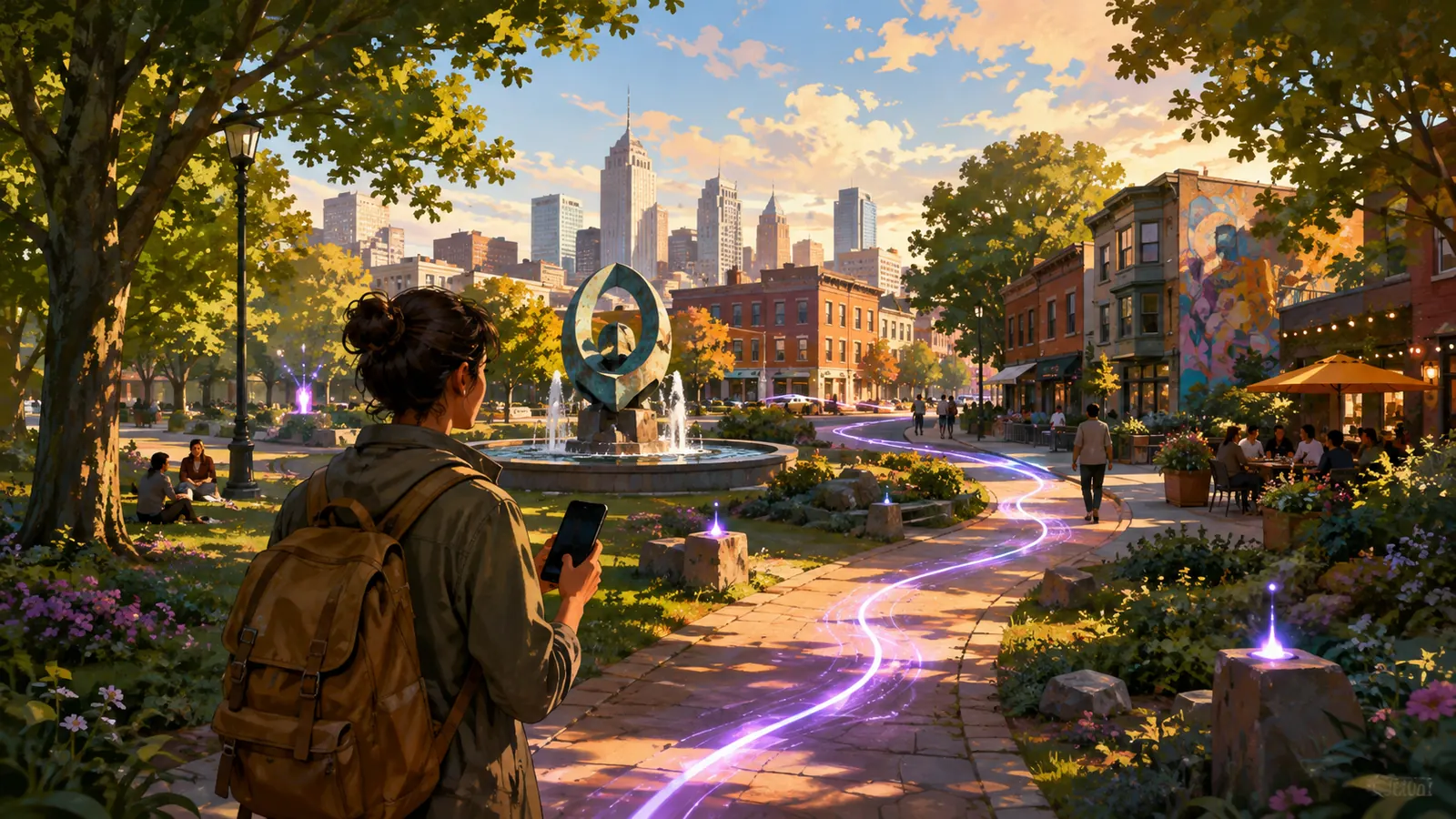
Some games give a place a second layer. A park becomes a route, a landmark becomes a meeting point, and an ordinary walk acquires a little more attention. The best location-based design adds meaning to the world without pretending the screen is the whole world.
Wang and Hsieh’s study of Pokémon GO examines the relationship between people, environments, and a location-based augmented-reality game. That framing is useful because much of the game’s novelty lies in the way familiar geography becomes actionable, beyond the collection system itself. A corner, trail, or public space can acquire a new affordance when play points your attention toward it.
The design challenge is to add a layer without erasing the place itself. A game should encourage awareness of the street, the people sharing it, and the practical limits of the environment—not turn every public space into an invisible resource node.
Sources1Wang, S. S., & Hsieh, C.-T. (2020). Ubiquitous Pokémon Go: Human–environment relationships and the location-based augmented reality game. Environment and Behavior.
A uses-and-gratifications study of Pokémon GO examined why people play and how those motivations relate to continued use. The paper is about one augmented-reality game and its surveyed participants, not a universal account of player behaviour, but it reinforces a practical idea: retention can come from the meaning a game adds to an activity, not only from a reward schedule.
Exploration, competence, and social contact can overlap. A player may walk farther because a route is interesting, because a friend is waiting, or because the game makes a familiar neighbourhood feel newly legible.
Sources2Bueno, S., Gallego, M. D., & Noyes, J. (2020). Uses and gratifications on augmented reality games: An examination of Pokémon Go. Applied Sciences, 10(5), 1644.6Przybylski, A. K., Rigby, C. S., & Ryan, R. M. (2010). A motivational model of video game engagement. Review of General Psychology, 14(2), 154–166.
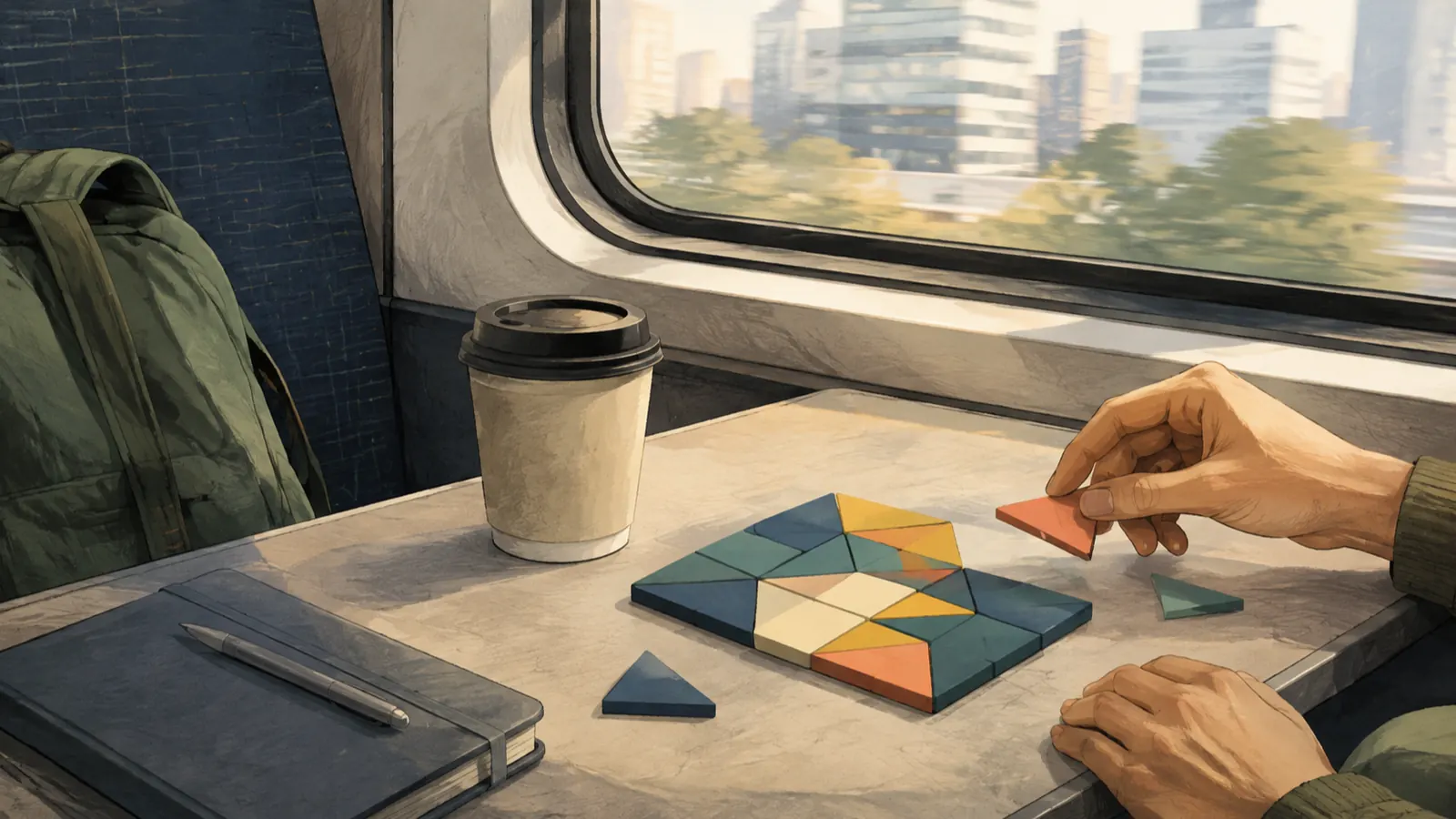
OutBrick does not ask you to walk anywhere. Its place is the small interval: the train platform, the coffee table, the minute before a meeting, and it plays offline, so the tunnel does not matter. The connection is one of attitude rather than mechanics. A good game can make an ordinary context feel more intentional by giving attention a clear, bounded shape. We wrote more about that interval in The commuter puzzle.
Whether the board is in a park or at home, the invitation is the same: notice one thing, make one choice, and leave the world a little easier to return to.
Sources1Wang, S. S., & Hsieh, C.-T. (2020). Ubiquitous Pokémon Go: Human–environment relationships and the location-based augmented reality game. Environment and Behavior.5Ballou, N., Vuorre, M., Hakman, T., Magnusson, K., & Przybylski, A. K. (2025). Perceived value of video games, but not hours played, predicts mental well-being in casual adult Nintendo players. Royal Society Open Science, 12(3).
Filed under
APA 7
References
Where a source is a studio’s own history or a news account rather than a study, the article says so beside the claim.
- Wang, S. S., & Hsieh, C.-T. (2020). Ubiquitous Pokémon Go: Human–environment relationships and the location-based augmented reality game. Environment and Behavior. doi.org/10.1177/0013916518817878 (opens in a new tab)
- Bueno, S., Gallego, M. D., & Noyes, J. (2020). Uses and gratifications on augmented reality games: An examination of Pokémon Go. Applied Sciences, 10(5), 1644. doi.org/10.3390/app10051644 (opens in a new tab)
- Lawler-Sagarin, K. A., Sagarin, B. J., & Pederson, A. (2023). Enhanced community through augmented reality: Social benefits of Pokémon Go. Psychological Reports. https://doi.org/10.1177/00332941231197155 doi.org/10.1177/00332941231197155 (opens in a new tab)
- Ballou, N., Vuorre, M., Hakman, T., Magnusson, K., & Przybylski, A. K. (2025). Perceived value of video games, but not hours played, predicts mental well-being in casual adult Nintendo players. Royal Society Open Science, 12(3). doi.org/10.1098/rsos.241174 (opens in a new tab)
- Przybylski, A. K., Rigby, C. S., & Ryan, R. M. (2010). A motivational model of video game engagement. Review of General Psychology, 14(2), 154–166. doi.org/10.1037/a0019440 (opens in a new tab)
Social benefits have a place
A PubMed-indexed study titled Enhanced Community Through Augmented Reality reported survey findings about meeting people, visiting new locations, and patronizing local businesses through Pokémon GO. These are self-reported associations, so they should not be read as proof that the game caused every outcome. They do show why place can be a social design material.
A social layer does not have to mean voice chat or a leaderboard. It can be a shared route, a familiar landmark, a story about the day’s walk, or the simple recognition that other people are paying attention to the same world.
Sources3Source 3Lawler-Sagarin, K. A., Sagarin, B. J., & Pederson, A. (2023). Enhanced community through augmented reality: Social benefits of Pokémon Go. Psychological Reports. https://doi.org/10.1177/003329412311971554Source 4Sra, M., & Schmandt, C. (2015). Expanding social mobile games beyond the device screen. MIT Media Lab.