

When a game teaches curiosity without a lecture
How interactive systems can invite experimentation, and what MIT’s maker-learning work suggests about putting agency before explanation.
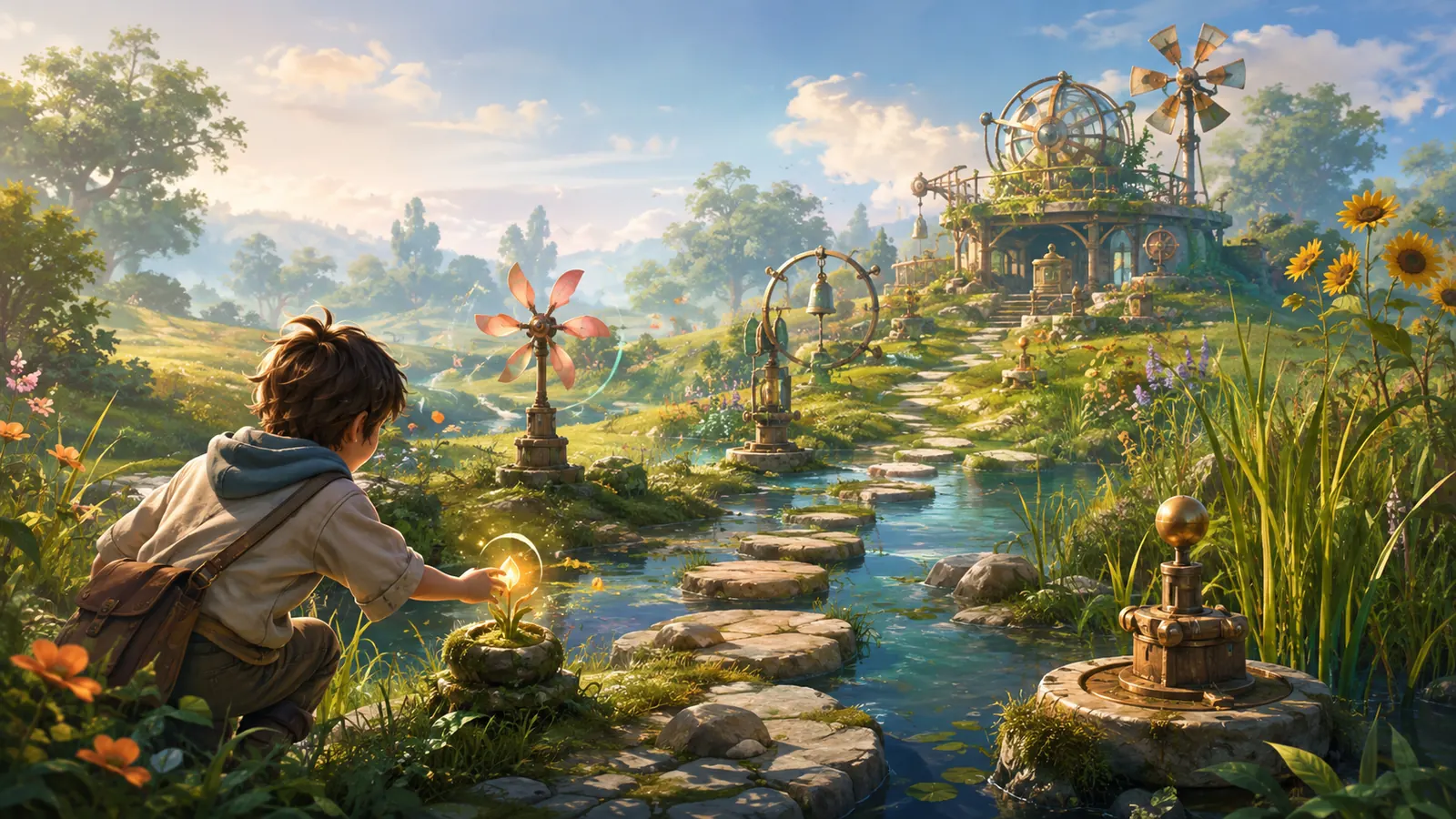
Teaching in a game is not the same as putting a lesson inside a game. The player needs a question worth asking, a system that answers honestly, and enough room to form a hypothesis before the explanation arrives.
A game teaches when the player wants to know what will happen next. That desire can begin with a visible mismatch, a responsive object, or a rule that is simple enough to test. The player is not waiting for the tutorial to finish; they are already constructing a model.
The model can be wrong. That is part of the value. A safe mistake gives the player a new piece of evidence and keeps authorship on their side of the screen.
Sources1Turakhia, D. (2022, July 14). 3 Questions: Teaching computational maker skills through gaming. MIT News.2Przybylski, A. K., Rigby, C. S., & Ryan, R. M. (2010). A motivational model of video game engagement. Review of General Psychology, 14(2), 154–166.
MIT News describes work that teaches computational maker skills through gaming, connecting game-like activities with creating and tinkering. The article is a university news account, not a randomized evaluation of every game-based learning outcome, so the useful claim is about design posture: let learners make something, see it respond, and share the result.
That posture turns explanation into a consequence of activity. A player understands a system more deeply when the explanation answers a question they have already felt in their hands.
Sources1Turakhia, D. (2022, July 14). 3 Questions: Teaching computational maker skills through gaming. MIT News.
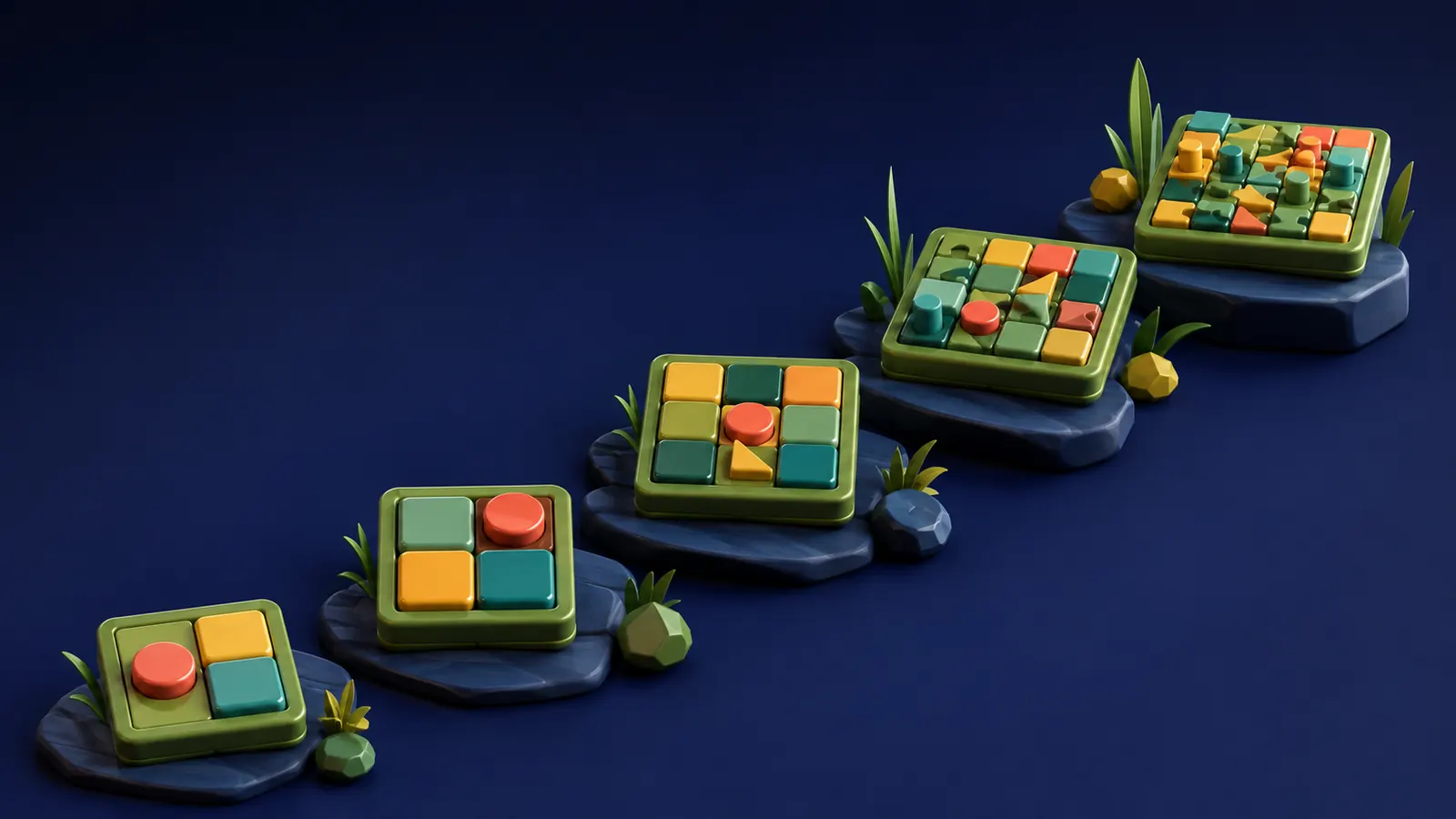
OutBrick’s boards are small enough to ask a focused question: if this brick moves first, which lane stays open? The player can try, undo, compare, and eventually recognize the relationship. The game does not need to call this a lesson for the player to practice reasoning.
The important part is that the feedback is truthful. A move should change the board in a way the player can inspect. Mystery can create curiosity at the start, but clarity is what lets curiosity become understanding.
- Show the question in the layout
- Let experiments be reversible
- Give feedback that explains the state
- Reward a better model, not a lucky guess
Sources1Turakhia, D. (2022, July 14). 3 Questions: Teaching computational maker skills through gaming. MIT News.3Ma, S. L. L. L., Bechard-Evans, M., et al. (2019). The use and effect of video game design theory in the creation of game-based systems for upper limb stroke rehabilitation. JMIR Serious Games, 7(2), e12131.
A good learning game does not end every session with a score that claims to summarize the player. It leaves them with a sharper question for the next board. That is a quieter measure of progress, but it is often the one that belongs to the player.
The OutBrick version of teaching is modest: help someone notice one relationship, make one deliberate choice, and feel that their attention changed what became possible.
Sources1Turakhia, D. (2022, July 14). 3 Questions: Teaching computational maker skills through gaming. MIT News.4Granic, I., Lobel, A., & Engels, R. C. M. E. (2014). The benefits of playing video games. The American Psychologist, 69(1), 66–78.
Filed under
APA 7
References
Where a source is a studio’s own history or a news account rather than a study, the article says so beside the claim.
- Turakhia, D. (2022, July 14). 3 Questions: Teaching computational maker skills through gaming. MIT News. news.mit.edu/2022/3-questions-dishita-turakhia-teaching-computational-maker-skills-through-gaming-0714 (opens in a new tab)
- Przybylski, A. K., Rigby, C. S., & Ryan, R. M. (2010). A motivational model of video game engagement. Review of General Psychology, 14(2), 154–166. doi.org/10.1037/a0019440 (opens in a new tab)
- Ma, S. L. L. L., Bechard-Evans, M., et al. (2019). The use and effect of video game design theory in the creation of game-based systems for upper limb stroke rehabilitation. JMIR Serious Games, 7(2), e12131. pmc.ncbi.nlm.nih.gov/articles/PMC6453078 (opens in a new tab)
- Granic, I., Lobel, A., & Engels, R. C. M. E. (2014). The benefits of playing video games. The American Psychologist, 69(1), 66–78. doi.org/10.1037/a0034857 (opens in a new tab)