

Minecraft’s early lesson: let discovery build the next layer
How an open-ended beginning grew through creation, survival, crafting, multiplayer, and platform expansion.
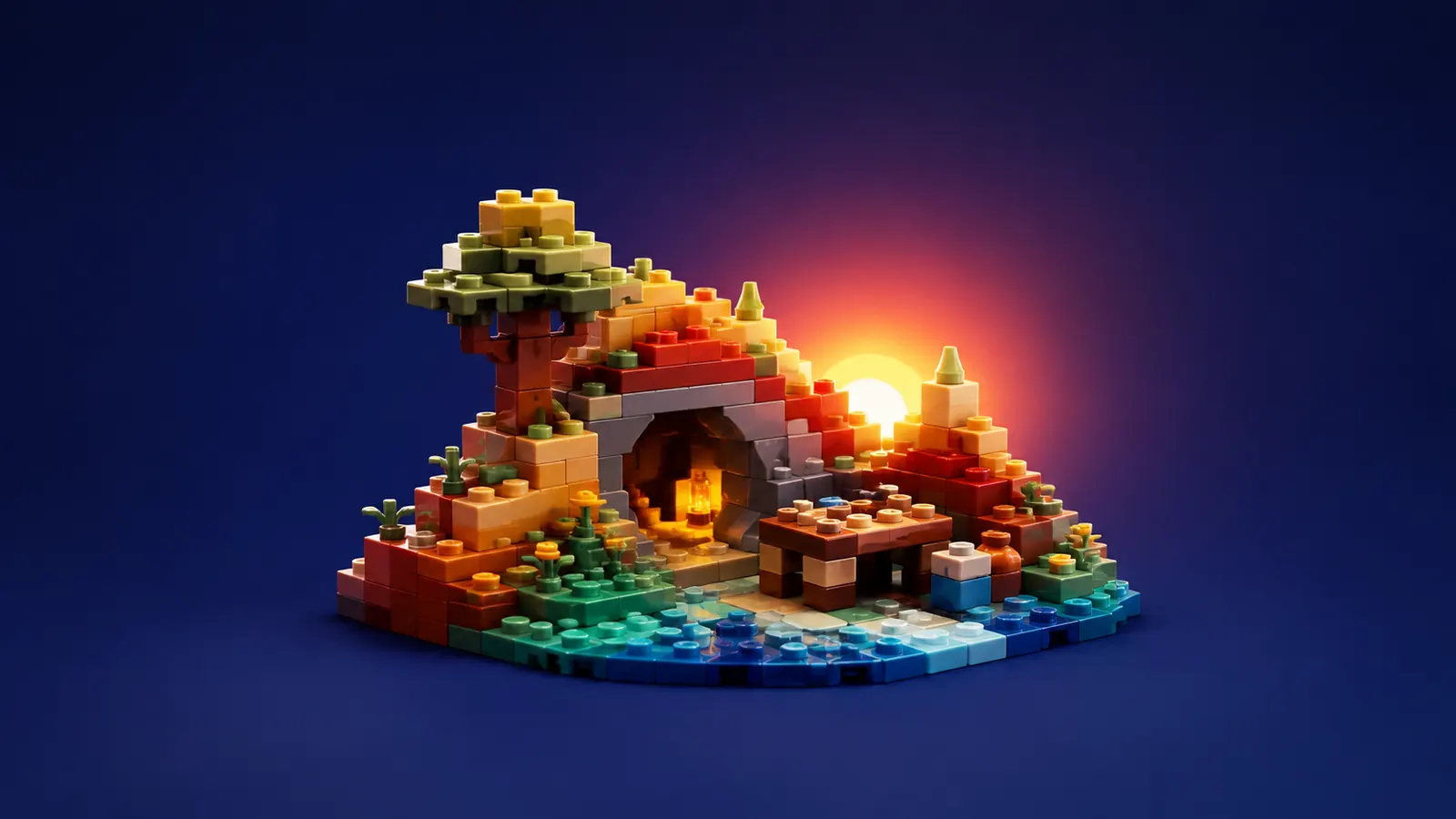
Minecraft’s early history is a story about layers arriving at the right time. The first version gave players an open field for digging and building; later additions gave that freedom more texture, stakes, and ways to share the result.
Xbox Wire’s 15-year retrospective says Markus Persson began Minecraft in 2009, drawing inspiration from Infiniminer and Dungeon Keeper. The early Classic version let players dig and build freely. Creative and Survival modes followed, then crafting, minecarts, and Survival multiplayer were added during 2010.
The exact milestone list comes from Microsoft’s own editorial channel, so it is useful provenance rather than an independent audit. The design pattern is still clear: the game began with a verb that was immediately understandable, then built new reasons to use it.
Sources1Skrebels, J. (2024, May 17). The most important moments in Minecraft’s first 15 years. Xbox Wire.
A layer works when it makes the player look back at the original verb differently. Crafting changes what gathering means. Survival changes what a safe place means. Multiplayer changes what a build means when another person can see it.
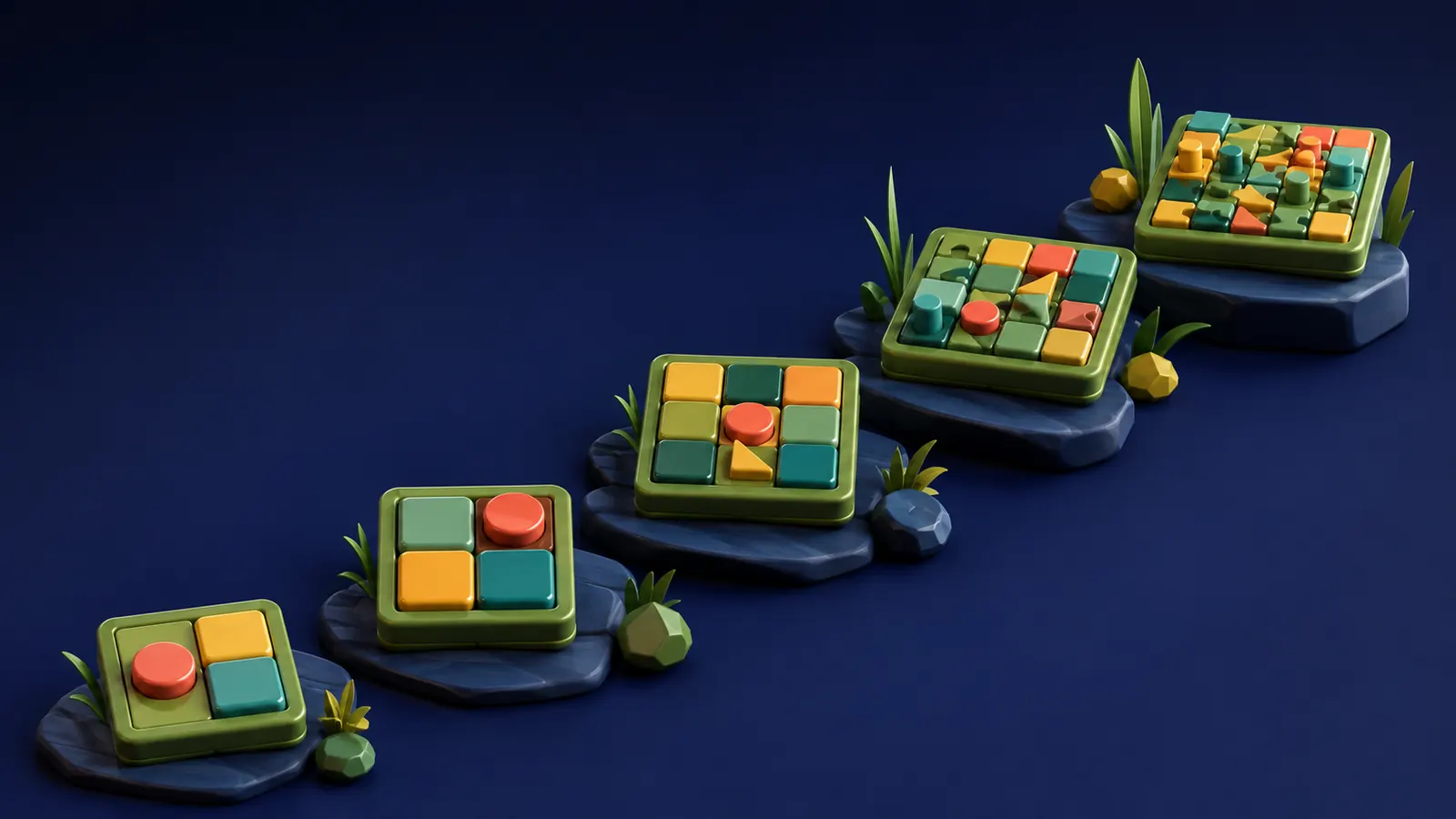
That is different from adding noise. OutBrick’s chapters, stars, widgets, brick friends and the Journey of 167 villages all orbit the same core action: push a brick along a legal lane and route it through an open gate that accepts its colour. Each layer should give the move a new context without asking the player to learn a second game.
- Add depth to an existing action
- Let players choose how much system they want
- Make progress visible without turning discovery into homework
- Allow personal stories to emerge from repeated play
Sources1Skrebels, J. (2024, May 17). The most important moments in Minecraft’s first 15 years. Xbox Wire.2Turakhia, D. (2022, July 14). 3 Questions: Teaching computational maker skills through gaming. MIT News.
MIT’s FabO project explored how gameplay objects could be brought into the physical world. In an exploratory study of 47 fabricated objects from 33 games, the researchers found that learners attached meanings such as pride, creative self-expression, resources, expanded play, and shared experience to what they made.
Few games need a 3D printer. The broader finding is that play means more when it leaves behind something that feels like yours. In OutBrick, a cleared chapter, a favourite mascot, or a third star on a board you went back for can work as a small personal trace: a reminder of a moment rather than a demand for another one.
Sources2Turakhia, D. (2022, July 14). 3 Questions: Teaching computational maker skills through gaming. MIT News.
Minecraft’s success is often described as infinite, but its early story is more practical: give players a strong verb, let them make meaning with it, and add systems that reward the meaning they are already making.
That is the scale of the lesson OutBrick can use. A new feature should make the board feel more like OutBrick, not like a second app installed inside it.
Sources1Skrebels, J. (2024, May 17). The most important moments in Minecraft’s first 15 years. Xbox Wire.
Filed under
APA 7
References
Where a source is a studio’s own history or a news account rather than a study, the article says so beside the claim.
- Skrebels, J. (2024, May 17). The most important moments in Minecraft’s first 15 years. Xbox Wire. news.xbox.com/en-us/2024/05/17/minecraft-15-years-most-important-moments/?ver=3.7.1 (opens in a new tab)
- Turakhia, D. (2022, July 14). 3 Questions: Teaching computational maker skills through gaming. MIT News. news.mit.edu/2022/3-questions-dishita-turakhia-teaching-computational-maker-skills-through-gaming-0714 (opens in a new tab)