

Why a two-minute puzzle can feel like a proper reset
A research-backed look at competence, attention, and the small satisfactions that make a short OutBrick session worth returning to.
Not every game session needs to be an odyssey. Sometimes the best version of play is a small, complete loop: notice a pattern, make a choice, see the board respond, and leave with the feeling that something clicked.
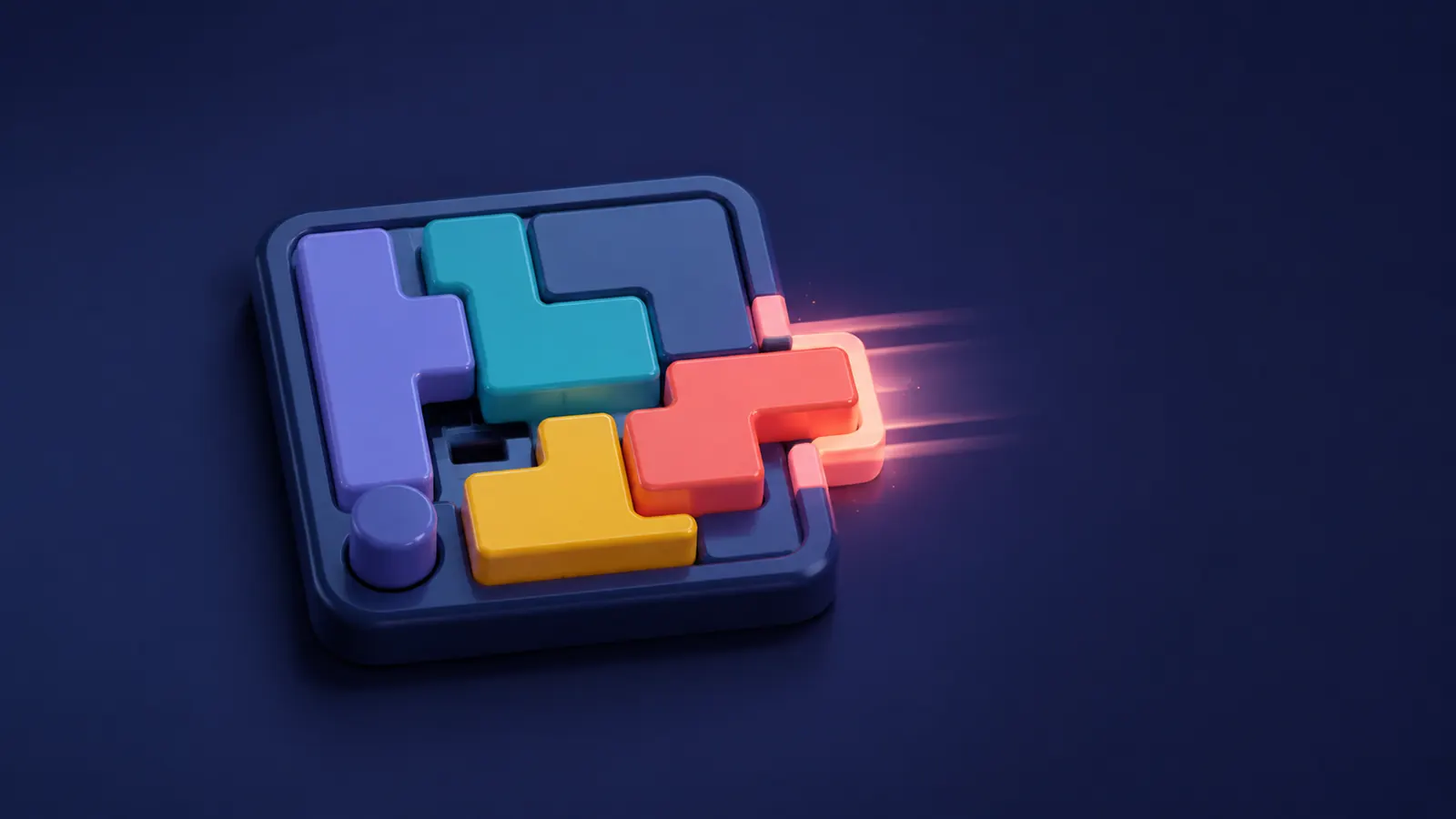
A satisfying puzzle does not need to overwhelm you with content. It needs to make the relationship between your choice and the result easy to feel. Slide a brick, read the opening, and watch the gate answer back. That little exchange is the emotional centre of OutBrick.
The motivational model proposed by Przybylski, Rigby, and Ryan describes game engagement through three basic needs: competence, autonomy, and relatedness. A small puzzle can touch the first two immediately. You understand a rule, then prove something to yourself by using it. The pleasure comes from authorship as much as from winning.
Sources1Przybylski, A. K., Rigby, C. S., & Ryan, R. M. (2010). A motivational model of video game engagement. Review of General Psychology, 14(2), 154–166.
A controlled study of casual game play found stronger short-term affective restoration and engagement after a cognitively demanding task, while the evidence for broad cognitive restoration was less certain. That distinction matters. A game can help you feel more ready to continue without turning into a magical brain upgrade.
A separate study comparing a casual game with a body-scan mindfulness exercise found reductions in psychological and physiological stress in both groups. Mindfulness performed better on self-reported psychological stress, so games do not replace other practices. A well-sized game can be one modest option in a larger day.
Sources3Rupp, M. A., Sweetman, R., Sosa, A. E., Smither, J. A., & McConnell, D. S. (2017). Searching for affective and cognitive restoration: Examining the restorative effects of casual video game play. Human Factors, 59(7), 1096–1107.4Desai, V., Gupta, A., Andersen, L., Ronnestrand, B., & Wong, M. (2021). Stress-reducing effects of playing a casual video game among undergraduate students. Trends in Psychology, 29(3), 563–579.2Granic, I., Lobel, A., & Engels, R. C. M. E. (2014). The benefits of playing video games. The American Psychologist, 69(1), 66–78.
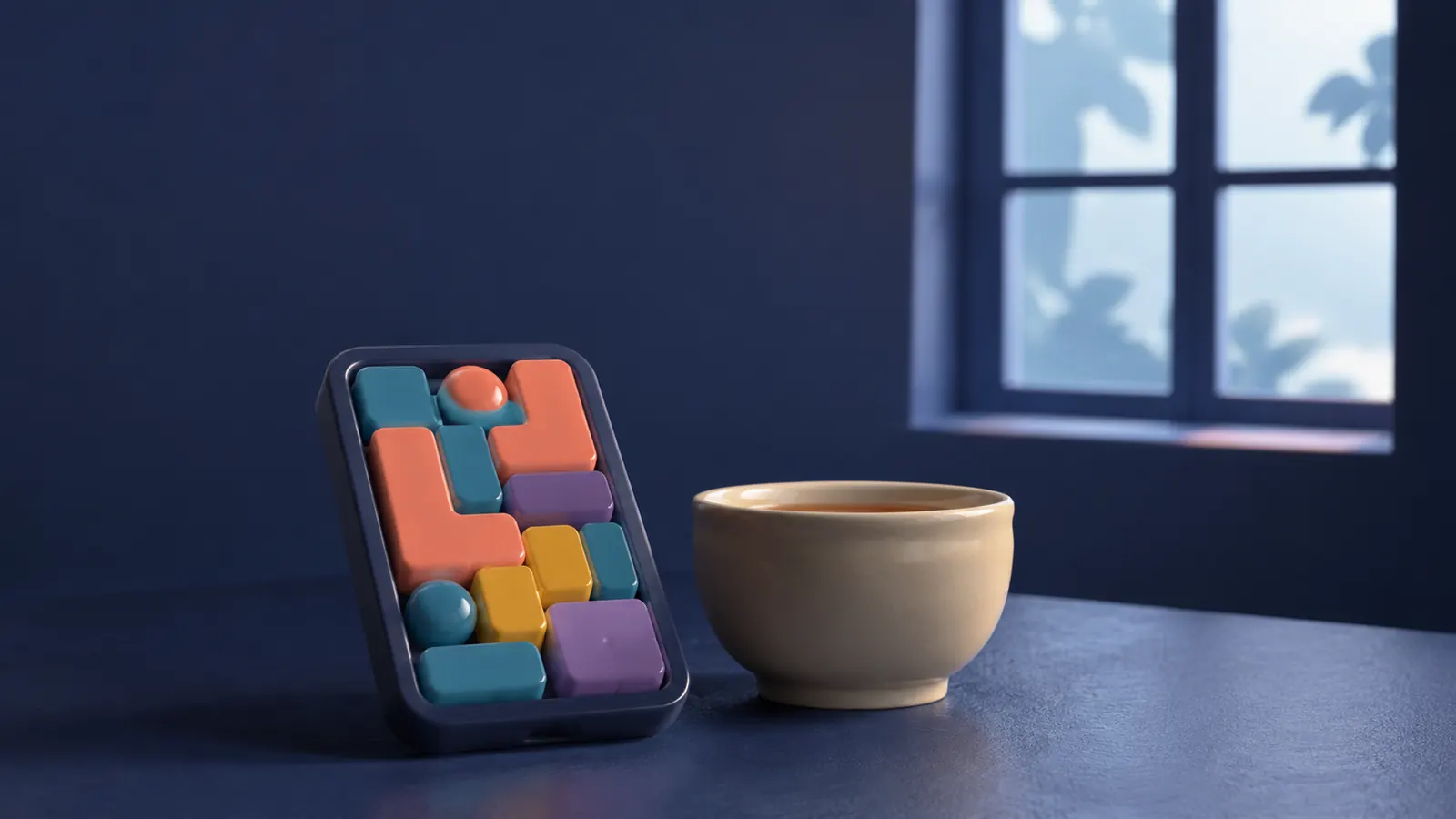
OutBrick starts with a board that can be understood at a glance. There is no quest log to remember and no clock to beat; where a board has a move limit, its goals and budget sit in plain view from the first tap. Some boards have no move limit. The board tells you the rest: the bricks, the open lanes, and the matching gates.
Undo is part of the loop rather than a punishment for using it, which is why the first undo on every board is free and cannot run out. That changes the emotional temperature of experimentation. You can try a move, learn from the result, and keep the useful part of the attempt. Boards are still meant to push back. What changes is that trying something costs less than hesitating. The home page sets out exactly what lives, undos and ads cost.
- One readable board at a time
- A clear action-to-feedback relationship
- Recovery tools that preserve curiosity
- A finish line that arrives before the session feels heavy
A good two-minute session gives you a small feeling of progress and then lets you decide what happens next. If you have time for another board, there is always another board. If you need to go, the game can wait.
That is why OutBrick treats calm as a design input. The research does not say every player benefits in the same way, and it does not prove a universal effect. It does point in a useful direction: build a game that respects agency, makes progress legible, and leaves the player with more choice than they had before. We follow the same thread in Designing a game for the life players actually have.
Sources1Przybylski, A. K., Rigby, C. S., & Ryan, R. M. (2010). A motivational model of video game engagement. Review of General Psychology, 14(2), 154–166.5Vuorre, M., Johannes, N., Magnusson, K., & Przybylski, A. K. (2022). Time spent playing video games is unlikely to impact well-being. Royal Society Open Science, 9(7), 220411.
Filed under
Questions, answered
A few useful answers
Is OutBrick intended to improve mental health?
No. OutBrick is a recreational puzzle. Research on casual play can inform design, but it does not make the game a treatment or guarantee a well-being outcome.
Why are OutBrick sessions short?
Short sessions make the core puzzle legible and let play fit around real life. You can keep playing, but the game does not require a long uninterrupted block of time.
APA 7
References
Where a source is a studio’s own history or a news account rather than a study, the article says so beside the claim.
- Przybylski, A. K., Rigby, C. S., & Ryan, R. M. (2010). A motivational model of video game engagement. Review of General Psychology, 14(2), 154–166. doi.org/10.1037/a0019440 (opens in a new tab)
- Granic, I., Lobel, A., & Engels, R. C. M. E. (2014). The benefits of playing video games. The American Psychologist, 69(1), 66–78. doi.org/10.1037/a0034857 (opens in a new tab)
- Rupp, M. A., Sweetman, R., Sosa, A. E., Smither, J. A., & McConnell, D. S. (2017). Searching for affective and cognitive restoration: Examining the restorative effects of casual video game play. Human Factors, 59(7), 1096–1107. doi.org/10.1177/0018720817715360 (opens in a new tab)
- Desai, V., Gupta, A., Andersen, L., Ronnestrand, B., & Wong, M. (2021). Stress-reducing effects of playing a casual video game among undergraduate students. Trends in Psychology, 29(3), 563–579. doi.org/10.1007/s43076-021-00062-6 (opens in a new tab)
- Vuorre, M., Johannes, N., Magnusson, K., & Przybylski, A. K. (2022). Time spent playing video games is unlikely to impact well-being. Royal Society Open Science, 9(7), 220411. doi.org/10.1098/rsos.220411 (opens in a new tab)