

Founder & CEO
Mourad Hamdi
Mourad makes small, thoughtful games for the space between one task and the next. OutBrick is his ongoing experiment in calmer play.
In the journal
28 stories so far.
Designing a game for the life players actually have
Why “gaming life fit” is a better design question than chasing a bigger hours-played number.
What Angry Birds teaches about the long road to a hit
Rovio’s own history is a useful reminder that iconic games are often the visible tip of a much longer practice.
Tetris proves that simple rules can keep opening up
A look at constraint, rhythm, and the endless variety inside a very small ruleset.
Why colour should never be the only clue in a puzzle
The case for pairing colour with shape, text, and other signals—so a readable board stays readable for more players.
How to build a kinder difficulty curve
Challenge should stretch the player’s attention without making the relationship with the game feel brittle.
Hades and the run that keeps learning
What Supergiant’s Early Access success teaches about iteration, narrative momentum, and making another attempt feel meaningfully different.
The Sims and the stories systems tell
A long-running success story about player authorship, playful resistance, and the value of a game that does not write every line for you.
When a game teaches curiosity without a lecture
How interactive systems can invite experimentation, and what MIT’s maker-learning work suggests about putting agency before explanation.
Papers, Please and meaningful friction
How a game can turn a repetitive action into a moral question—and why the best friction asks the player to decide, not simply to wait.
The commuter puzzle: making room for a two-minute game
A field guide to designing for interrupted attention, small screens, and the lovely gap between “I have no time” and “I have two minutes.”
How to solve sliding block puzzles: a practical guide
Work backwards from the exit, find the move that makes space, count before you commit. A designer’s method for sliding block puzzles that look impossible.
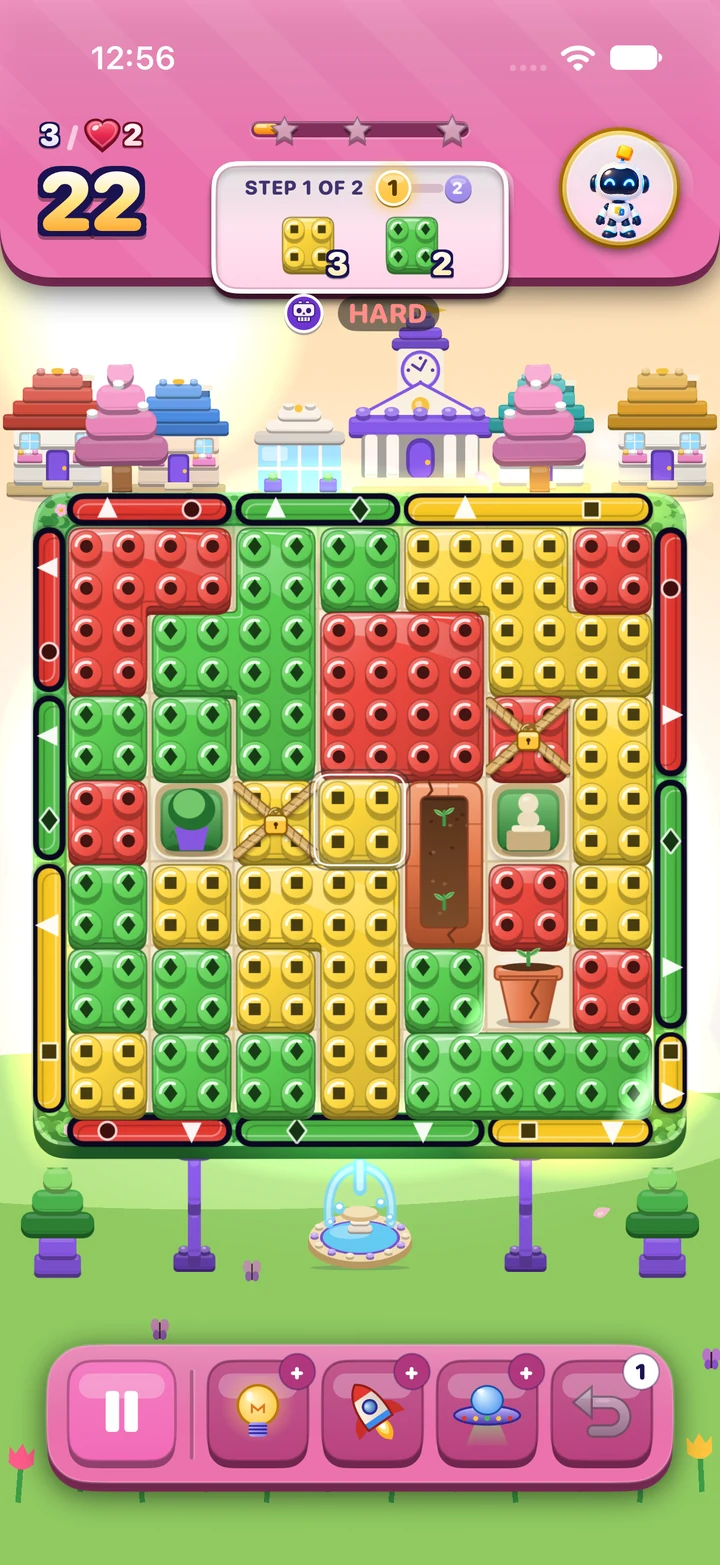
Colour sort puzzle tips: clear boards in fewer moves
How to read a colour sort board, choose which colour to clear first and make every move count, with the star rules explained. From OutBrick’s designer.
Apple Watch puzzle games: what works on a tiny screen
Glanceable boards, fingertip-sized pieces, the Digital Crown, haptics and standalone play: what makes a puzzle game work on Apple Watch.
How we verified 2,000 sliding-block puzzle boards before release
A pathfinding result is only the beginning. Here is how we replayed a clear for every OutBrick board against the same rules the game uses.
How to get three stars in puzzle games: think in fewer moves
Three stars means solving well, not just solving. Satisficing, planning depth and the habits that cut wasted moves, with OutBrick’s star rules explained.
Rewards, streaks and motivation: when incentives backfire
Why rewards can crowd out the fun they were meant to boost, why a broken streak makes people quit, and how to keep incentives on your side.
Dyslexia-friendly game text: fonts, spacing and plain words
Do dyslexia fonts work? What eye-tracking and reading studies say about typefaces, size, letter spacing and wording, and how to make game text easier to read.
Designing games for older eyes and hands: readable and forgiving
How vision, touch and reaction time change with age, what that means for contrast, targets and pace, and design principles for games that stay friendly at 80.
Game feel and juice: why a satisfying slide matters
Juice is the extra feedback that makes a tap feel good. Studies with thousands of players show it helps, up to a point, and then starts to hurt.
Game tutorials that teach without telling: what works
A study of 45,000 players found tutorials only paid off in complex games. What research says about teaching through play, hints and the first hour.
Friendly competition: how to challenge friends without pressure
Competing with friends can be fun or quietly corrosive. What motivation research says about winners, losers and teams, and how to keep a challenge friendly.
Playing across devices: what research says about continuity
Phone on the train, tablet on the sofa, TV at night: what studies of multi-device life say about continuity, and how OutBrick syncs across six Apple platforms.
OutBrick on iPhone Duo: what would you want to play?
Would you want OutBrick adapted for iPhone Duo? Explore possible inner and outer screen experiences, then tell us what would make play worthwhile.
OutBrick’s commitment to blind players and VoiceOver
What our commitment to blind players means: listening to real play, describing current limits honestly, and making accessibility part of OutBrick.
Reading OutBrick’s spatial board with VoiceOver
Build a clearer picture of OutBrick’s board with VoiceOver: explore bricks, gates and empty space, and understand the fixes promised next.
How to slide OutBrick bricks with VoiceOver actions
Learn OutBrick’s four slide directions, matching gates and slide distances, with VoiceOver action guidance and the promised teaching changes.
OutBrick without a timer: room for real challenge
AppleVis players asked for time to explore and a gentler start. How OutBrick’s move limits, untimed play and planned teaching changes fit together.
OutBrick accessibility beyond the puzzle board
From shop buttons and frozen gates to mission credit and Italian support: how AppleVis feedback is helping us improve the whole OutBrick session.