Rewards, streaks and motivation: when incentives backfire
Why rewards can crowd out the fun they were meant to boost, why a broken streak makes people quit, and how to keep incentives on your side.
Every app on your phone seems to want to reward you. Language apps count days in a row, fitness apps hand out badges, games shower you with coins and chests. Sometimes that helps: a visible count of days can get you through a dull patch. Sometimes it quietly changes why you are doing the thing at all, until the reward is the point and the activity is the chore. Psychologists have studied that shift for more than fifty years. As someone who makes a game with coins in it, I think players deserve to know what that research says.
In a classic study, Lepper, Greene and Nisbett watched preschool children who already liked drawing with felt-tip markers. Some were told they would receive a certificate for drawing; some received the same certificate as a surprise afterwards; others got nothing. Later, when the markers were simply left out during free play, the children who had drawn in order to get the award spent less time drawing than the others. Being rewarded unexpectedly made no such difference.
The researchers called this the overjustification effect. If you are given an external reason for something you were doing anyway, you may start to see the external reason as why you do it. When it disappears, so does some of the motivation.
Sources1Lepper, M. R., Greene, D., & Nisbett, R. E. (1973). Undermining children’s intrinsic interest with extrinsic reward: A test of the “overjustification” hypothesis. Journal of Personality and Social Psychology, 28(1), 129–137.
One experiment is a starting point, and there have been many since. Deci, Koestner and Ryan pooled 128 of them in a 1999 meta-analysis. Tangible rewards that people expected to receive, whether for taking part, finishing or performing well, reduced intrinsic motivation, measured as how much people chose to continue the activity in their own free time. The effects were small to moderate in size, and tangible rewards were more damaging for children than for university students.
Positive feedback did the opposite. Telling people they had done well increased both their free-choice engagement and their reported interest. The difference, in the self-determination theory the authors work within, is whether a reward is experienced as information about your competence or as an attempt to control your behaviour.
This is not an uncontested result. In a comment published alongside the meta-analysis, Eisenberger, Pierce and Cameron argued that the effects of reward can be negative, neutral or positive depending on how rewards are given, and that the harms had been overstated. The debate is mainly about how often and how much, not about whether rewards can backfire.
Sources2Deci, E. L., Koestner, R., & Ryan, R. M. (1999). A meta-analytic review of experiments examining the effects of extrinsic rewards on intrinsic motivation. Psychological Bulletin, 125(6), 627–668.3Eisenberger, R., Pierce, W. D., & Cameron, J. (1999). Effects of reward on intrinsic motivation—Negative, neutral, and positive: Comment on Deci, Koestner, and Ryan (1999). Psychological Bulletin, 125(6), 677–691.
Streaks are the most familiar reward in everyday apps, and they have their own research. Silverman and Barasch ran seven studies on how logged streaks affect what people do next. When an app highlighted an intact streak, people were more likely to repeat the behaviour than when it highlighted a broken one, even when their actual past behaviour was identical. Keeping the streak had become a goal in its own right.
Two further findings are revealing. The drop after a broken streak was bigger when people blamed themselves for the break, and smaller when they could repair the streak. Put simply, a streak is motivating until the day it breaks, and then the same design can push someone to give up on a habit they had been building for months.
Sources4Silverman, J., & Barasch, A. (2023). On or off track: How (broken) streaks affect consumer decisions. Journal of Consumer Research, 49(6), 1095–1117.
Game-style rewards outside games, often called gamification, have been studied intensively. A review by Koivisto and Hamari covered 819 studies. Results leaned positive overall, but the amount of mixed evidence was, in their words, remarkable, and most studies used the same few elements: points, badges and leaderboards.
Sailer and colleagues tested individual elements in a randomised experiment. Badges, leaderboards and performance graphs increased players’ sense of competence and how meaningful the task felt. Avatars, a story and teammates increased a sense of connection. None of the elements increased the feeling of freedom to choose. That gap matters, because autonomy is exactly what controlling rewards take away.
The practical difference between informative and controlling is often small in the interface and large in the experience. “You cleared that in fewer moves than last time” tells you something about your skill. “Log in tomorrow or lose your progress” tells you what to do. A badge can be either, depending on whether it marks something you achieved or something you were made to do. When a reward system leaves you feeling managed rather than informed, the research suggests your interest in the activity itself is what is most at risk.
Sources5Koivisto, J., & Hamari, J. (2019). The rise of motivational information systems: A review of gamification research. International Journal of Information Management, 45, 191–210.6Sailer, M., Hense, J. U., Mayr, S. K., & Mandl, H. (2017). How gamification motivates: An experimental study of the effects of specific game design elements on psychological need satisfaction. Computers in Human Behavior, 69, 371–380.
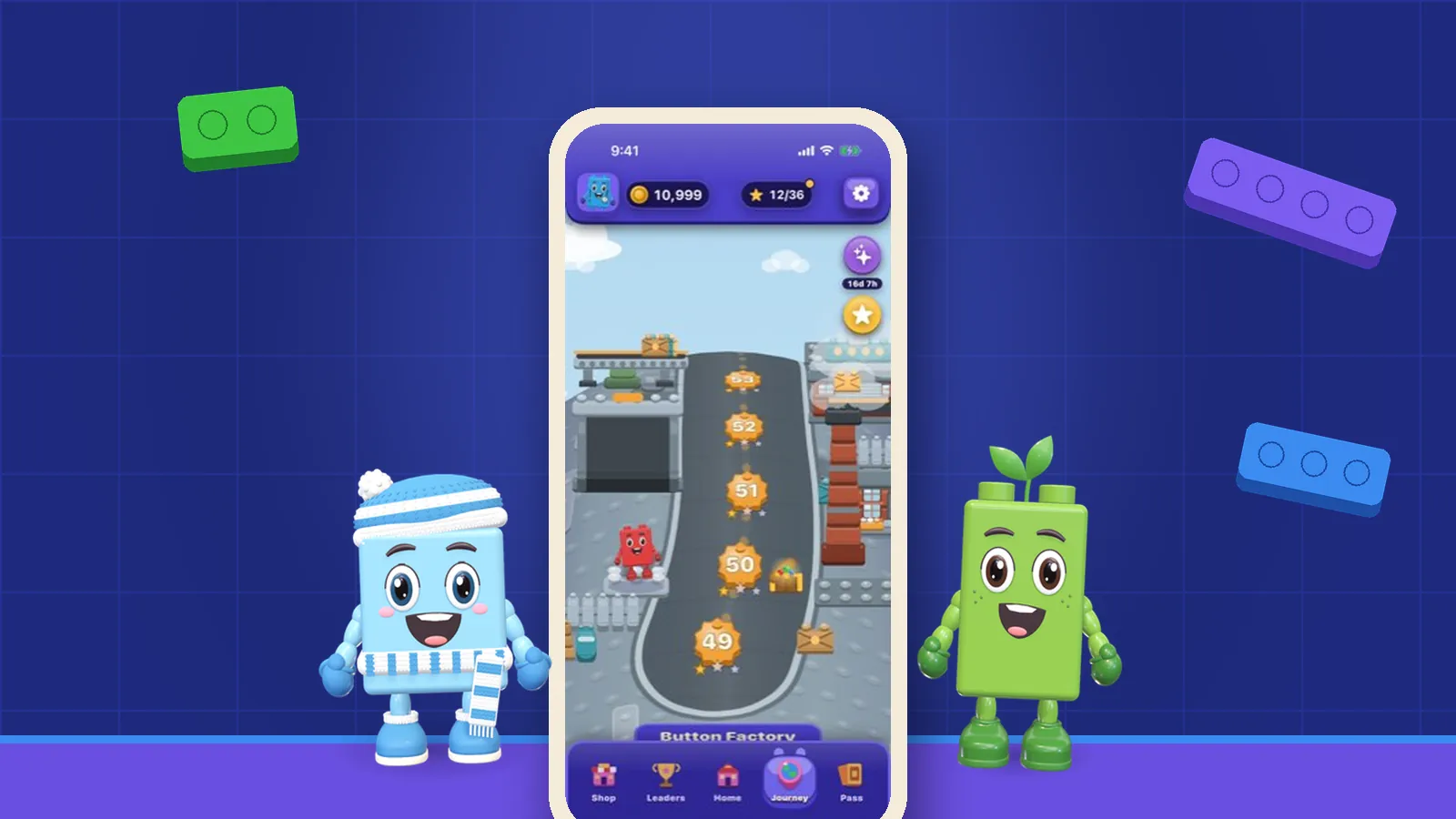
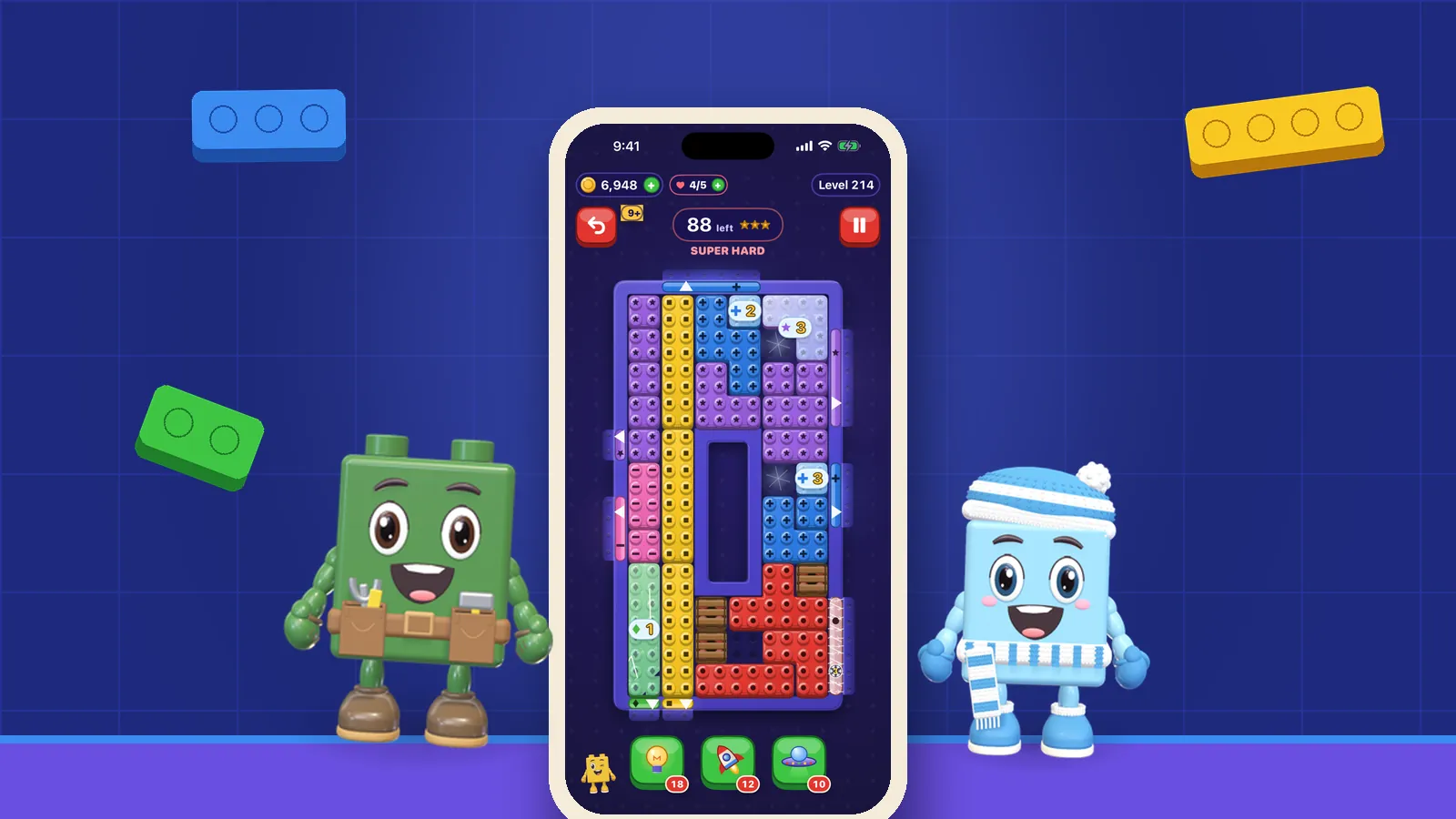
OutBrick has coins, stars and a clear card at the end of every board, so this is not an abstract question for us. Our rule of thumb is to make rewards informative rather than controlling. Stars describe how you played: they follow the board’s score, and every move you have left when the goals are met becomes a blaster that adds to it. OutBrick does keep a streak, which one of its Home Screen widgets shows, but the daily bonus is a flat hundred coins for your first clear of any day rather than a prize that climbs with the count. We explain the thinking in the case for daily rituals that do not demand you and how games become habits.
Where rewards are tied to adverts, we keep them optional and say exactly what they cost; the home page lists what lives, undos and adverts cost. Players can judge whether we have got the balance right. For anyone using rewards to build a habit, whether in a game or anywhere else, the research suggests a few habits of mind, and our guide to how long a habit takes to form covers the rest.
- Notice when you are doing something for the counter rather than the activity.
- Treat a broken streak as a data point, not a verdict; the habit is not the number.
- Prefer feedback that tells you how you did over prizes for simply showing up.
- If a reward system makes stopping feel costly, that is a design choice, not your failing.
Sources2Deci, E. L., Koestner, R., & Ryan, R. M. (1999). A meta-analytic review of experiments examining the effects of extrinsic rewards on intrinsic motivation. Psychological Bulletin, 125(6), 627–668.4Silverman, J., & Barasch, A. (2023). On or off track: How (broken) streaks affect consumer decisions. Journal of Consumer Research, 49(6), 1095–1117.
Filed under
Questions, answered
A few useful answers
What is the overjustification effect?
The overjustification effect is the finding that an expected external reward for something you already enjoy can reduce your interest in it once the reward stops. It was first shown with preschool children who liked drawing.
Do rewards kill intrinsic motivation?
Not always. A meta-analysis of 128 experiments found that expected tangible rewards reduced intrinsic motivation, while positive feedback increased it. Whether a reward feels informative or controlling makes a large difference.
Are streaks good for building habits?
Streaks can motivate while they are intact, but research across seven studies found that a highlighted broken streak made people less likely to continue. Streaks that can be repaired, or that do not reset, reduce that risk.
Why do I want to quit after breaking a streak?
Research suggests that keeping a logged streak becomes a goal in itself, so a break can feel like losing the goal. The effect is stronger when people blame themselves for the break.
APA 7
References
Where a source is a studio’s own history or a news account rather than a study, the article says so beside the claim.
- Lepper, M. R., Greene, D., & Nisbett, R. E. (1973). Undermining children’s intrinsic interest with extrinsic reward: A test of the “overjustification” hypothesis. Journal of Personality and Social Psychology, 28(1), 129–137. doi.org/10.1037/h0035519 (opens in a new tab)
- Deci, E. L., Koestner, R., & Ryan, R. M. (1999). A meta-analytic review of experiments examining the effects of extrinsic rewards on intrinsic motivation. Psychological Bulletin, 125(6), 627–668. doi.org/10.1037/0033-2909.125.6.627 (opens in a new tab)
- Eisenberger, R., Pierce, W. D., & Cameron, J. (1999). Effects of reward on intrinsic motivation—Negative, neutral, and positive: Comment on Deci, Koestner, and Ryan (1999). Psychological Bulletin, 125(6), 677–691. doi.org/10.1037/0033-2909.125.6.677 (opens in a new tab)
- Silverman, J., & Barasch, A. (2023). On or off track: How (broken) streaks affect consumer decisions. Journal of Consumer Research, 49(6), 1095–1117. doi.org/10.1093/jcr/ucac029 (opens in a new tab)
- Koivisto, J., & Hamari, J. (2019). The rise of motivational information systems: A review of gamification research. International Journal of Information Management, 45, 191–210. doi.org/10.1016/j.ijinfomgt.2018.10.013 (opens in a new tab)
- Sailer, M., Hense, J. U., Mayr, S. K., & Mandl, H. (2017). How gamification motivates: An experimental study of the effects of specific game design elements on psychological need satisfaction. Computers in Human Behavior, 69, 371–380. doi.org/10.1016/j.chb.2016.12.033 (opens in a new tab)