OutBrick’s commitment to blind players and VoiceOver
What our commitment to blind players means: listening to real play, describing current limits honestly, and making accessibility part of OutBrick.
A player can love a puzzle and still encounter a barrier that should not be there. That is the most important lesson in the AppleVis conversation about OutBrick. Players described discovering a new kind of game, enjoying its challenge, struggling to understand a movement, and finding controls or board information that VoiceOver did not expose as expected. All of those experiences deserve attention. We are fully committed to accessibility for blind players and VoiceOver users. Your feedback is helping us make the board easier to explore, the rules easier to learn and the whole experience more welcoming. We want you to be able to concentrate on the puzzle you came to play.
Someone opening OutBrick might want to solve a stubborn board, discover whether a sorting game suits them, or simply spend a few enjoyable minutes with a new puzzle. Accessibility needs to support that purpose. Finding a button is important, but so is understanding the choice it offers and being able to enjoy the result. A technically exposed interface can still leave too much unexplained.
Interviews with 32 blind and low-vision mobile players in China found varied motivations, including accomplishment and social connection, alongside access barriers (Ran et al., 2025). Players bring more than one reason to play.
In the AppleVis discussion, people told us what they enjoyed, where they got stuck and what they wanted to try next. We value that whole picture. A report about an unreachable gate matters even when the player loves the game. So does the pleasure of discovering a genre that previously felt out of reach. Both help us understand what is worth building on.
Sources1Ran, Z., Li, X., Xiao, Q., Fan, X., Li, F. M., Wang, Y., & Lu, Z. (2025). How users who are blind or low vision play mobile games: Perceptions, challenges, and strategies. In Proceedings of the 2025 CHI Conference on Human Factors in Computing Systems (pp. 1–18). Association for Computing Machinery.
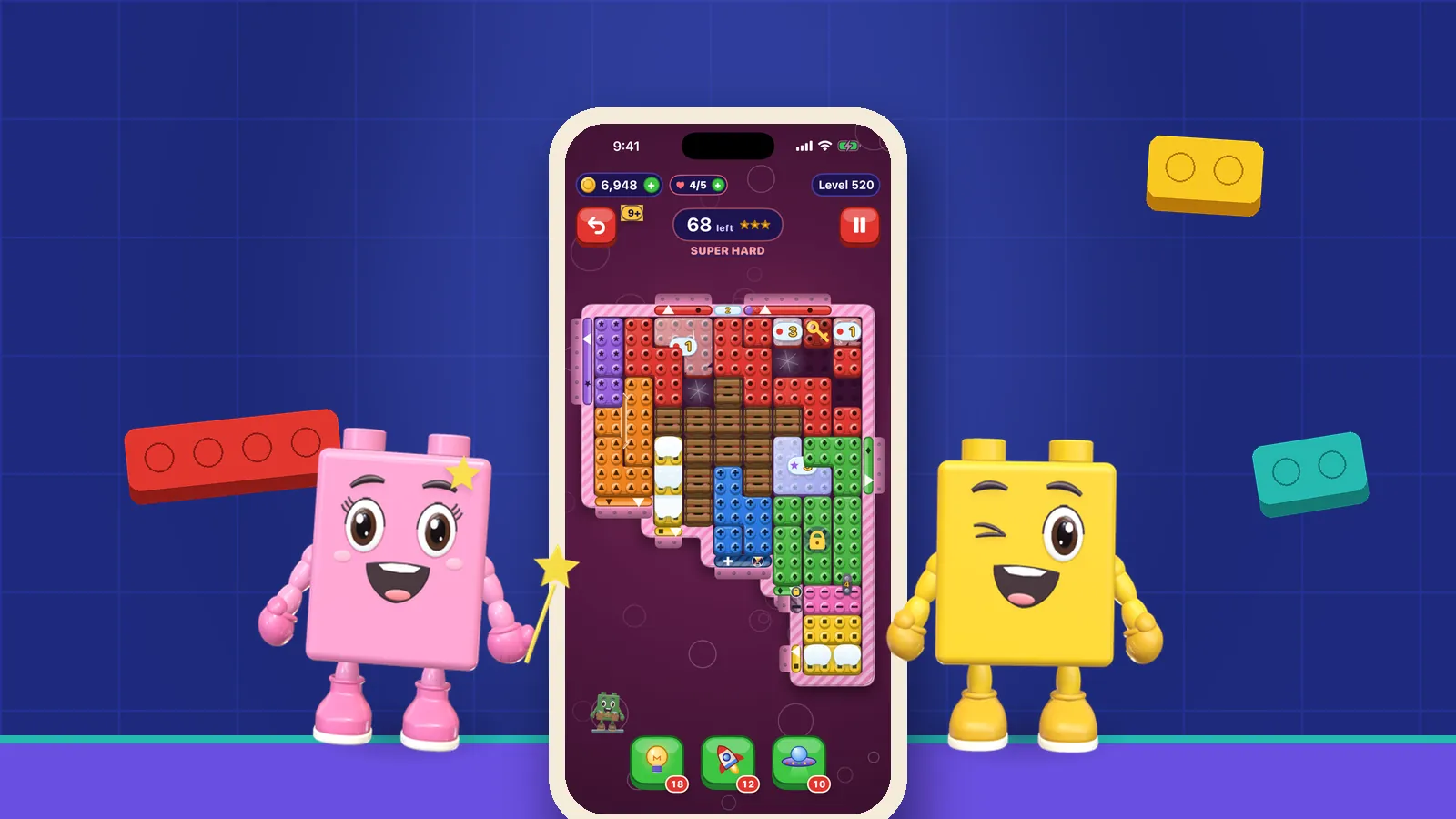
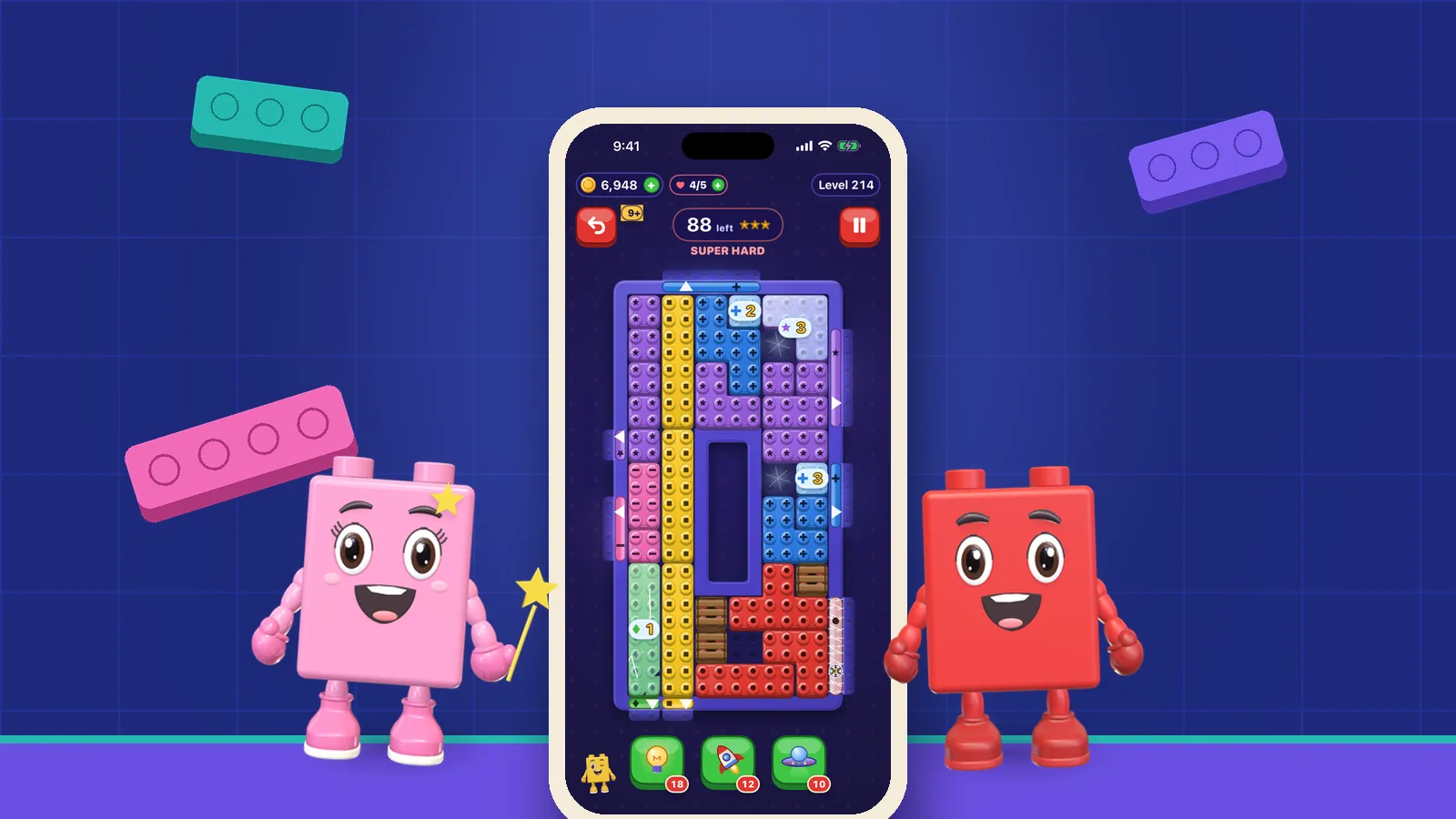
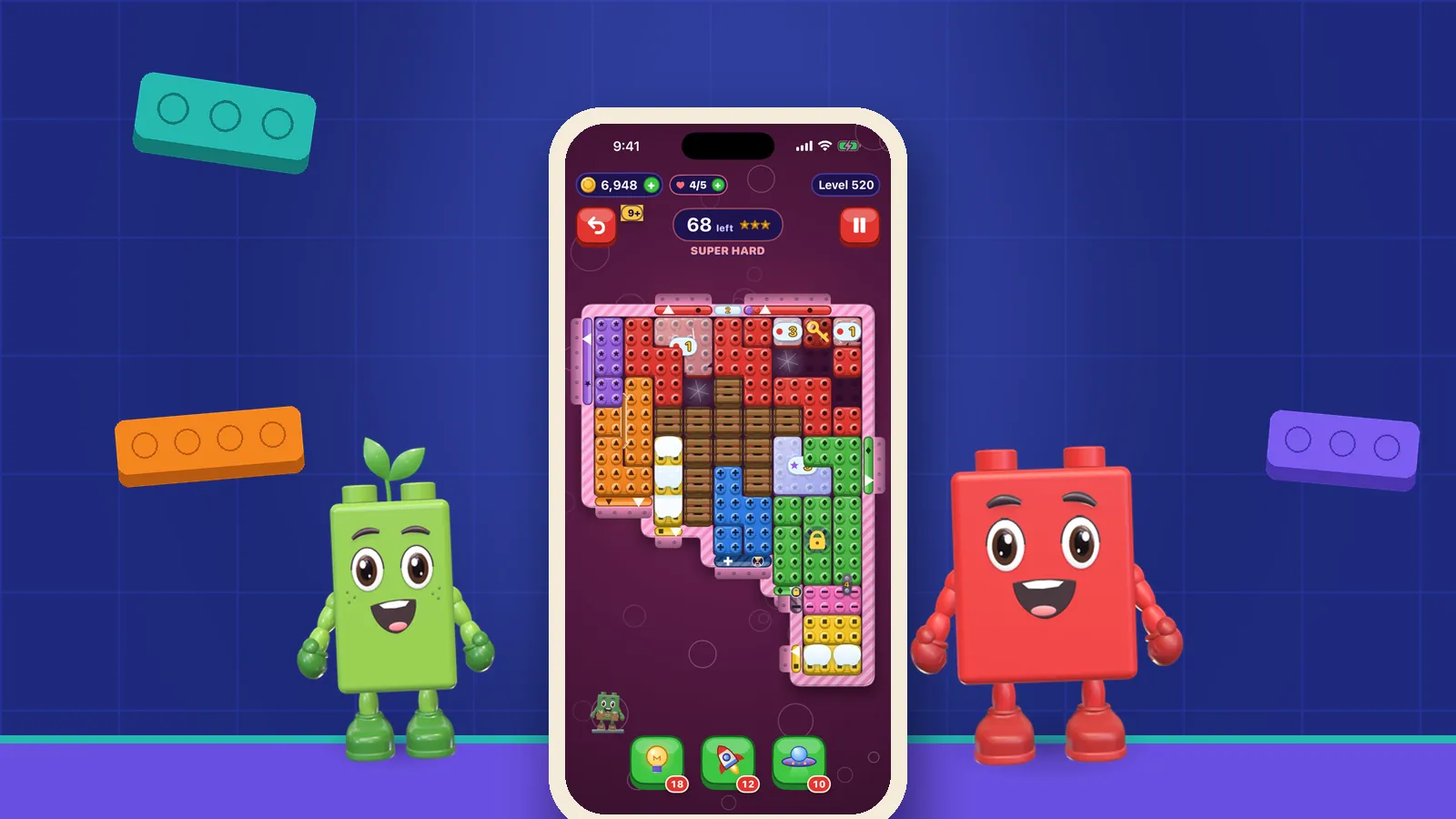
We introduced OutBrick to AppleVis with colour paired with glyphs, brick labels identifying colour, shape and position, and VoiceOver slide actions. Players helped us find gaps in discovering some bricks and gates by touch. We acknowledged those problems. For the next update, we are working towards exploration that announces every brick and gate at its position, along with the empty cells between them.
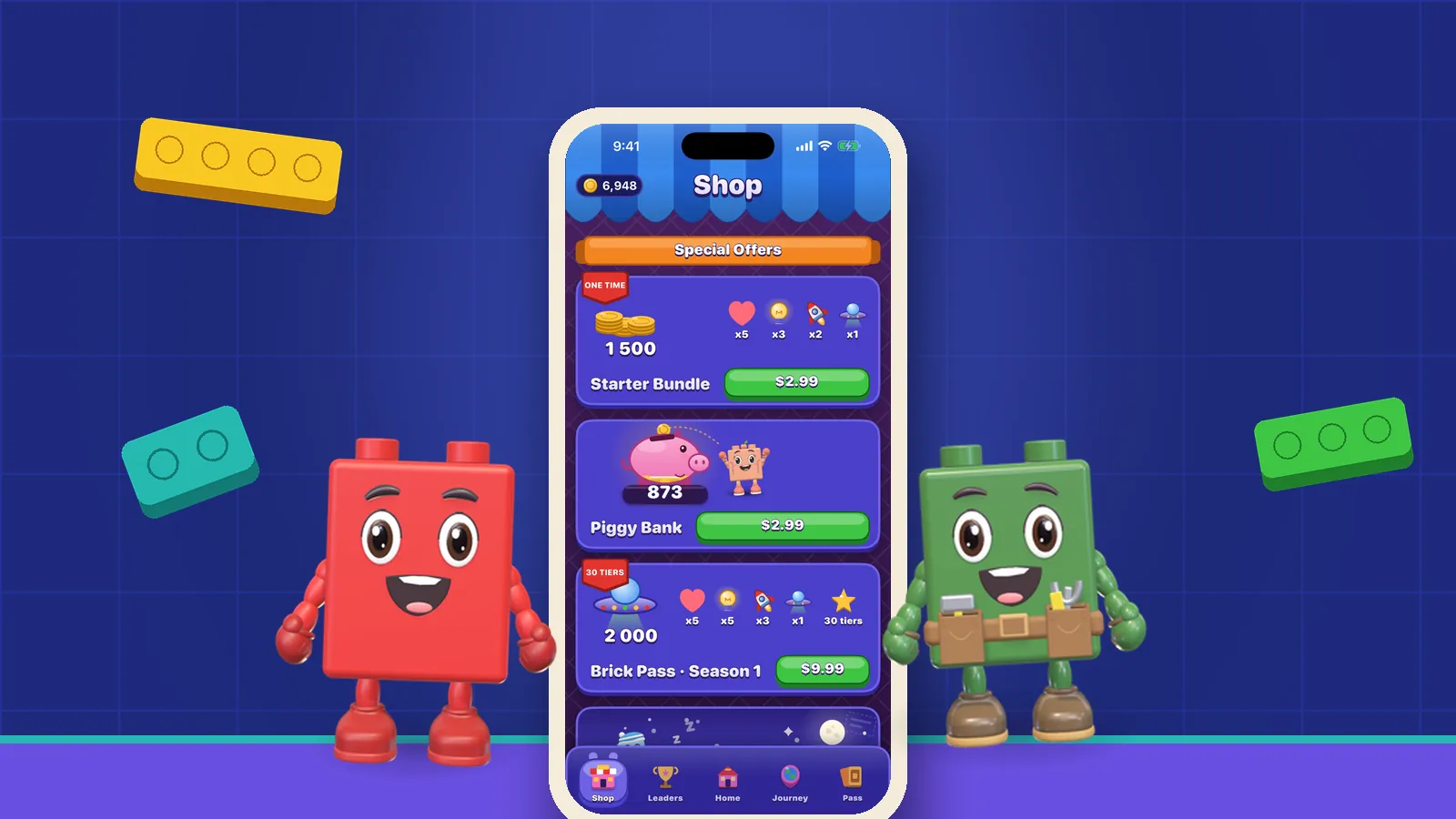
The surrounding screens matter too. Our next-update plans include VoiceOver-responsive shop buttons, a faster home screen, clearer frozen-gate information and correct mission credit when ice melts. Our guide to accessibility beyond the board explains what players reported and what those changes are intended to make easier.
Gonçalves et al. (2023) analysed blind players’ published gameplay and the trade-offs between access, agency and engagement. Their work reminds us that completing a task can leave substantial friction unaddressed.
If an action works only through an awkward route, the extra effort still matters. We want you to have useful ways to explore the board and understand where things are. Our spatial board guide explains how touch exploration and sequential navigation can help with different parts of that task.
Status on 2 October 2026: the improvements described for the next update remain in progress. The AppleVis replies announce commitments, not a release of those fixes.
Sources2Gonçalves, D., Piçarra, M., Pais, P., Guerreiro, J., & Rodrigues, A. (2023). “My Zelda Cane”: Strategies used by blind players to play visual-centric digital games. In Proceedings of the 2023 CHI Conference on Human Factors in Computing Systems (Article 289, pp. 1–15). Association for Computing Machinery.
Accessibility includes room for challenge. The community described both enjoyment and difficulty: several ideas arriving together, move allowances feeling tight, and uncertainty about how to move a brick. Those are different problems. A player who understands the controls may want a demanding board; a player still learning the controls needs an explanation before the game can fairly ask for a plan.
In a small survey and interview study, players with visual impairments valued rich experiences and complexity while describing access tensions (Andrade et al., 2019). We should leave room for those preferences.
We are redesigning the levels with a more understandable beginning in mind. The next-update plans described in our replies include gentler early boards, ideas introduced individually, short teaching cards and more moves at the start. The goal is to give a new player a fair chance to learn each idea before several ideas combine. We still want the pleasure of working out a satisfying solution.
A useful question after a difficult attempt is what made it difficult: an interesting dependency between bricks, a rule that had not been explained, or information that could not be reached? Our movement and onboarding guide helps separate those questions. They can lead to very different improvements.
Sources3Andrade, R., Rogerson, M. J., Waycott, J., Baker, S., & Vetere, F. (2019). Playing blind: Revealing the world of gamers with visual impairment. In Proceedings of the 2019 CHI Conference on Human Factors in Computing Systems (pp. 1–14). Association for Computing Machinery.
A useful accessibility report can be short. Start with the screen or board and the thing you wanted to do. Explain how you reached the control, what you expected, and what happened instead. For example: “I can reach this gate by swiping through elements, but touching its position does not announce it.” That describes an interaction difference clearly without requiring technical language.
If convenient, include the app version, device model and operating-system version, and whether the behaviour repeats after returning to the screen. These details can help distinguish different versions and conditions. They are optional context, not a reason to reject a report from someone who cannot easily find them. Saying “I do not know why this happened” is perfectly useful when the steps are clear.
Use the OutBrick contact form for a direct message and avoid health information, account credentials, payment details or purchase receipts unless a separate support process genuinely requires something specific. You can describe a VoiceOver interaction without explaining why you use VoiceOver. If a shop action is the problem, there is no need to complete a purchase merely to demonstrate it.
- Where: the screen, level or control involved.
- Goal: what you were trying to accomplish.
- Action and result: what you did and what was announced or changed.
- Context, if available: app and system versions, device, and whether it happens again.
Touch exploration and sequential navigation serve different purposes. A person may want the efficiency of moving through elements at one moment and a sense of spatial relationships at another. Offering information through one route does not automatically make the other route dispensable. That is especially relevant when empty space is part of a puzzle’s solution.
Nair et al. (2024) compared nonvisual exploration tools with nine blind and low-vision participants. Preferences split between Surveyor and an audio menu, underlining different priorities within a small, experienced sample.
We want to understand which experience you are trying to have. In the AppleVis conversation, another accessible-game developer offered to compare notes, and we welcomed that exchange. Sharing ideas can bring overlooked questions into view: is an announcement useful at this moment, is a control easy to discover, and can you recover your bearings after a move? Those are worthwhile conversations to keep having.
Feedback is welcome, not an obligation placed on players. You should be able to stop, take a break, or decide the current experience is not right for you. Reviews are also voluntary. A candid account of a barrier is useful whether or not it comes with praise, a star rating or a promise to test another build.
Sources4Nair, V., Zhu, H., Song, P., Wang, J., & Smith, B. A. (2024). Surveyor: Facilitating discovery within video games for blind and low vision players. In Proceedings of the CHI Conference on Human Factors in Computing Systems (pp. 1–15). Association for Computing Machinery.
Visit the accessibility page for support information and the release notes to follow published changes. When you try an update, tell us whether the task that mattered to you has become easier. Perhaps you can find a gate more naturally, understand a rule sooner or reach a screen that previously got in the way. Those concrete improvements are the progress we want players to feel.
Blind players should be able to discover, understand and enjoy the whole game. That is the commitment we are making as OutBrick develops. We want your feedback to be taken seriously when something gets in the way, and we want to keep learning from the moments that make you want to play another board. Thank you to everyone who has helped us see what the next steps need to be.
Filed under
Questions, answered
A few useful answers
Is OutBrick fully committed to accessibility for blind players?
Yes. Accessibility for blind players and VoiceOver users is an ongoing commitment for OutBrick, including the board, rules and surrounding screens. That commitment does not mean every reported barrier has already been removed.
Have the fixes promised on AppleVis already shipped?
The October 2 replies describe several changes as coming in the next update. They do not confirm delivery of those fixes. Check the release notes and the installed version rather than treating a promise as a completed change.
What should an accessibility report include?
Describe the screen or board, what you wanted to do, your action and the result. App version, system version and device can help if available. Avoid health information, credentials and private payment details.
Do I need to buy something or leave a review to give feedback?
No. You can use the contact form to explain a problem or suggestion without making a purchase or leaving a review. Feedback and reviews are voluntary.
APA 7
References
Where a source is a studio’s own history or a news account rather than a study, the article says so beside the claim.
- Ran, Z., Li, X., Xiao, Q., Fan, X., Li, F. M., Wang, Y., & Lu, Z. (2025). How users who are blind or low vision play mobile games: Perceptions, challenges, and strategies. In Proceedings of the 2025 CHI Conference on Human Factors in Computing Systems (pp. 1–18). Association for Computing Machinery. doi.org/10.1145/3706598.3714205 (opens in a new tab)
- Gonçalves, D., Piçarra, M., Pais, P., Guerreiro, J., & Rodrigues, A. (2023). “My Zelda Cane”: Strategies used by blind players to play visual-centric digital games. In Proceedings of the 2023 CHI Conference on Human Factors in Computing Systems (Article 289, pp. 1–15). Association for Computing Machinery. doi.org/10.1145/3544548.3580702 (opens in a new tab)
- Andrade, R., Rogerson, M. J., Waycott, J., Baker, S., & Vetere, F. (2019). Playing blind: Revealing the world of gamers with visual impairment. In Proceedings of the 2019 CHI Conference on Human Factors in Computing Systems (pp. 1–14). Association for Computing Machinery. doi.org/10.1145/3290605.3300346 (opens in a new tab)
- Nair, V., Zhu, H., Song, P., Wang, J., & Smith, B. A. (2024). Surveyor: Facilitating discovery within video games for blind and low vision players. In Proceedings of the CHI Conference on Human Factors in Computing Systems (pp. 1–15). Association for Computing Machinery. doi.org/10.1145/3613904.3642615 (opens in a new tab)