Friendly competition: how to challenge friends without pressure
Competing with friends can be fun or quietly corrosive. What motivation research says about winners, losers and teams, and how to keep a challenge friendly.
Some of the best moments in games come from a friend: the text that says “beat that”, the family argument over a board game, the colleague who got three stars on a level you are still stuck on. Some of the worst do too. Competition with people we know carries more weight than competition with strangers, because it touches how we see ourselves and how we think they see us. The good news is that researchers have spent decades working out what separates the competition that energises people from the kind that wears them down, and most of it translates directly into how to challenge a friend.
In 1954 the psychologist Leon Festinger proposed that people have a drive to evaluate their own abilities and, when there is no objective yardstick, they do it by comparing themselves with others. Crucially, he argued, we prefer to compare ourselves with people whose abilities are close to ours. A chess beginner learns little from losing to a grandmaster, and a lot from losing to a friend at the same club.
That is why a friend’s result is both more motivating and more loaded than a global leaderboard. It is a comparison you actually care about, with someone whose opinion you care about. The upside is energy and a shared thing to talk about. The downside is that losing, repeatedly, to someone close can sting in a way that losing to strangers does not. We look at the wider evidence on rankings in do leaderboards motivate or discourage?
Sources1Festinger, L. (1954). A theory of social comparison processes. Human Relations, 7(2), 117–140.
Every competition produces losers, so the most practical question is what happens to them. Maarten Vansteenkiste and Edward Deci set up a puzzle competition and looked at intrinsic motivation afterwards. Winners were more intrinsically motivated than losers, which is not surprising. The interesting part was what helped the losers.
Losers who were given a clear standard and told that they had met it, positive feedback about their own performance, were more intrinsically motivated than losers who simply lost. Losers who were instead given a reward for reaching the same standard showed less intrinsic motivation, measured by what they chose to do in free time, than those who got the feedback, even though they reported similar enjoyment. Information about competence helped; a consolation prize did less.
For a friendly challenge, the lesson is simple. Make sure the person who comes second still learns something good about how they did: they cleared it, they beat their own best, they found a route you missed.
Sources2Vansteenkiste, M., & Deci, E. L. (2003). Competitively contingent rewards and intrinsic motivation: Can losers remain motivated? Motivation and Emotion, 27(4), 273–299.
John Tauer and Judith Harackiewicz compared pure competition, pure cooperation and a mix of the two in a series of studies built around basketball shooting. Competition and cooperation on their own came out about the same for enjoyment and performance. The combination, working with a partner against another pair, consistently produced the most intrinsic motivation, and in two of three studies the best performance.
Studies of games point the same way. Wei Peng and Gary Hsieh found players in a motion-controlled game put more effort in when working towards a cooperative goal than a competitive one. Benedikt Morschheuser, Juho Hamari and Alexander Maedche ran a field experiment in a gamified crowdsourcing app and found team-against-team competition produced more enjoyment and participation than individual competition or pure cooperation. A meta-analysis of classroom gamification also found that competition paired with collaboration worked especially well.
Sources3Tauer, J. M., & Harackiewicz, J. M. (2004). The effects of cooperation and competition on intrinsic motivation and performance. Journal of Personality and Social Psychology, 86(6), 849–861.4Peng, W., & Hsieh, G. (2012). The influence of competition, cooperation, and player relationship in a motor performance centered computer game. Computers in Human Behavior, 28(6), 2100–2106.5Morschheuser, B., Hamari, J., & Maedche, A. (2019). Cooperation or competition – When do people contribute more? A field experiment on gamification of crowdsourcing. International Journal of Human-Computer Studies, 127, 7–24.6Sailer, M., & Homner, L. (2020). The gamification of learning: A meta-analysis. Educational Psychology Review, 32(1), 77–112.
Personality matters too. Hayeon Song and colleagues found that competition in an exercise game raised enjoyment and motivation for people who were competitive by nature and had the opposite effect for those who were not. A challenge that delights one friend can feel like an exam to another.
That is worth remembering before sending a challenge to someone who has never shown much interest in scores. Offer it lightly, and make it easy to decline or to play without comparing at all.
Competitiveness is also not fixed across situations. Someone who is fiercely competitive about a sport may want nothing more than a quiet puzzle at the end of the day, and someone who never races a stranger may love beating a sibling. Asking is better than guessing.
Sources7Song, H., Kim, J., Tenzek, K. E., & Lee, K. M. (2013). The effects of competition and competitiveness upon intrinsic motivation in exergames. Computers in Human Behavior, 29(4), 1702–1708.
Festinger’s theory has an awkward implication for families and mixed groups: comparison is most motivating between people of similar ability, and least motivating when the gap is large. A parent who always wins at a puzzle game is not giving a child a useful comparison; nor is a child who has learnt every level by heart giving one to a grandparent.
Games and families have worked out many answers over the years, most of which keep the competition while shrinking the gap. Handicaps, like a golf score or a head start, are one. Competing against your own previous result rather than each other is another. Choosing a fresh puzzle that neither player has seen, such as a new daily board, resets experience to zero. And switching from competition to a shared target, the two of you against the move limit, turns the stronger player into a helper rather than an opponent.
The research on losers applies with extra force here. If one person keeps coming second, make sure they keep hearing something true and specific about what they did well. That is the difference between a rivalry someone looks forward to and one they quietly stop turning up for. For what researchers found when families played together, see how games kept people connected.
Sources1Festinger, L. (1954). A theory of social comparison processes. Human Relations, 7(2), 117–140.2Vansteenkiste, M., & Deci, E. L. (2003). Competitively contingent rewards and intrinsic motivation: Can losers remain motivated? Motivation and Emotion, 27(4), 273–299.
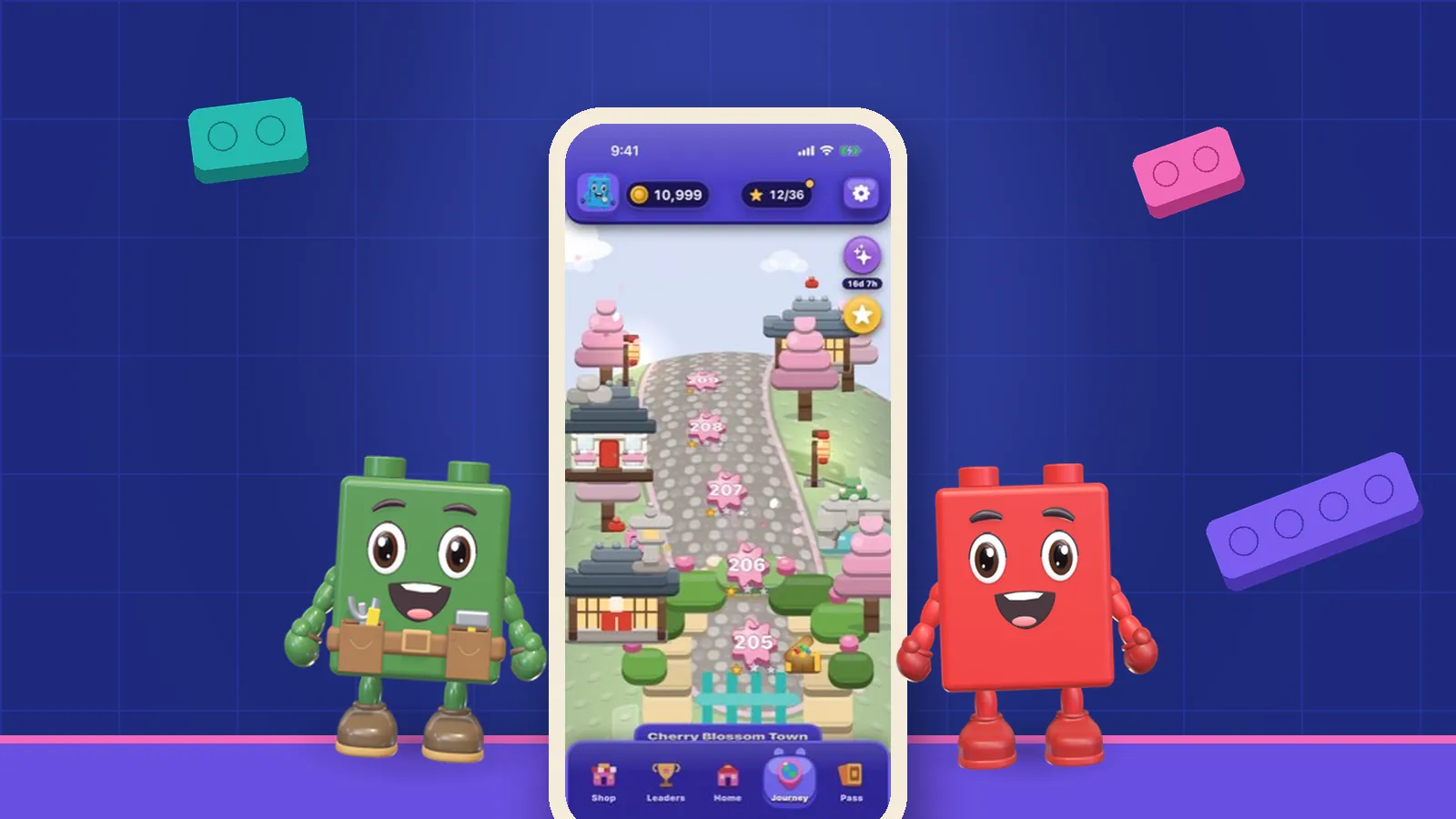
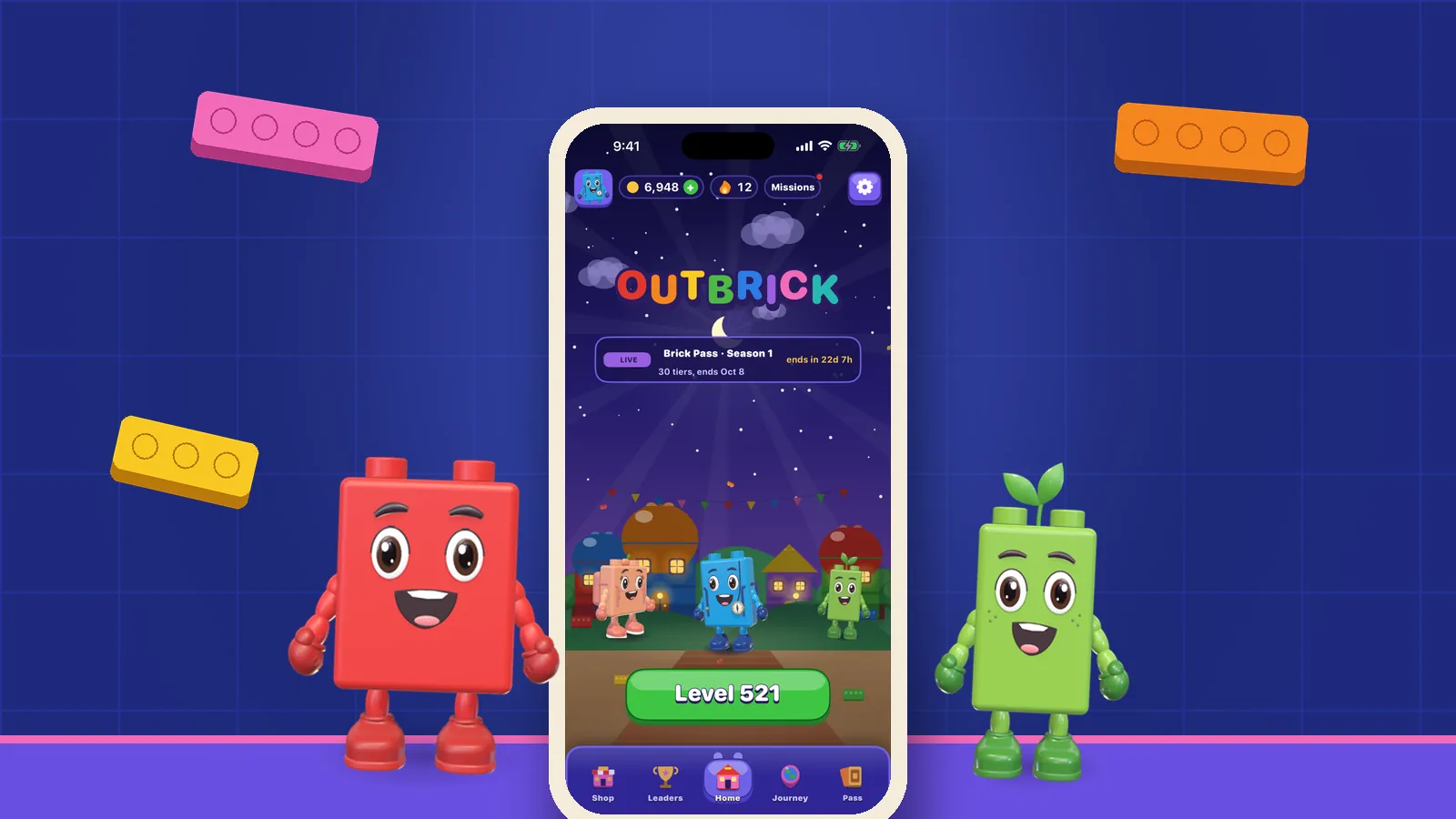
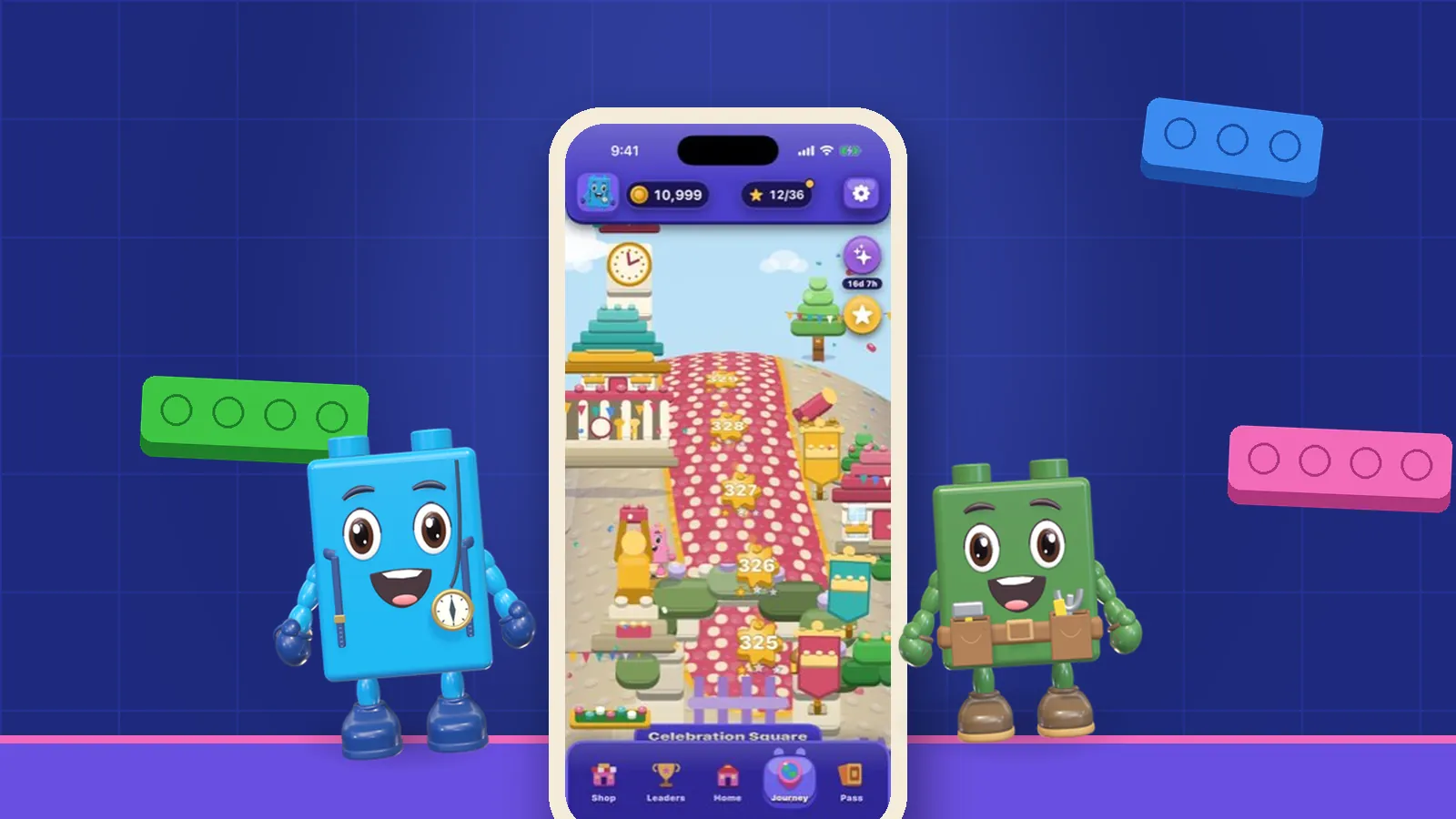
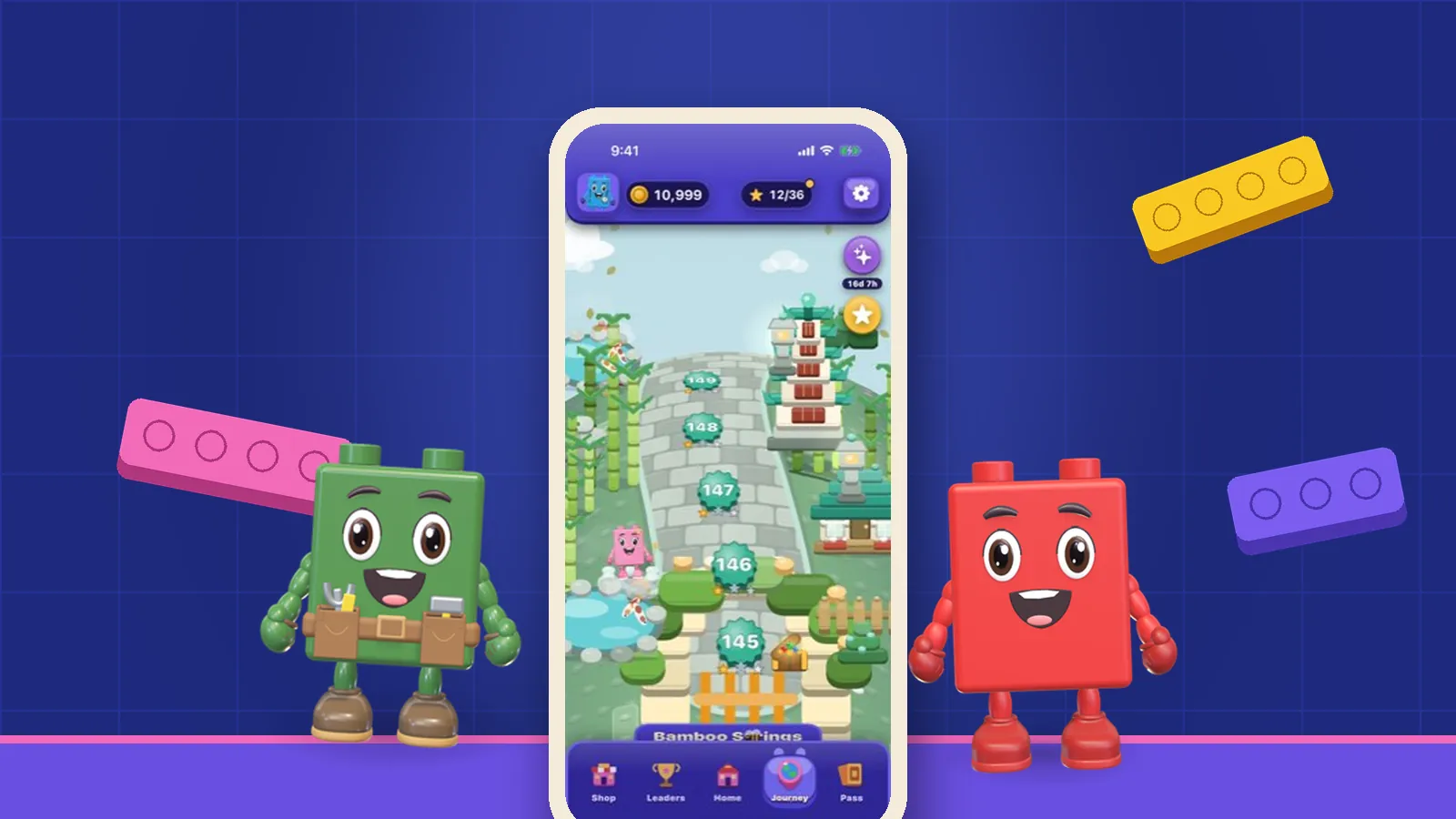
We designed OutBrick’s sharing with these findings in mind. There is no clock, so a challenge is about thinking, not reflexes. The daily board gives everyone the same board each day, and a shared result shows your stars without your moves, so your friend gets a target and still gets to solve it. We explain why that format works in why a daily puzzle becomes a shared ritual. You can also play a board in the browser together on one screen and take turns. The version 4.2 notes on what’s new describe challenge links from a friend opening straight onto the right screen in the app.
- Pick a puzzle you both have a fair chance at, like the same daily board.
- Share a result, not a solution, so the other person still gets the fun of solving.
- Celebrate the second-place finish with something specific: a personal best, a clever route.
- Try team play: two of you against the move target, or against another pair.
- Keep it optional. A challenge ignored should cost nothing, including goodwill.
Sources2Vansteenkiste, M., & Deci, E. L. (2003). Competitively contingent rewards and intrinsic motivation: Can losers remain motivated? Motivation and Emotion, 27(4), 273–299.3Tauer, J. M., & Harackiewicz, J. M. (2004). The effects of cooperation and competition on intrinsic motivation and performance. Journal of Personality and Social Psychology, 86(6), 849–861.
Filed under
Questions, answered
A few useful answers
Is competition good for motivation?
It depends on who wins and who is playing. Winners tend to stay motivated, losers stay motivated when they still get honest positive feedback about their performance, and competitive people enjoy competition more than people who are not.
Is cooperation or competition better in games?
Studies often find a mix works best. Teaming up against another team has repeatedly produced more enjoyment than pure competition or pure cooperation.
How do you challenge a friend without making it stressful?
Choose a puzzle you both have a fair chance at, share a result rather than the solution, praise what went well for whoever came second, and make it easy to decline. A daily puzzle that everyone plays on the same day works well.
Why does losing to a friend feel worse than losing to a stranger?
Social comparison theory suggests we judge ourselves mainly against people similar to us, so a friend’s result feels more relevant. It also involves someone whose opinion we care about.
APA 7
References
Where a source is a studio’s own history or a news account rather than a study, the article says so beside the claim.
- Vansteenkiste, M., & Deci, E. L. (2003). Competitively contingent rewards and intrinsic motivation: Can losers remain motivated? Motivation and Emotion, 27(4), 273–299. doi.org/10.1023/a:1026259005264 (opens in a new tab)
- Tauer, J. M., & Harackiewicz, J. M. (2004). The effects of cooperation and competition on intrinsic motivation and performance. Journal of Personality and Social Psychology, 86(6), 849–861. doi.org/10.1037/0022-3514.86.6.849 (opens in a new tab)
- Peng, W., & Hsieh, G. (2012). The influence of competition, cooperation, and player relationship in a motor performance centered computer game. Computers in Human Behavior, 28(6), 2100–2106. doi.org/10.1016/j.chb.2012.06.014 (opens in a new tab)
- Morschheuser, B., Hamari, J., & Maedche, A. (2019). Cooperation or competition – When do people contribute more? A field experiment on gamification of crowdsourcing. International Journal of Human-Computer Studies, 127, 7–24. doi.org/10.1016/j.ijhcs.2018.10.001 (opens in a new tab)
- Sailer, M., & Homner, L. (2020). The gamification of learning: A meta-analysis. Educational Psychology Review, 32(1), 77–112. doi.org/10.1007/s10648-019-09498-w (opens in a new tab)
- Song, H., Kim, J., Tenzek, K. E., & Lee, K. M. (2013). The effects of competition and competitiveness upon intrinsic motivation in exergames. Computers in Human Behavior, 29(4), 1702–1708. doi.org/10.1016/j.chb.2013.01.042 (opens in a new tab)