Video game nostalgia: why old games still feel so good
Why the games of your childhood still pull at you, what nostalgia research says it does for mood and connection, and why remakes and retro play keep selling.
Play the opening notes of a game you loved at ten and something happens that has little to do with the game. You remember the carpet you sat on, the friend who had the second controller, the long summer afternoon it filled. Nostalgia has built an entire corner of the games industry: remasters, retro consoles, pixel-art homages and the steady trickle of people reinstalling games they first played decades ago. Psychologists once treated nostalgia as a kind of homesickness, close to an illness. The modern research tells a much warmer story, and games turn out to be one of its clearest examples.
The word was coined in the seventeenth century for a medical condition afflicting homesick soldiers. That reputation lasted a long time. The turning point came with a series of studies by Tim Wildschut, Constantine Sedikides and colleagues, who asked people to describe nostalgic experiences and then looked at what those memories contained, what triggered them and what they did.
Their findings changed the field. Nostalgic memories usually starred the self alongside close others, often at meaningful events. They were mostly positive, though frequently bittersweet, and often told a story of difficulty that turned out well. They were commonly triggered by a negative mood, and loneliness in particular. And experimentally inducing nostalgia raised positive feelings, self-regard and a sense of being loved and connected.
A later study by Xinyue Zhou and colleagues showed the loneliness link directly. Loneliness reduced people’s sense of social support, but it also increased nostalgia, and nostalgia in turn increased their sense of support. The authors describe this as a restorative function. When we feel alone, we reach back to times when we were not.
Sources1Wildschut, T., Sedikides, C., Arndt, J., & Routledge, C. (2006). Nostalgia: Content, triggers, functions. Journal of Personality and Social Psychology, 91(5), 975–993.2Zhou, X., Sedikides, C., Wildschut, T., & Gao, D.-G. (2008). Counteracting loneliness: On the restorative function of nostalgia. Psychological Science, 19(10), 1023–1029.
Tim Wulf, Nicholas Bowman, John Velez and Johannes Breuer brought this research to games. In an online experiment they asked players to write about a gaming memory, varying whether it was from the past or recent, and whether it was social or solo. Past memories produced more nostalgia, as you would expect. So did memories in which the player had felt competent and connected to others at the time. Social memories raised nostalgia indirectly, by increasing that sense of relatedness.
The same study linked nostalgic gaming memories to present-day benefits: players who felt more nostalgic also felt more socially connected, more energetic and more optimistic. This fits the general nostalgia research, but it is worth noting that it is based on people recalling memories rather than on long-term tracking, so it shows how nostalgia works in the moment rather than how it changes a life.
In other words, the games we are nostalgic for are rarely just games. They are the co-op campaign with a sibling, the handheld swapped on a school trip, the high score a parent could never beat. The memory is of mastery and company, and the game is the doorway back to it.
Sources3Wulf, T., Bowman, N. D., Velez, J. A., & Breuer, J. (2020). Once upon a game: Exploring video game nostalgia and its impact on well-being. Psychology of Popular Media, 9(1), 83–95.
Nostalgia does not need an old game. Wulf and Matthew Baldwin studied Pokémon Go around its 2016 launch, in Germany before release and in the United States after. The more meaningful Pokémon had been to people, the more nostalgia they anticipated and felt, and that nostalgia predicted a more meaningful kind of entertainment experience, which in turn predicted psychological well-being. A brand-new game worked as a time machine because it drew on a world players had grown up with.
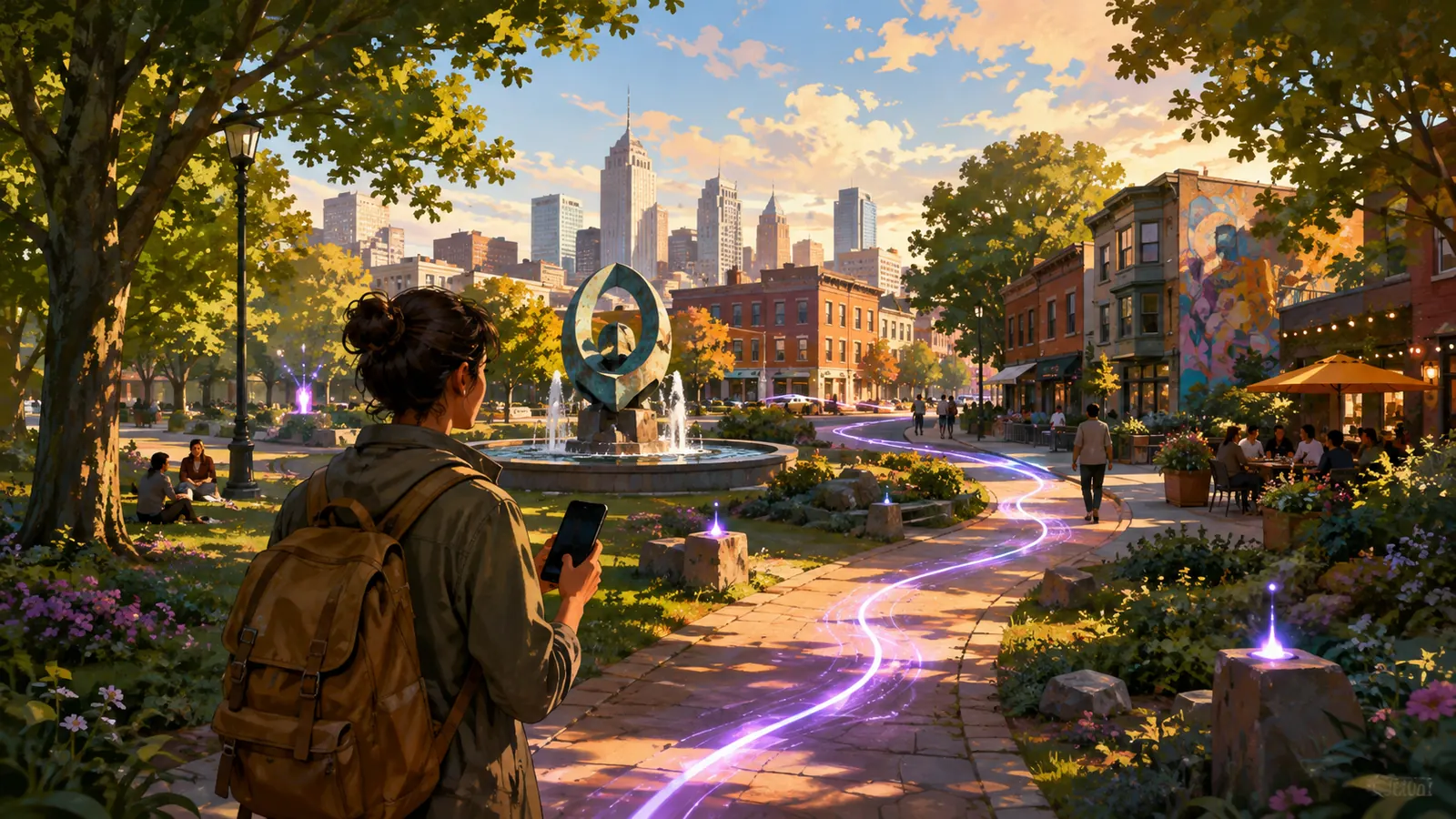
In a 2023 review, Bowman and Wulf describe video games as unusually strong nostalgia triggers, partly because they are interactive: you do not just see the old world, you act in it again, with the same muscle memory. That helps explain why remakes and retro collections succeed, and why a simple, familiar mechanic can feel like coming home. We looked at how that played out on the streets in Pokémon GO and the power of place.
Sources4Wulf, T., & Baldwin, M. (2020). Being a kid again: Playing Pokémon Go contributes to wellbeing through nostalgia. Studies in Communication and Media, 9(2), 241–263.5Bowman, N. D., & Wulf, T. (2023). Nostalgia in video games. Current Opinion in Psychology, 49, 101544.
Because nostalgia works, it is also sold. Remasters, anniversary editions, miniature versions of old consoles and a steady supply of reboots all trade on the feeling that the past was better. Much of this is harmless and some of it is wonderful: a well-made remaster can let a new generation share a game their parents loved, which is nostalgia doing its social job in both directions.
It helps to know what you are actually buying, though. The research suggests the feeling is mostly about the people and the sense of mastery around the game, not the game on its own. A remaster cannot bring back the friend on the other controller or the long empty summer. Players who replay an old favourite alone sometimes find it thinner than they remembered, and that is not the game’s fault. The memory had other people in it.
The same insight suggests a better use for nostalgia. If a game from childhood still pulls at you, it may be worth playing it with someone from that time, or introducing it to someone new. Sharing the experience is closer to what the memory was made of than any upgrade in resolution. Our piece on how games kept people connected shows how much of games’ value lies in who you play with.
Sources3Wulf, T., Bowman, N. D., Velez, J. A., & Breuer, J. (2020). Once upon a game: Exploring video game nostalgia and its impact on well-being. Psychology of Popular Media, 9(1), 83–95.5Bowman, N. D., & Wulf, T. (2023). Nostalgia in video games. Current Opinion in Psychology, 49, 101544.
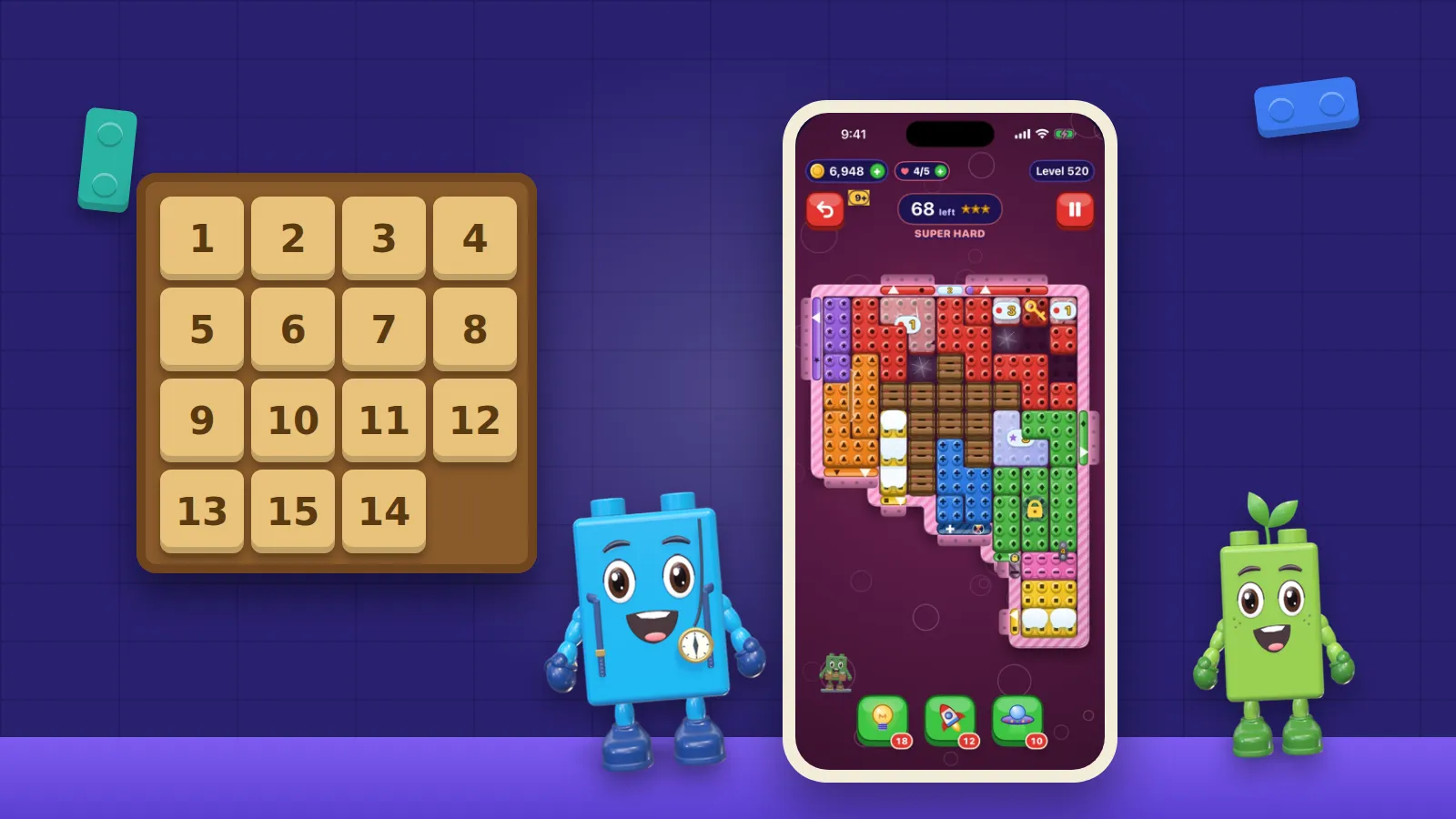
Some games date quickly: their graphics, their interfaces, their assumptions. Others are close to timeless because their core is a rule you can hold in your head. Falling blocks, sliding tiles, a crossword grid. The history of these forms is long, and we cover it in why crosswords, jigsaws and sliding puzzles endure and in the history of sliding block puzzles.
OutBrick is a new game that grew from one of those old rules: in its classic boards, still playable in the browser, a brick glides until something stops it and leaves through the gate of its own colour. On iPhone and iPad it now adds swaps and three-in-a-row matches to the slide. Part of the pleasure, for many players, is recognition, the feeling of a wooden tray puzzle or a parking-lot puzzle from childhood, now in colour. If that rings a bell, try a board in your browser and see what it brings back.
The research gives few reasons to feel guilty about revisiting old games and some reasons to do it on purpose, especially with the people who were there the first time.
- Replay with company: the social part of a memory is what makes it nostalgic, so invite the old co-op partner.
- Notice the trigger. If you reach for an old game when you feel low or lonely, that is nostalgia doing its restorative job, and a message to a friend can do the same.
- Let new games in too. Familiar mechanics in a new setting can carry the old feeling forward.
- Do not expect the game to be as good as you remember; expect the memory to be.
Sources3Wulf, T., Bowman, N. D., Velez, J. A., & Breuer, J. (2020). Once upon a game: Exploring video game nostalgia and its impact on well-being. Psychology of Popular Media, 9(1), 83–95.2Zhou, X., Sedikides, C., Wildschut, T., & Gao, D.-G. (2008). Counteracting loneliness: On the restorative function of nostalgia. Psychological Science, 19(10), 1023–1029.
Filed under
Questions, answered
A few useful answers
Why do old video games make us feel nostalgic?
Game memories often involve feeling skilled and being with other people, and those are exactly the memories that research finds most nostalgic. Because games are interactive, replaying one lets you act in the old world again, which makes them strong nostalgia triggers.
Is nostalgia good for you?
Research generally finds nostalgia is a mostly positive emotion that lifts mood, self-regard and feelings of social connection, and it often appears when people feel lonely. It is not a treatment, and most studies look at short-term effects.
Why are retro games and remakes so popular?
Part of their appeal is nostalgia: they let players revisit a world they remember with affection. Studies of Pokémon Go found that nostalgia for Pokémon motivated people to play and was linked to a more meaningful experience.
Does nostalgia only come from old games?
No. New games can trigger nostalgia when they draw on familiar worlds, characters or mechanics, as Pokémon Go did for players who grew up with Pokémon.
APA 7
References
Where a source is a studio’s own history or a news account rather than a study, the article says so beside the claim.
- Wildschut, T., Sedikides, C., Arndt, J., & Routledge, C. (2006). Nostalgia: Content, triggers, functions. Journal of Personality and Social Psychology, 91(5), 975–993. doi.org/10.1037/0022-3514.91.5.975 (opens in a new tab)
- Zhou, X., Sedikides, C., Wildschut, T., & Gao, D.-G. (2008). Counteracting loneliness: On the restorative function of nostalgia. Psychological Science, 19(10), 1023–1029. doi.org/10.1111/j.1467-9280.2008.02194.x (opens in a new tab)
- Wulf, T., Bowman, N. D., Velez, J. A., & Breuer, J. (2020). Once upon a game: Exploring video game nostalgia and its impact on well-being. Psychology of Popular Media, 9(1), 83–95. doi.org/10.1037/ppm0000208 (opens in a new tab)
- Wulf, T., & Baldwin, M. (2020). Being a kid again: Playing Pokémon Go contributes to wellbeing through nostalgia. Studies in Communication and Media, 9(2), 241–263. doi.org/10.5771/2192-4007-2020-2-241 (opens in a new tab)
- Bowman, N. D., & Wulf, T. (2023). Nostalgia in video games. Current Opinion in Psychology, 49, 101544. doi.org/10.1016/j.copsyc.2022.101544 (opens in a new tab)