OutBrick on iPhone Duo: what would you want to play?
Would you want OutBrick adapted for iPhone Duo? Explore possible inner and outer screen experiences, then tell us what would make play worthwhile.
Apple’s announcement of iPhone Duo raises an interesting question for a small puzzle game: what should change when a phone opens? A larger board sounds obvious, until you imagine holding it on a train, showing a difficult position to a friend or folding it while answering the door. We would like to hear whether you want an OutBrick adaptation, and what you would want from each screen. This is an invitation to discuss possibilities. It does not announce device support, a development programme or a release date. Your answer can be enthusiastic, cautious or simply that the current experience is enough.
Apple announced iPhone Duo on 9 September 2026, with a 5.4-inch outer display and a 7.6-inch inner display. Its announced pre-orders begin on 16 October, with initial availability on 23 October. Those dates are future dates as we publish this on 30 September. The device announcement supplies context for this conversation; it does not establish that an individual app has been adapted or tested.
For the confirmed hardware and launch information, read Apple’s iPhone Duo announcement. We are keeping the question narrower than the specifications: would opening a phone improve the way you read, manipulate or return to a sliding-brick puzzle? More screen space is useful only when it serves a real activity.
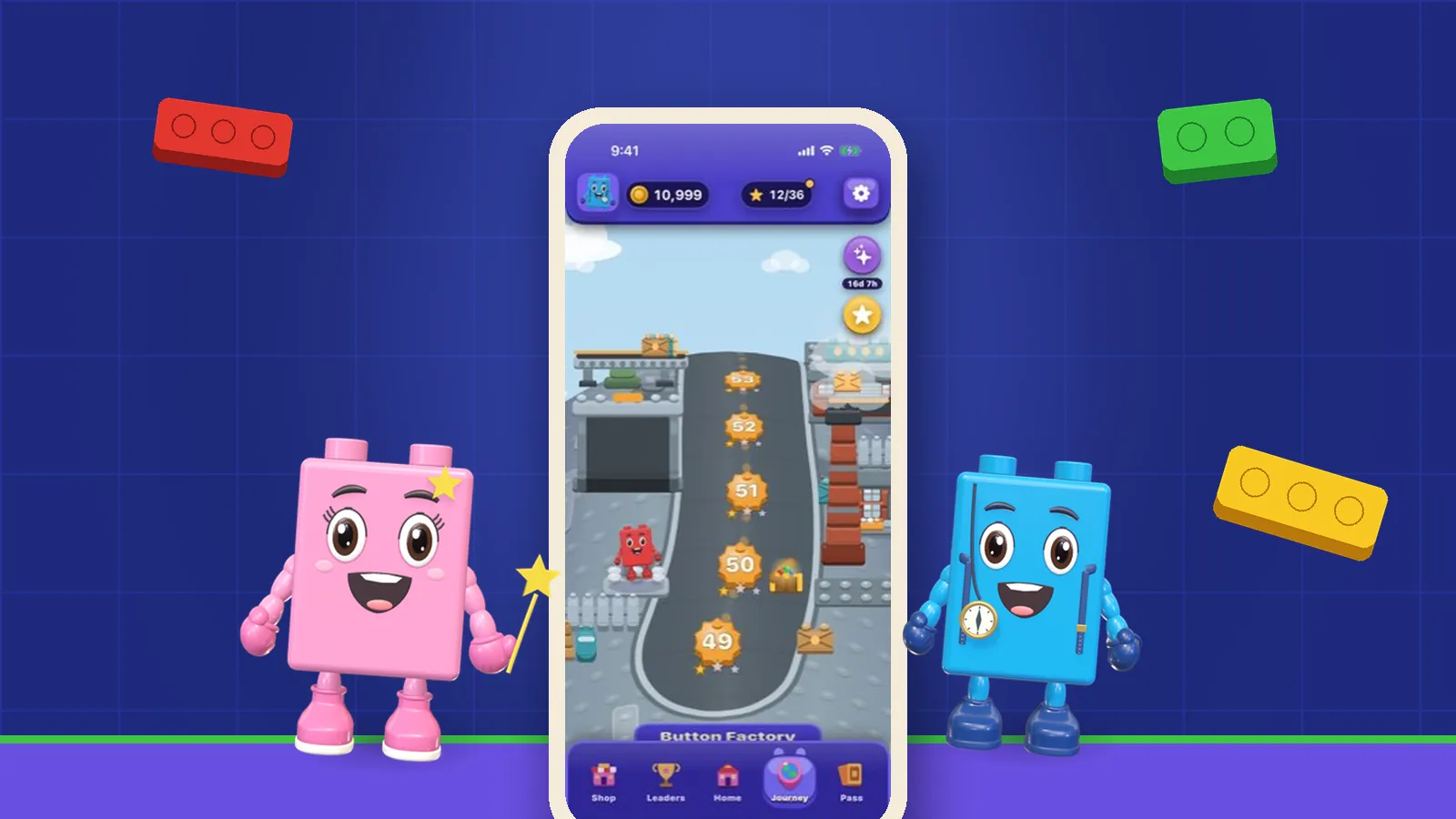
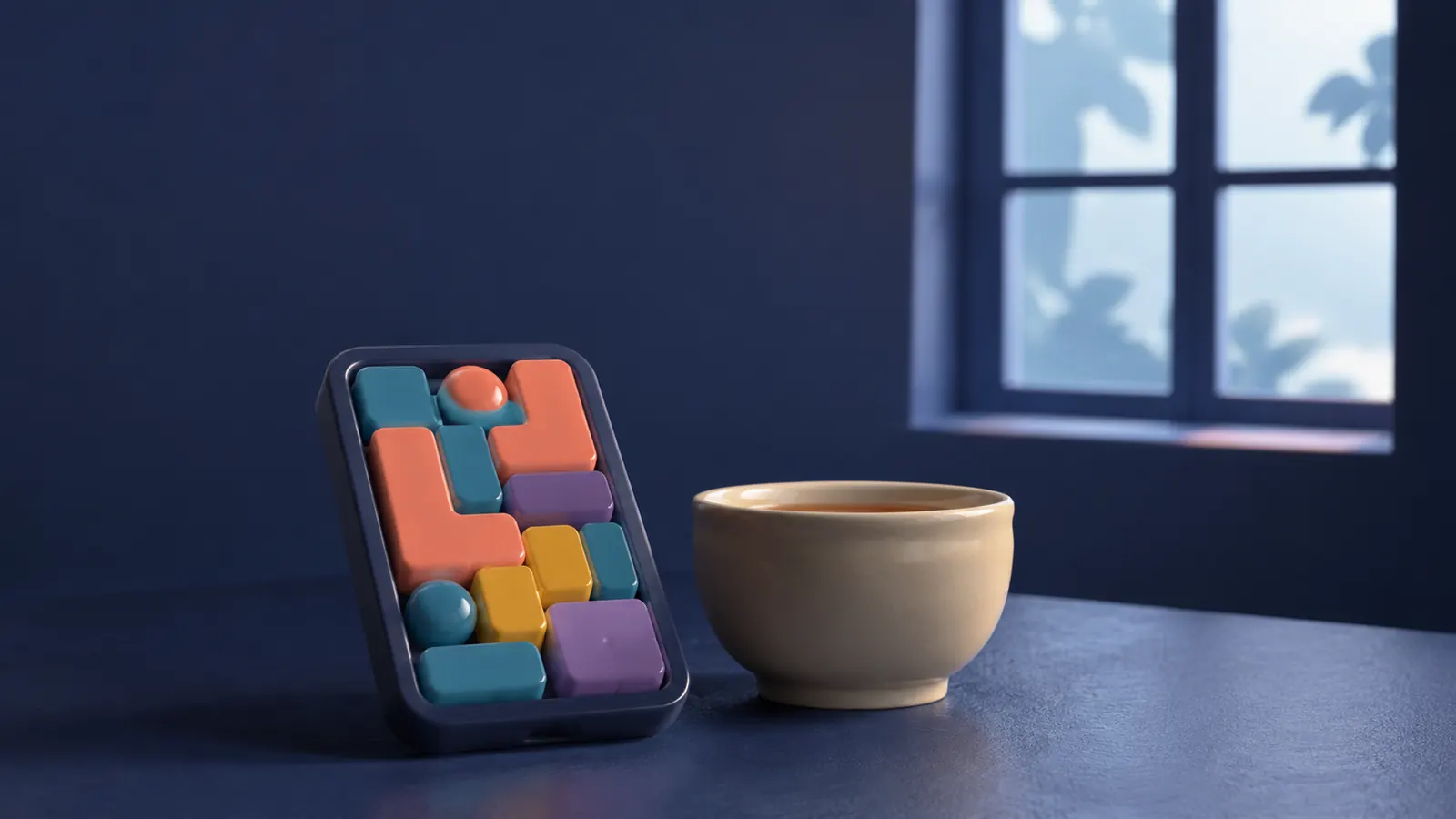
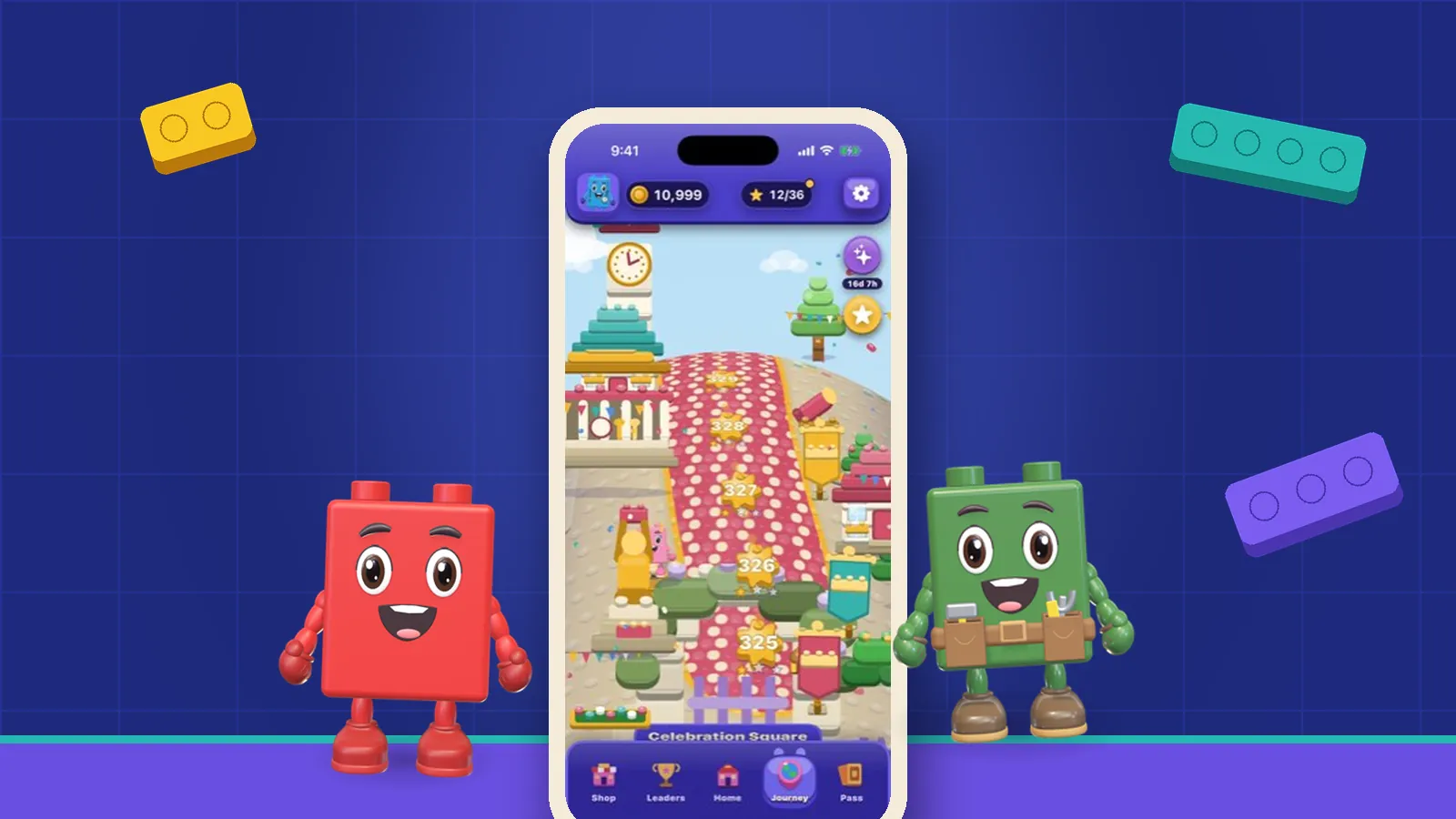
OutBrick’s puzzle now asks you to slide each brick home through its matching gate, or swap neighbours so three or more of a colour line up and clear. The difficulty comes from routes, swaps and what each move sets up. A different screen could change how clearly you see those relationships without changing the puzzle itself. Equally, a comfortable existing layout may be more valuable to you than extra panels.
Our article on playing across devices considers why the same game can occupy different places in a day. Here we are asking about those places before treating a new device as a reason to add things. No idea on this page should be read as a supported OutBrick feature or a commitment to build one.
Imagine a brief wait when you want to inspect one familiar board without opening the phone. A possible outer-screen experience might put the board first, with large, predictable controls and very little surrounding information. That is a proposal to discuss, not a preview. Would you use it, or would you normally open the device before playing?
The useful distinction is between a smaller board and a smaller task. A miniature version of every screen could be awkward. A deliberately limited view might be easier to understand, but could hide something you rely on. Tell us whether you would prioritise the full board, easier reach, readable symbols or a quick route back to your current position.
One-handed use also varies. A layout that suits someone holding a bag may not suit someone using a stand or assistive input. If reaching the far gate is the problem, say that. If distinguishing a brick’s symbol is the problem, say that instead. Those accounts lead to different design questions even though both could be described as wanting a bigger button.
Ryan et al. (2006) linked perceived competence and autonomy with enjoyment across four game studies. They did not study foldable phones or OutBrick. We use that work as a reason to ask whether a proposed layout would help you understand your actions and choose how to play, rather than assuming that additional display area automatically creates enjoyment.
Sources3Ryan, R. M., Rigby, C. S., & Przybylski, A. (2006). The motivational pull of video games: A self-determination theory approach. Motivation and Emotion, 30(4), 344–360.
Opening the device could, hypothetically, give the same board more breathing room. We could discuss a larger board, clearer spacing around controls or a restrained planning area beside it. A planning area might explain a rule or preserve a player’s own observation. It would not have to reveal a move. None of these possibilities describes functionality we are announcing.
Consider a concrete position: a blue brick must become a stopping point before a red brick can reach its gate. Would a larger view help you spot that dependency? Would information beside the board help, or compete with the route you are trying to read? Tell us which you would choose if space allowed only one improvement.
Pereira et al. (2019) propose a framework for participation-centred game design. It is design research, not a trial showing that our suggested layout works. Its relevance is the invitation to think beyond the finished interface: what role would you want to have while playing, observing or discussing a board? Your answer need not be a specification.
The inner screen might also be somewhere to share the view with another person. That raises an everyday question: would you want the board to stay visually central, with controls close to the person moving bricks? Or do you mostly play alone and want everything within easy reach? Our approach to designing for real-life play starts with those circumstances.
Sources2Pereira, L. L., Craveirinha, R., & Roque, L. (2019). A canvas for participation-centered game design. In Proceedings of the Annual Symposium on Computer-Human Interaction in Play (pp. 521–532). Association for Computing Machinery.
Picture folding the phone halfway through thinking about a route. A possible adaptation could aim to preserve your place, avoid treating the fold as a puzzle move and make the return understandable. Perhaps you would prefer a deliberate pause; perhaps you would prefer an immediate continuation. These are questions about desired behaviour, not promises about automatic saving or a tested transition.
What would help you recognise the position when you reopened it? Some players might want an unchanged selection. Others might prefer no selection, so their first touch cannot accidentally act. A short visual reminder could help one person and be distracting for another. Describing the moment of interruption is more useful than voting for “seamless” in the abstract.
Accessibility belongs in that account from the beginning. If you use VoiceOver, larger text, reduced motion or colour glyphs, tell us what information you need to remain understandable during a layout change. Our accessibility page describes existing features; it does not establish behaviour on iPhone Duo. A general accessibility declaration cannot substitute for testing a new device experience.
Khaled and Vasalou (2014) examine participation in serious-game design. OutBrick is not a serious-game intervention, so we do not transfer their outcomes to it. Their discussion provides a useful caution for this invitation: asking people to contribute is only worthwhile when their perspective has room to challenge the designer’s initial idea. “Please keep it simple” is meaningful feedback.
Sources1Khaled, R., & Vasalou, A. (2014). Bridging serious games and participatory design. International Journal of Child-Computer Interaction, 2(2), 93–100.
Sanders and Stappers (2008) describe co-creation as a changing relationship between designers and the people who use what they make. This article is a modest first conversation, not a formal co-design study. We are asking for your experience, rather than claiming that a contact message makes you responsible for a future product decision.
First, would an iPhone Duo adaptation interest you, and why? Second, what would you want to do on the outer screen that feels inconvenient on your current phone? Third, what should the inner screen prioritise: a larger board, clearer controls, optional planning information or something else? Fourth, what should happen when you fold or unfold during a board?
Send your thoughts through our existing contact page. A brief description is enough: “I play seated with the phone on a stand, and I would value larger symbols more than extra information.” You do not need to provide personal health information, buy the device or draw a mock-up. Please identify suggestions as ideas, and describe any actual bug separately with the app version and device.
You can also explain what you would give up to get your first choice. If a roomy board means fewer surrounding controls, is that acceptable? If changing layout risks losing your mental map, would you prefer a stable view? Trade-offs help us understand a preference. A long feature list without a situation is harder to interpret.
For released changes, use What’s new. If you want to understand the existing game before offering an idea, try a browser board or download OutBrick on the Apple App Store. The browser introduces the classic movement rule; it does not demonstrate native iPhone Duo behaviour. The question remains yours to answer: what would make opening the screen worth doing?
Sources4Sanders, E. B.-N., & Stappers, P. J. (2008). Co-creation and the new landscapes of design. CoDesign, 4(1), 5–18.
Apple. (2026, September 9). Apple unveils iPhone Duo. Apple Newsroom. Official announcement and availability details.
The peer-reviewed references below inform the discussion of participation and player preferences. They did not evaluate iPhone Duo or OutBrick.
Filed under
Questions, answered
A few useful answers
Is OutBrick announcing support for iPhone Duo?
No. This article asks players whether an adaptation would interest them and what they would want from each screen. It does not announce verified compatibility, features or a release date.
Is iPhone Duo available now?
On this article’s publication date, 30 September 2026, Apple had announced pre-orders for 16 October and initial availability for 23 October. Check Apple’s current information for later changes and regional availability.
Where can I send my screen ideas?
Use the existing OutBrick contact page. Describe when you play, the improvement you want and what should remain familiar; a short message is enough.
Will every suggestion become a feature?
No feature commitment is made here. Suggestions help us understand players’ priorities and the trade-offs they would accept.
APA 7
References
Where a source is a studio’s own history or a news account rather than a study, the article says so beside the claim.
- Khaled, R., & Vasalou, A. (2014). Bridging serious games and participatory design. International Journal of Child-Computer Interaction, 2(2), 93–100. doi.org/10.1016/j.ijcci.2014.03.001 (opens in a new tab)
- Pereira, L. L., Craveirinha, R., & Roque, L. (2019). A canvas for participation-centered game design. In Proceedings of the Annual Symposium on Computer-Human Interaction in Play (pp. 521–532). Association for Computing Machinery. doi.org/10.1145/3311350.3347154 (opens in a new tab)
- Ryan, R. M., Rigby, C. S., & Przybylski, A. (2006). The motivational pull of video games: A self-determination theory approach. Motivation and Emotion, 30(4), 344–360. doi.org/10.1007/s11031-006-9051-8 (opens in a new tab)
- Sanders, E. B.-N., & Stappers, P. J. (2008). Co-creation and the new landscapes of design. CoDesign, 4(1), 5–18. doi.org/10.1080/15710880701875068 (opens in a new tab)