


A shelf of the journal
Game craft
Rules, friction and difficulty, from the bench.
Stories on this shelf
Sokoban vs sliding-block puzzles: push, glide, plan
Learn how Sokoban pushing differs from glide-to-stop block puzzles, with practical examples of corners, access routes and temporary stopping points.
Block Blast!+ vs OutBrick: two kinds of block puzzle
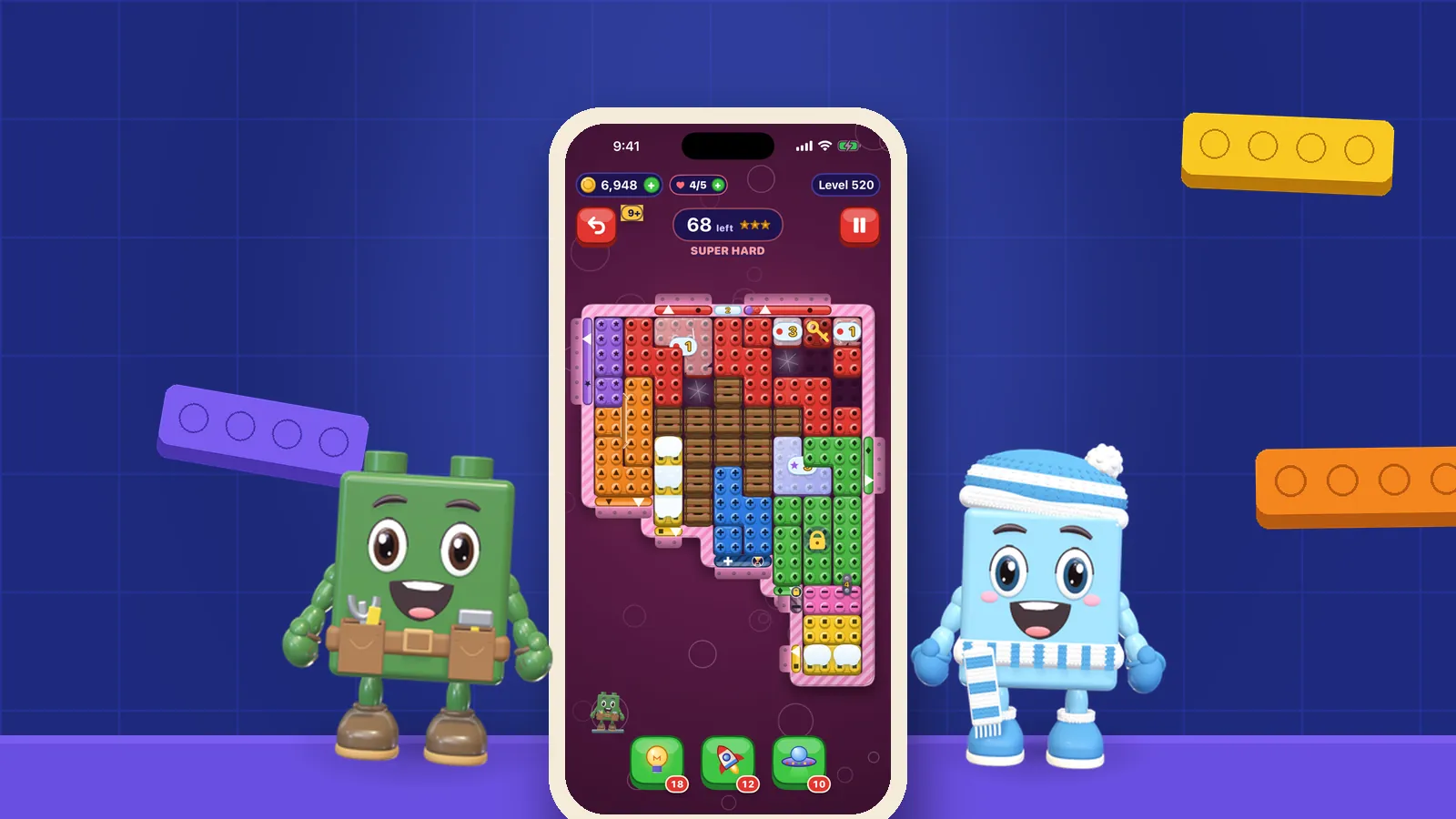
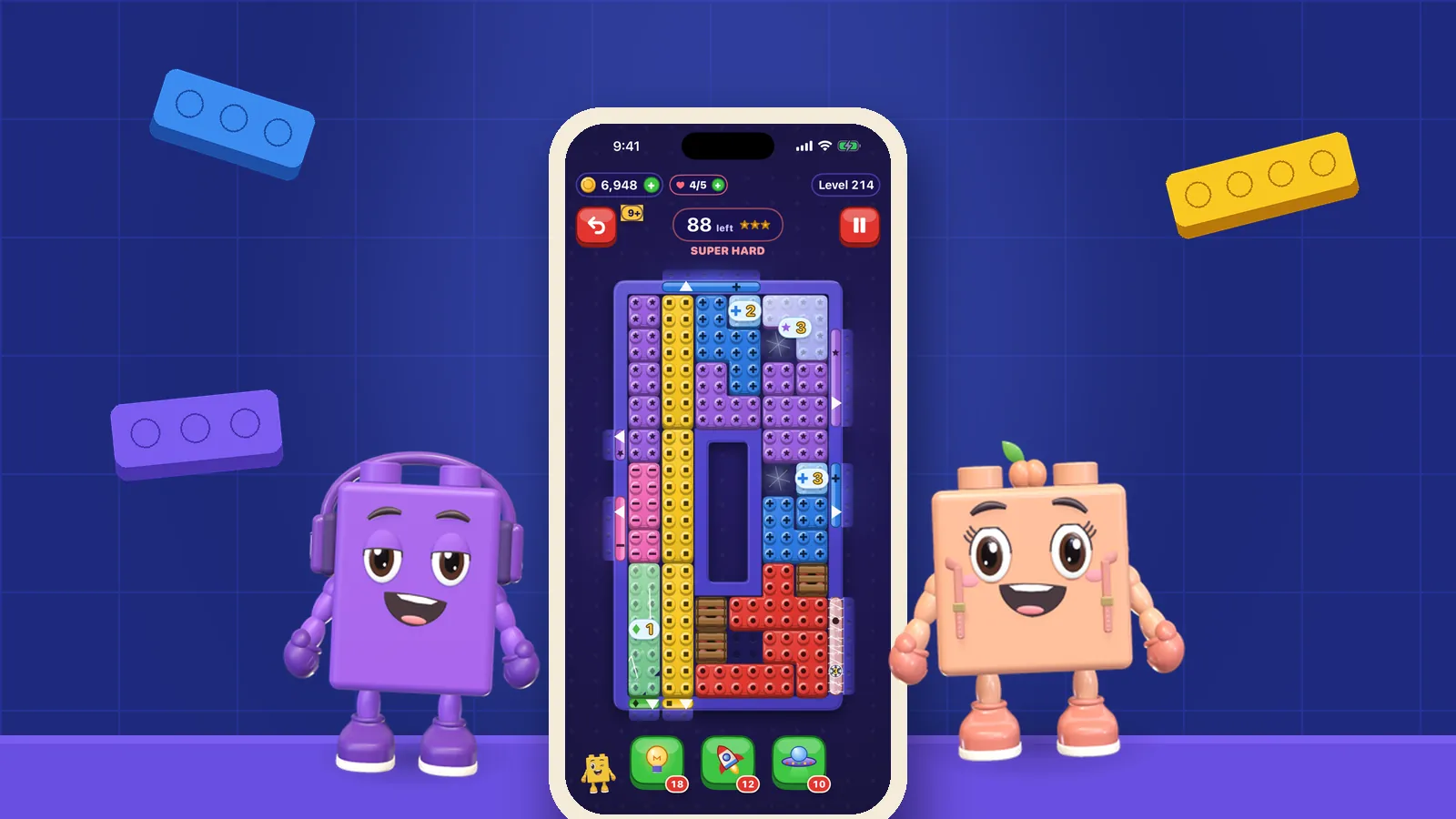
Compare Block Blast!+ and OutBrick by their actual mechanics: placing shapes to clear lines, sliding bricks to exits, and choosing how to pay.
OutBrick on iPhone Duo: what would you want to play?
Would you want OutBrick adapted for iPhone Duo? Explore possible inner and outer screen experiences, then tell us what would make play worthwhile.
How we verified 2,000 sliding-block puzzle boards before release
A pathfinding result is only the beginning. Here is how we replayed a clear for every OutBrick board against the same rules the game uses.
History of sliding block puzzles: 15 Puzzle to Rush Hour
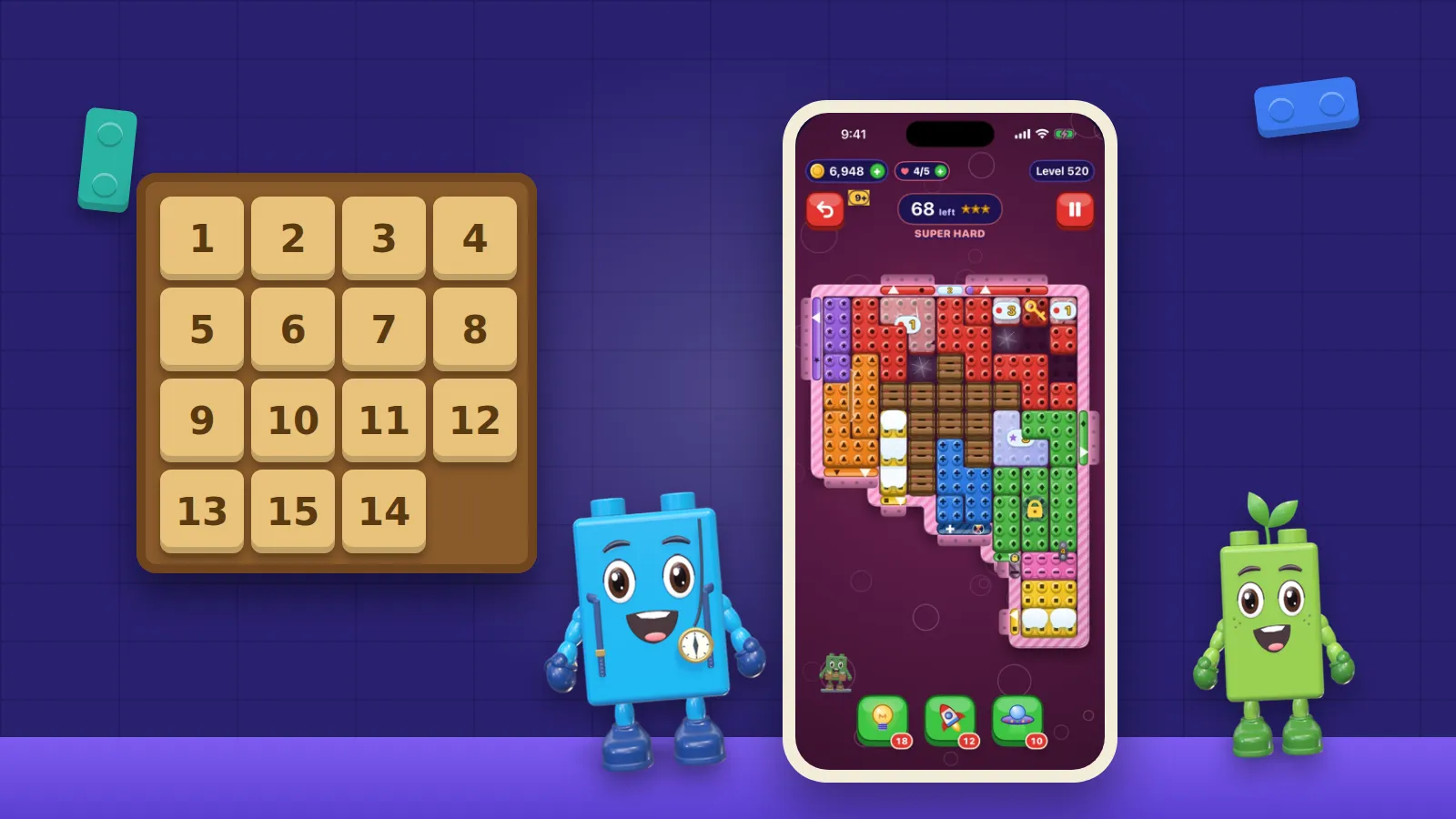
A post office in New York, an 1880 craze, a famous puzzler’s false claim and a parking-lot puzzle from Tokyo: how sliding blocks became a classic.
Colour in game design: contrast, meaning and emotion
What colour psychology can and cannot tell game designers, why contrast matters more than hue, and how to make coloured pieces readable for everyone.
Why we get attached to game characters, even silent ones
Players admire, worry about and miss game characters. Research on attachment, parasocial bonds and cuteness explains why, and what designers owe players.
Loot boxes, variable rewards and ethical monetisation
Loot box spending is consistently linked to problem gambling. What the studies show, what makes monetisation predatory, and a fair test for any game.
The sound of success: how game audio shapes player experience
Sound changes how immersed, tense and competent players feel, and music can even bend their sense of time. What the research shows, and how to design for mute.
Game tutorials that teach without telling: what works
A study of 45,000 players found tutorials only paid off in complex games. What research says about teaching through play, hints and the first hour.
Dynamic difficulty adjustment: should games adapt to you?
Many games quietly tune themselves to your skill. What studies say about adaptive difficulty, why it can leave players overconfident, and the case for asking.
How computers generate puzzle levels, and why checking matters
Procedural generation can make endless puzzles, but a board that is merely solvable is not a good one. How generators work, and where they fall short.
Game feel and juice: why a satisfying slide matters
Juice is the extra feedback that makes a tap feel good. Studies with thousands of players show it helps, up to a point, and then starts to hurt.
What makes a puzzle feel fair? Difficulty, failure and trust
Hard is not the same as unfair. What research on challenge and failure says about the puzzles players trust, and the ones they quit in frustration.
Games like Tetris: what makes a block puzzle last
Simple rules, a board you can read, fair difficulty and a short loop: what makes block puzzles endure, and how to judge any game like Tetris.
Apple Vision Pro puzzle games: designing for space
Comfort, gaze and pinch, windows versus immersion, seated play and legible pieces: what makes a puzzle game work well on Apple Vision Pro.
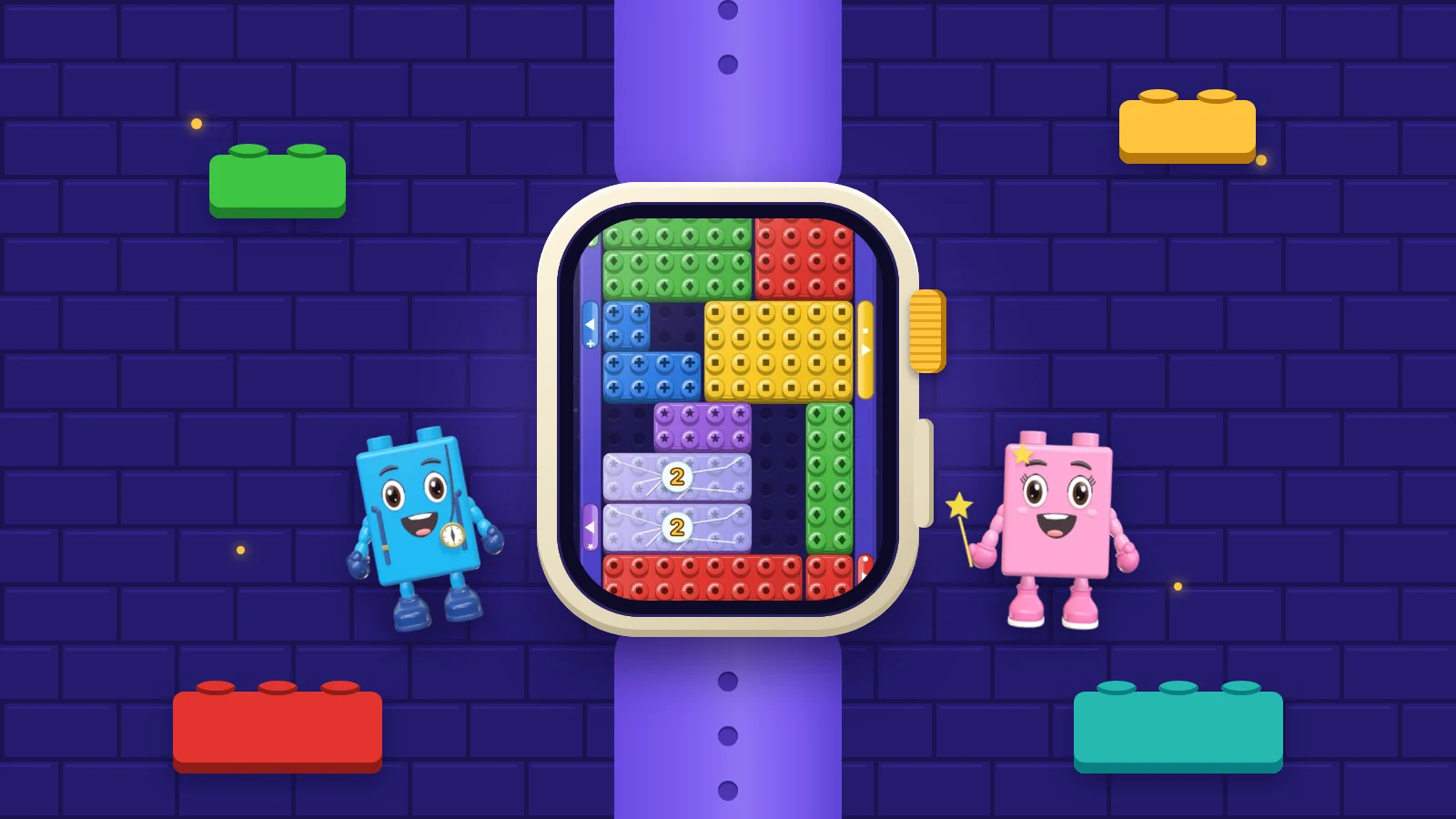
Apple Watch puzzle games: what works on a tiny screen
Glanceable boards, fingertip-sized pieces, the Digital Crown, haptics and standalone play: what makes a puzzle game work on Apple Watch.
Relaxing puzzle games: what actually makes one calm
Soft colours are not enough. Move limits versus clocks, fair lives, and games that never interrupt you: how to tell if a puzzle game will stay calm.
How to solve sliding block puzzles: a practical guide
Work backwards from the exit, find the move that makes space, count before you commit. A designer’s method for sliding block puzzles that look impossible.
Papers, Please and meaningful friction
How a game can turn a repetitive action into a moral question—and why the best friction asks the player to decide, not simply to wait.
How to build a kinder difficulty curve
Challenge should stretch the player’s attention without making the relationship with the game feel brittle.
Tetris proves that simple rules can keep opening up
A look at constraint, rhythm, and the endless variety inside a very small ruleset.


Topics on this shelf
Follow the journal
New stories, in your feed reader.
Rather not give an email? Copy the feed address into any RSS reader (Reeder, NetNewsWire, Feedly, Inoreader) and each new story arrives as it is published.
www.outbrick.site/feed.xml
Or follow one shelf
- Player habitsCopy the Player habits feed address
- Success storiesCopy the Success stories feed address
- Game craftCopy the Game craft feed address
- Inclusive designCopy the Inclusive design feed address
- Learning through playCopy the Learning through play feed address
- Social playCopy the Social play feed address
- OutBrick practiceCopy the OutBrick practice feed address