


A shelf of the journal
OutBrick practice
Notes on how the game itself is made.
Stories on this shelf
OutBrick without a timer: room for real challenge
AppleVis players asked for time to explore and a gentler start. How OutBrick’s move limits, untimed play and planned teaching changes fit together.
Why a puzzle walkthrough does not match your board
Before copying another move, check the game, version, mode and starting layout. Learn why a level number alone cannot identify a puzzle solution.
Play block puzzles online without downloading an app
Try OutBrick’s browser boards without installing an app. Learn the controls, daily-board rotation, scoring and differences from the full game.
Water sort vs block sort: which puzzle style fits you?
Compare water-sort capacity puzzles with sliding-block routes, using concrete examples, practical selection tips and clear limits to the research.
OutBrick vs Block Out Puzzle: which game fits you?
Compare OutBrick and Grand Games’ Block Out using official listings: mechanics, offline play, accessibility and costs, with an honest fit guide.
Playing across devices: what research says about continuity
Phone on the train, tablet on the sofa, TV at night: what studies of multi-device life say about continuity, and how OutBrick syncs across five platforms.
Achievements and collections: why completing a set feels good
Why the last badge, sticker or level pulls so hard, what the Zeigarnik effect really shows, and how to enjoy collecting in games without being driven by it.
Mobile games in the in-between moments of the day
Queues, platforms and waiting rooms: what research on phone use in the gaps of the day says about the games that fit them, and how to keep those minutes yours.
Deliberate practice for casual players: what actually helps
Practice matters, but less than the 10,000-hour story claims. What studies of deliberate practice and online game players suggest for getting better at puzzles.
How to get three stars in puzzle games: think in fewer moves
Three stars means solving well, not just solving. Satisficing, planning depth and the habits that cut wasted moves, with OutBrick’s star rules explained.
Before the first move: how to read a puzzle like a solver
Why the way you picture a puzzle shapes how hard it feels, what experts look at first, and a short routine for reading any board before you touch it.
Colour sort puzzle tips: clear boards in fewer moves
How to read a colour sort board, choose which colour to clear first and make every move count, with the star rules explained. From OutBrick’s designer.
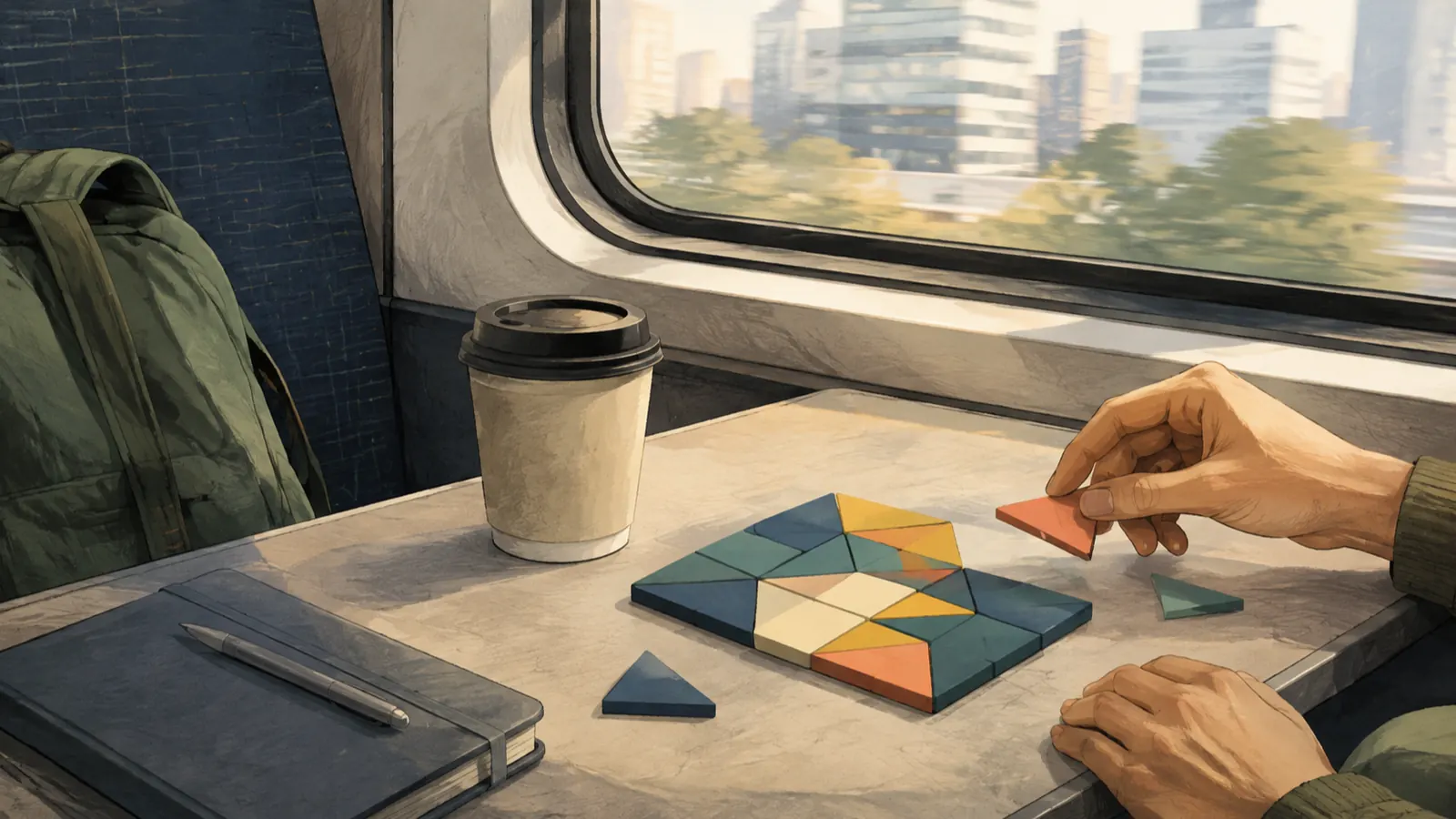
The commuter puzzle: making room for a two-minute game
A field guide to designing for interrupted attention, small screens, and the lovely gap between “I have no time” and “I have two minutes.”
Topics on this shelf
Follow the journal
New stories, in your feed reader.
Rather not give an email? Copy the feed address into any RSS reader (Reeder, NetNewsWire, Feedly, Inoreader) and each new story arrives as it is published.
www.outbrick.site/feed.xml
Or follow one shelf
- Player habitsCopy the Player habits feed address
- Success storiesCopy the Success stories feed address
- Game craftCopy the Game craft feed address
- Inclusive designCopy the Inclusive design feed address
- Learning through playCopy the Learning through play feed address
- Social playCopy the Social play feed address
- OutBrick practiceCopy the OutBrick practice feed address