OutBrick vs Block Out Puzzle: which game fits you?
Compare OutBrick and Grand Games’ Block Out using official listings: mechanics, offline play, accessibility and costs, with an honest fit guide.
A red block sits beside a red door, but another block is in the way. The puzzle is not recognising the match; it is deciding what must move first. That shared idea makes OutBrick and Grand Games’ Block Out! - Color Sort Puzzle natural games to compare. The useful question is which version of that problem you want to spend time with. This guide compares their published descriptions, checked on 30 September 2026. We make OutBrick, and have a reason to recommend it. We also have a responsibility to distinguish documented features from preferences and unknowns. This is a source-based buying guide, not a report of hands-on testing.
Research gives a reason to take preference seriously. Across four studies, Ryan et al. (2006) associated perceived competence and autonomy in games with enjoyment and preferences. That does not tell us which of these apps is more enjoyable. It does suggest a useful test: can you understand what the game asks, and can you choose how to approach it? The same board can feel inviting when you have time to think and tiresome when you are trying to answer a message.
Challenge itself is not a defect. Abuhamdeh and Csikszentmihalyi (2012), studying Internet chess and everyday activities, found that the relationship between challenge and enjoyment depended on motivation and the type of activity. Those findings do not show that clocks are harmful or that slower games are better. They support a conditional recommendation: favour planning if planning is what you enjoy, and favour action if acting quickly is part of the pleasure.
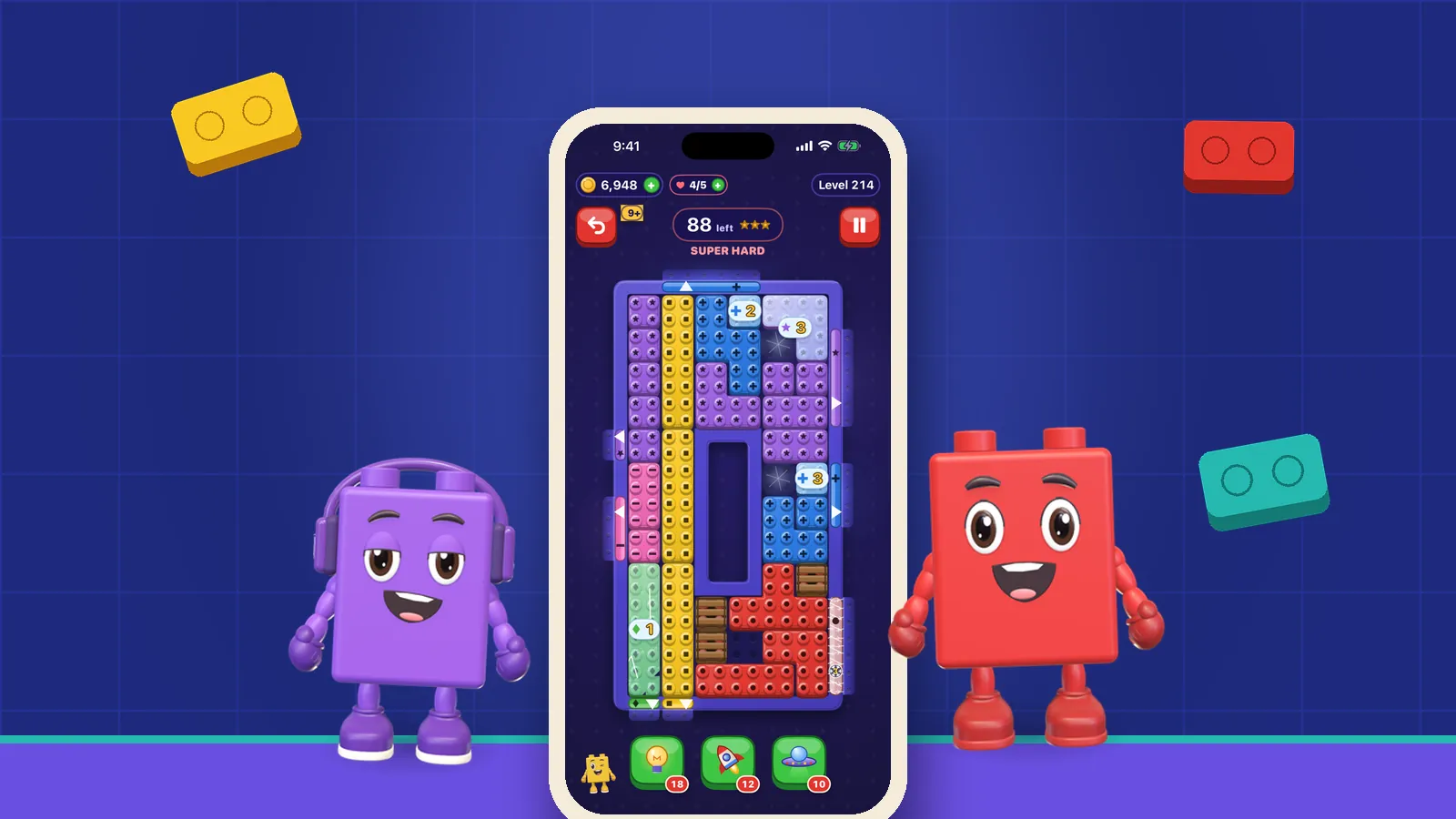
OutBrick’s current App Store release notes say version 4.2 withdrew Rush throughout the game. Its boards retain move limits, so untimed play still asks you to plan carefully. If avoiding a countdown is your priority, read our no-timer block-sort comparison (Hamdi, n.d.). If dynamic obstacles are your priority, Block Out’s explicitly advertised elevators and generators make it a reasonable candidate to try.
A good first session answers a modest question: would I like another board of this kind? Do not force a verdict after a single frustrating attempt. Learning a movement rule and preferring that rule are different decisions. Equally, there is no obligation to persevere just because a game has an attractive map, a long level list or a large audience.
Sources4Ryan, R. M., Rigby, C. S., & Przybylski, A. (2006). The motivational pull of video games: A self-determination theory approach. Motivation and Emotion, 30(4), 344–360.1Abuhamdeh, S., & Csikszentmihalyi, M. (2012). The importance of challenge for the enjoyment of intrinsically motivated, goal-directed activities. Personality and Social Psychology Bulletin, 38(3), 317–330.
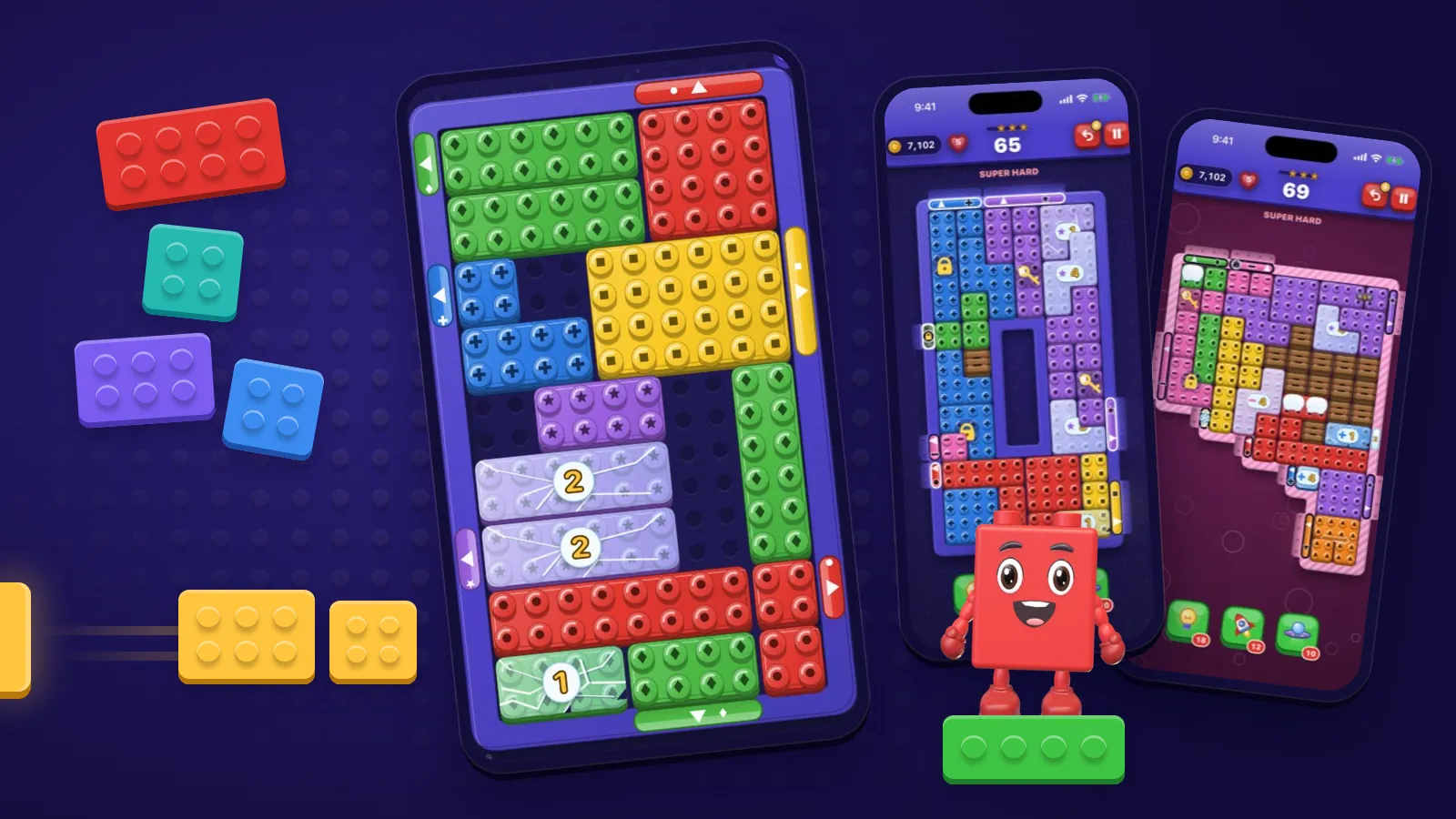
Imagine moving a blue brick to create a stopping point for a red one. If the game clearly shows where the blue brick stops, the red brick’s next route becomes legible. If the movement surprises you, your next job is learning that rule. This is a useful observation to make in either app. We have not measured their responsiveness, compared input latency or counted accidental moves.
Klimmt et al. (2007) studied enjoyment and perceived influence in an online experiment with 500 participants. Perceived influence mattered, while the relationship with control was more complex than a simple “more is better” rule. For a player choosing a puzzle, the practical implication is to watch whether your actions have understandable consequences. It is an editorial application of their finding, not evidence that one of these games has better controls.
Iacovides et al. (2015) used multiple case studies to explore how action, understanding and involvement interact during play. Breakthroughs in understanding and feeling responsible for progress were important in those accounts. That helps explain why an earned clear can feel different from merely getting past a level with an unfamiliar booster. It does not prove a benefit to intelligence, nor does it require avoiding help.
Try stating what your last attempt taught you: “I need that space empty before moving the long brick.” If you can say it, a failed attempt has given you information. Our article on reading a puzzle before the first move develops that habit. If you cannot tell why a move was refused, look for a tutorial or help screen before treating the problem as your own mistake.
Sources3Klimmt, C., Hartmann, T., & Frey, A. (2007). Effectance and control as determinants of video game enjoyment. CyberPsychology & Behavior, 10(6), 845–848.2Iacovides, I., Cox, A. L., McAndrew, P., Aczel, J., & Scanlon, E. (2015). Game-play breakdowns and breakthroughs: Exploring the relationship between action, understanding, and involvement. Human–Computer Interaction, 30(3–4), 202–231.
Both official listings advertise offline play (Grand Games A.Ş., n.d.; Hamdi, n.d.). That removes offline availability as a unique reason to pick OutBrick over Block Out. It also leaves a practical question for either app: which services still require a connection? Download and open the game before travelling, and check the board you intend to play. An offline-board claim is not a promise that adverts, purchases or synchronisation work without the internet.
OutBrick’s listing explicitly declares VoiceOver, Differentiate Without Color Alone, Reduced Motion and Dark Interface support (Hamdi, n.d.). These are developer declarations, not an independent accessibility audit. Block Out had not indicated accessibility support in its listing when checked. That is an information gap, not proof of incompatibility. Our accessibility comparison for colour-sort players explains what to test when those features are essential.
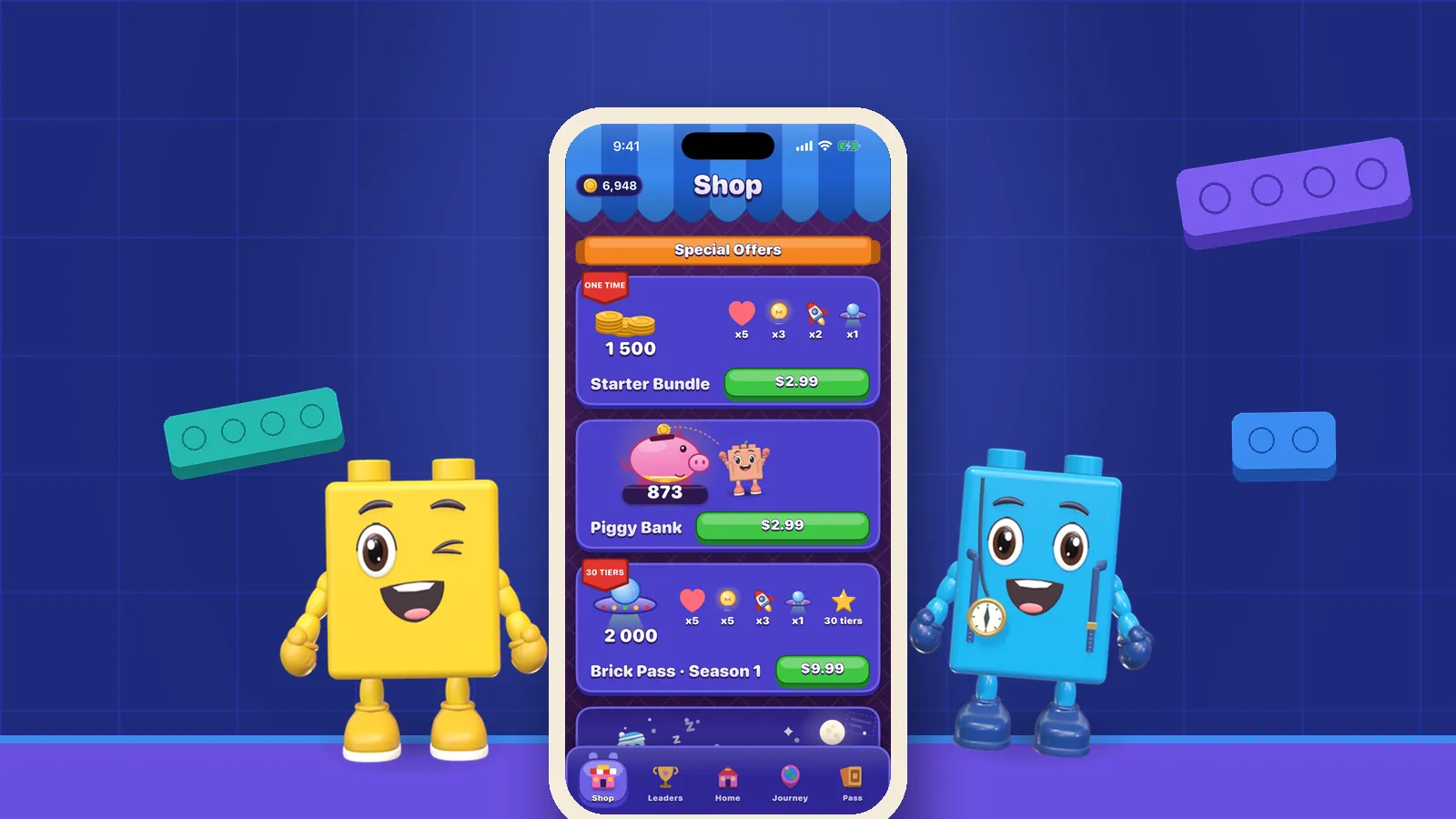
Both are free to download with in-app purchases, and advertising is disclosed. OutBrick also has lives and optional rewarded video. Read a purchase’s current description before deciding what it removes or unlocks; this guide does not promise permanent ad removal or unlimited retries. A listed feature should earn your interest, not bypass your spending decision.
Set a simple first-session budget: no spending while you learn the rule. Notice whether you are content to stop when the free session ends. If you are comparing games for a child or another family member, assess those interruptions together. The fairest recommendation includes the cost of continuing, not just the price of installing.
OutBrick is worth considering if you want its Slide & Match planning rule, solver-checked board collection and explicitly documented accessibility features. Block Out deserves consideration if its advertised elevators, generators and dynamic layouts are what excite you. Neither conclusion is a universal ranking. We have not verified that a competitor lacks a feature simply because its listing does not mention it.
You can sample OutBrick’s classic movement idea on a playable browser board. The browser keeps the older glide-and-stop rule, so it is a useful introduction to the matching-gate idea, not a full substitute for the installed app: it cannot validate every native mode, purchase or accessibility feature. If you enjoy setting up a route rather than dragging a block straight to its destination, you have a concrete reason to explore further.
Ready to try that approach? Download OutBrick on the Apple App Store and review the current device requirements and purchase details there. If accessibility is your deciding factor, visit our accessibility information first and use the checklist on your own device. A successful download is the beginning of checking fit, not proof that the app meets every need.
Keep the decision reversible. It is reasonable to enjoy different puzzle games at different times, or to keep one for fast sessions and another for deliberate planning. The best comparison ends with a clearer preference, not an obligation to agree with the studio publishing it.
Product statements above use the US App Store pages retrieved on 30 September 2026. Features, availability and purchase terms can change. Research references below explain the comparison criteria; none tested or endorsed these apps.
Grand Games A.Ş. (n.d.). Block Out! - Color Sort Puzzle [Mobile app]. App Store. Retrieved September 30, 2026, from the Block Out listing.
Hamdi, M. (n.d.). OutBrick: Block Sort Puzzle [Mobile app]. App Store. Retrieved September 30, 2026, from the OutBrick listing.
Filed under
Questions, answered
A few useful answers
Is OutBrick the same game as Block Out Puzzle?
No. OutBrick is by Mourad Hamdi, while Block Out! - Color Sort Puzzle is by Grand Games A.Ş. They share a matching-gate sliding idea, but their published mechanics and feature descriptions differ.
Can OutBrick and Block Out be played offline?
Both official App Store descriptions advertise offline play. This does not establish that online services such as purchases, advertising or progress synchronisation work without a connection.
Which game is better for colour-blind players?
OutBrick explicitly declares Differentiate Without Color Alone support. Block Out’s lack of an accessibility declaration is not evidence that support is absent, so evaluate the installed games against your needs.
Is OutBrick completely free of timers and purchases?
Its current release notes say version 4.2 removed all timing, but the app still has move limits, lives and in-app purchases. Untimed play does not mean unlimited retries or no purchase offers.
APA 7
References
Where a source is a studio’s own history or a news account rather than a study, the article says so beside the claim.
- Abuhamdeh, S., & Csikszentmihalyi, M. (2012). The importance of challenge for the enjoyment of intrinsically motivated, goal-directed activities. Personality and Social Psychology Bulletin, 38(3), 317–330. doi.org/10.1177/0146167211427147 (opens in a new tab)
- Iacovides, I., Cox, A. L., McAndrew, P., Aczel, J., & Scanlon, E. (2015). Game-play breakdowns and breakthroughs: Exploring the relationship between action, understanding, and involvement. Human–Computer Interaction, 30(3–4), 202–231. doi.org/10.1080/07370024.2014.987347 (opens in a new tab)
- Klimmt, C., Hartmann, T., & Frey, A. (2007). Effectance and control as determinants of video game enjoyment. CyberPsychology & Behavior, 10(6), 845–848. doi.org/10.1089/cpb.2007.9942 (opens in a new tab)
- Ryan, R. M., Rigby, C. S., & Przybylski, A. (2006). The motivational pull of video games: A self-determination theory approach. Motivation and Emotion, 30(4), 344–360. doi.org/10.1007/s11031-006-9051-8 (opens in a new tab)