Before the first move: how to read a puzzle like a solver
Why the way you picture a puzzle shapes how hard it feels, what experts look at first, and a short routine for reading any board before you touch it.
Most wasted moves in a puzzle are made in the first ten seconds, before the solver really knows what the puzzle is. That is not carelessness. It is how minds work: we start acting on the first description of a problem that comes to hand, and the first description is often a poor one. Psychologists have spent fifty years showing that the same puzzle can be easy or brutal depending on how it is represented in the head. The good news is that representation is a skill, and a few habits of looking improve it.
In 1985 Kenneth Kotovsky, John Hayes and Herbert Simon gave people a set of puzzles that were, underneath, all the Tower of Hanoi: the same positions, the same legal moves, the same shortest solution. Only the cover story and the way the rules were framed changed. In some versions, monsters passed globes between one another; in others, they changed the size of the globes they held. The structure was identical, yet some versions took people many times longer to solve than others.
Their analysis pointed at representation. Versions whose rules were harder to picture, or that forced solvers to hold more of the rules and the current position in mind at once, were harder. Much of the solving time went into simply learning to make legal moves fluently; once that became easy, the final run to the goal tended to be quick. A large part of the difficulty was not in searching for a solution at all, but in getting the problem into a shape the mind could work with.
Jiajie Zhang and Donald Norman took the idea a step further in 1994. They built versions of the Tower of Hanoi in which some rules were enforced by the objects themselves, so an illegal move was physically awkward or impossible rather than something the solver had to remember not to do. The more of the rules that lived in the world rather than in the head, the easier the puzzle became. A well-made board, like a well-made tool, carries part of the thinking for you.
Sources1Kotovsky, K., Hayes, J. R., & Simon, H. A. (1985). Why are some problems hard? Evidence from Tower of Hanoi. Cognitive Psychology, 17(2), 248–294.2Zhang, J., & Norman, D. A. (1994). Representations in distributed cognitive tasks. Cognitive Science, 18(1), 87–122.
A classic study by Michelene Chi, Paul Feltovich and Robert Glaser asked physics experts and novices to sort textbook problems into groups. Novices grouped them by what they looked like: problems with inclined planes together, problems with springs together. Experts grouped them by the principle that would solve them, such as conservation of energy, even when the problems looked nothing alike. The experts were not seeing more. They were seeing different things.
Puzzle boards invite the same split. The surface of a colour sort board is colours and shapes, and it is tempting to read it that way: there are the reds, there are the blues. The structure is something else: which piece sits between which other piece and its exit, where the empty space is, which slide opens a lane and which one closes it. A solver who reads structure sees a short chain of dependencies. A solver who reads surface sees a crowd.
You do not need years of practice to borrow the expert’s question. Before you move, ask what kind of problem this board is. Is it a traffic jam, where everything waits on one piece? A shortage of space, where the first job is to make room? An ordering problem, where colours must leave in a particular sequence? Naming the type is a small act of representation, and it changes which moves look promising. Over time those types become patterns you recognise at a glance, which is what chunking describes.
Sources3Chi, M. T. H., Feltovich, P. J., & Glaser, R. (1981). Categorization and representation of physics problems by experts and novices. Cognitive Science, 5(2), 121–152.
How long should you look before you move? Geoff Ward and Alan Allport studied adults planning solutions to a hard, five-disc version of the Tower of London, a puzzle used widely in psychology to study planning. People planned a fluent solution and then carried it out. The time they needed to prepare, and the errors they made, rose with the number of subgoal chunks: stretches of moves that were necessary but did not put anything in its final place. Planning also slowed when more alternative moves competed at critical steps.
That gives a useful rule of thumb. Planning is not spread evenly across a puzzle. It piles up at the points where several moves look sensible and only one keeps the solution alive, and in the stretches where you must move pieces out of the way rather than home. Those are the moments to slow down. Where a move is forced, or a piece has a clear run to its exit, there is little to plan, and staring only burns attention.
Seen this way, a board read is really a search for the forks. Find the one or two places where the board branches and you have found most of the puzzle.
Sources4Ward, G., & Allport, A. (1997). Planning and problem-solving using the five-disc Tower of London task. The Quarterly Journal of Experimental Psychology Section A, 50(1), 49–78.
Here is a routine that puts the research into practice. It takes about thirty seconds on a mid-sized board, and it works on sliding puzzles, colour sort puzzles and most grid puzzles with exits.
- Name the goal. What does “solved” look like, and which pieces have furthest to go?
- Find the free space. Every plan has to pass through the empty cells, so know where they are.
- Trace one chain backwards from an exit: what blocks this piece, and what blocks that one?
- Mark the forks: places where two moves both look sensible but lead to different boards.
- Name the board’s type: a jam, a shortage of space or an ordering problem.
The last step is the one most people skip, and it is where representation does its work. Once you have named the type, the obvious first move often stops looking obvious.
One caution from research on action: reading a board does not have to be purely mental. David Kirsh and Paul Maglio found that skilled Tetris players rotate pieces on screen partly to find out how they fit, using the world to think. They called these epistemic actions, moves made to uncover information rather than to make progress, and showed they can be quicker and more reliable than working everything out in the head. In a puzzle with an undo, a probing move is sometimes the fastest way to read a board.
For move-by-move tactics once the reading is done, our guides to solving sliding block puzzles and colour sort puzzle tips pick up where this routine stops.
Sources5Kirsh, D., & Maglio, P. (1994). On distinguishing epistemic from pragmatic action. Cognitive Science, 18(4), 513–549.
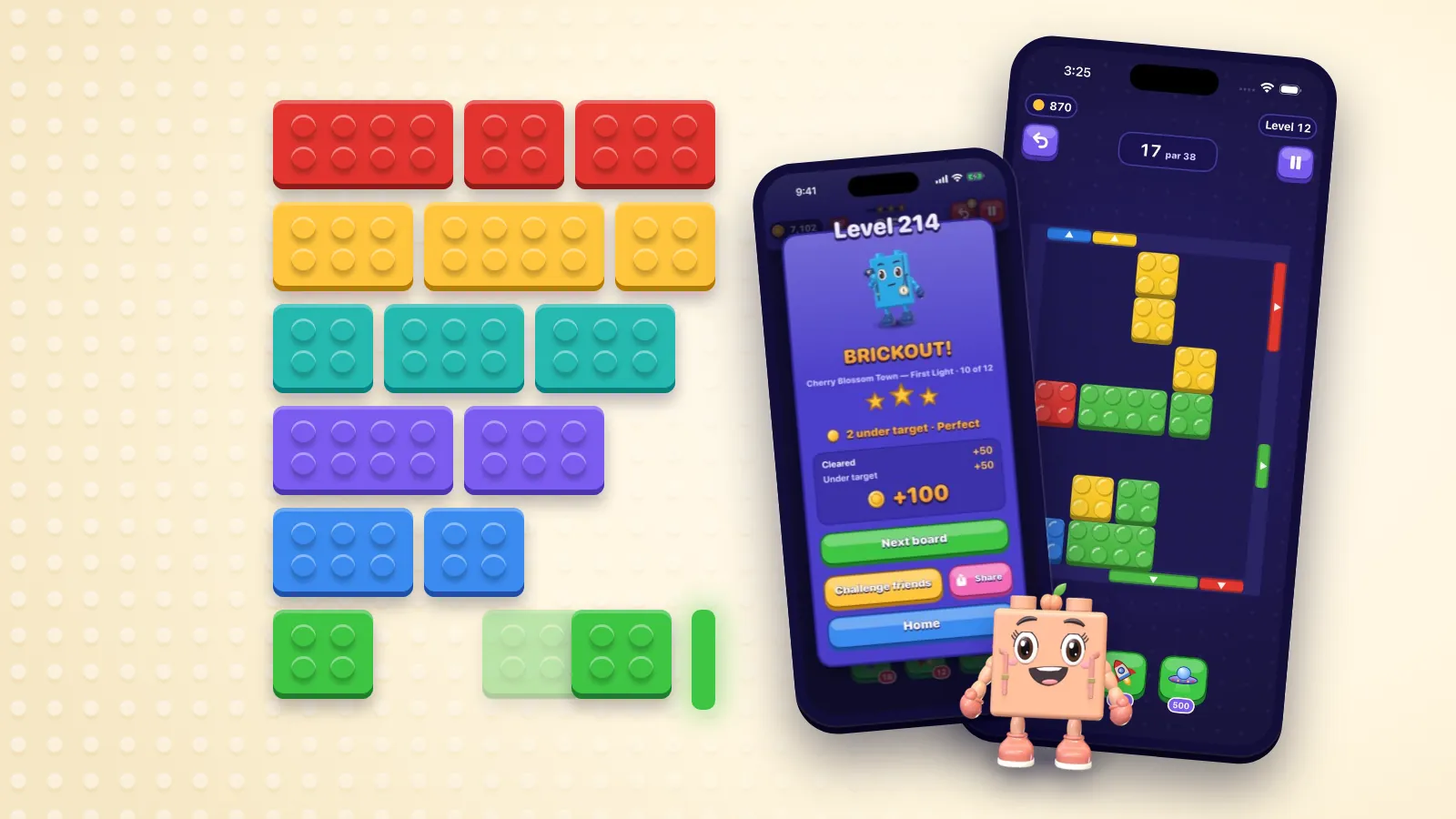
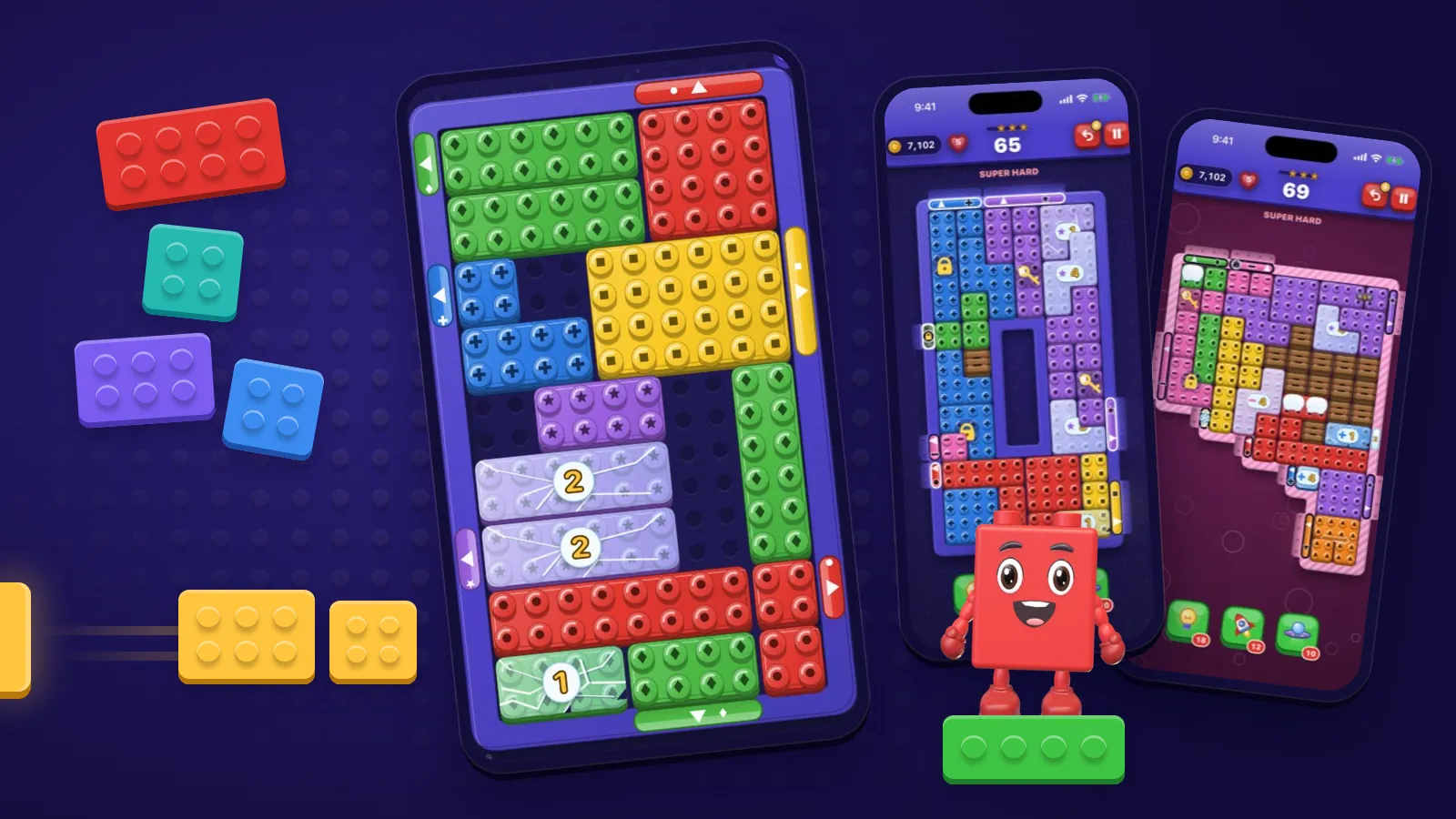
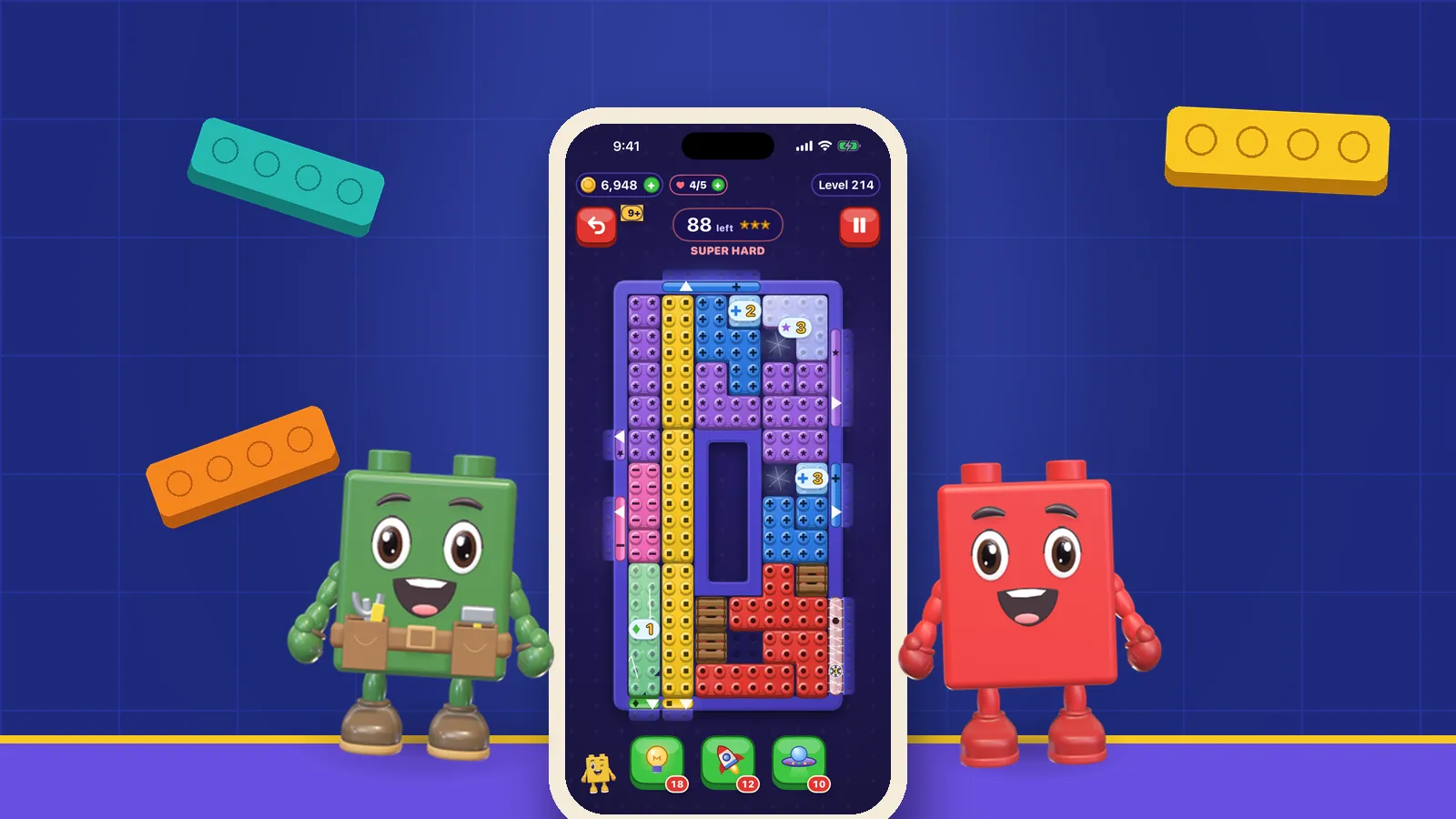
OutBrick puts several of its rules into the board itself, which is the Zhang and Norman lesson in practice. A brick goes home only through the gate of its own colour, and a long brick only through a gate as wide as it is, so the gates enforce those rules for you. The goals and the move limit are shown from the first tap. And the colour-blind glyphs, on by default, give every brick and gate a shape as well as a hue, which makes it easier to read the board as structure rather than a wash of colour.
What remains for you is the structural read: which brick is holding up which colour, where the space is, where the board forks. On later boards, crates, ice, locks, moss and counted gates add dependencies worth tracing before anything moves, because a lock opened too late can turn a tidy chain into a long detour.
There is no clock on any board, so reading costs you nothing but a few seconds. The browser board is a good place to try the routine, and the daily board gives everyone the same puzzle each day, which makes it easy to compare how you read it with how a friend did.
Sources2Zhang, J., & Norman, D. A. (1994). Representations in distributed cognitive tasks. Cognitive Science, 18(1), 87–122.
Filed under
Questions, answered
A few useful answers
How should you approach a puzzle you have never seen before?
Read it before you move. Find the goal, the free space and what blocks the piece closest to leaving, then look for the points where two moves compete, because those forks are where most of the thinking belongs.
Why do some puzzles feel harder than others with the same rules?
Much of a puzzle’s difficulty lies in how it is represented in your head. In a classic study of Tower of Hanoi versions with identical structure, some took people many times longer to solve, largely because their rules were harder to hold in mind.
Should I plan the whole solution before my first move?
Rarely. Plan up to the next point where the board forks, play that stretch, then read the board again. Studies of planning puzzles find that effort rises with the number of competing choices, so that is where your attention is best spent.
Does OutBrick have a timer?
No. Every OutBrick board shows its goals and a move limit from the first tap, but there is no clock anywhere in the game, so time spent reading the board is free.
APA 7
References
Where a source is a studio’s own history or a news account rather than a study, the article says so beside the claim.
- Kotovsky, K., Hayes, J. R., & Simon, H. A. (1985). Why are some problems hard? Evidence from Tower of Hanoi. Cognitive Psychology, 17(2), 248–294. doi.org/10.1016/0010-0285(85)90009-X (opens in a new tab)
- Zhang, J., & Norman, D. A. (1994). Representations in distributed cognitive tasks. Cognitive Science, 18(1), 87–122. doi.org/10.1207/s15516709cog1801_3 (opens in a new tab)
- Chi, M. T. H., Feltovich, P. J., & Glaser, R. (1981). Categorization and representation of physics problems by experts and novices. Cognitive Science, 5(2), 121–152. doi.org/10.1207/s15516709cog0502_2 (opens in a new tab)
- Ward, G., & Allport, A. (1997). Planning and problem-solving using the five-disc Tower of London task. The Quarterly Journal of Experimental Psychology Section A, 50(1), 49–78. doi.org/10.1080/713755681 (opens in a new tab)
- Kirsh, D., & Maglio, P. (1994). On distinguishing epistemic from pragmatic action. Cognitive Science, 18(4), 513–549. doi.org/10.1207/s15516709cog1804_1 (opens in a new tab)