Chunking explained: how expert puzzlers see patterns
Chess masters remember boards by the pattern, not the piece. What chunking research shows about expert perception, and how to build chunks of your own.
Watch a strong puzzle player and they seem to see the answer before they have looked. They have not skipped the thinking. They have done much of it in advance, over hundreds of earlier boards, and stored it as patterns. Psychologists call those patterns chunks. The research on chunking began with chess, and it explains a good deal about what getting better at any puzzle involves, and what it does not.
In 1973 William Chase and Herbert Simon, building on earlier work by the Dutch psychologist Adriaan de Groot, showed chess positions for five seconds to a master, a strong club player and a beginner, then asked each to rebuild the position on an empty board. With positions taken from real games, the master recalled several times as many pieces as the beginner on the first attempt. With pieces scattered at random, the master’s advantage all but disappeared.
Chase and Simon also looked at how the pieces came back. Players replaced them in bursts, with short pauses inside a group and longer pauses between groups. The groups were meaningful: pieces that defended one another, a familiar pawn structure, a standard arrangement around the king. The master’s groups were bigger. The better player was not holding more items in mind; each item simply carried more.
That is the core idea of chunking. Working memory holds only a handful of items at once, and expertise makes each item richer. The study was small, with just three players, but the pattern has been confirmed many times since.
Sources1Chase, W. G., & Simon, H. A. (1973). Perception in chess. Cognitive Psychology, 4(1), 55–81.
Later work refined the random-board result. Fernand Gobet and Herbert Simon reviewed a series of chess experiments in 1996 and found that stronger players usually keep a small edge even with random positions, though it is much smaller than with positions from real games. Random boards still contain the odd familiar fragment by chance, and experts pick those out.
Eye tracking shows the same advantage from another angle. Eyal Reingold, Neil Charness and colleagues found that expert players took in far more of a structured chess position in each glance than less-skilled players, but not when the position was random. In a simple task of spotting whether a king was in check, experts made fewer fixations and more often looked between pieces rather than at them, as if they were reading relationships rather than objects. The authors concluded that the advantage came from chess experience, not from better general eyesight or memory.
The lesson for puzzlers is that pattern recognition is not a general talent you have or lack. It is built from exposure to the kinds of positions that recur in a particular game, and it helps exactly as far as a new board resembles the old ones.
Sources2Gobet, F., & Simon, H. A. (1996). Recall of rapidly presented random chess positions is a function of skill. Psychonomic Bulletin & Review, 3(2), 159–163.3Reingold, E. M., Charness, N., Pomplun, M., & Stampe, D. M. (2001). Visual span in expert chess players: Evidence from eye movements. Psychological Science, 12(1), 48–55.
In a 2001 review, Fernand Gobet and colleagues distinguish two routes to chunks. One is deliberate and goal-driven: you decide to treat three moves as a single manoeuvre, give it a name and use it on purpose. The other is automatic and perceptual: after enough exposure, certain arrangements simply start to look like one thing. Computational models of this second route learn chunks from experience and reproduce much of what is known about expert memory, in chess and in other areas such as language learning.
Puzzle players use both. The deliberate kind sounds like “open the left lane” or “get the yellows out”: a named intention that stands for several slides. The perceptual kind is quieter. One day a brick parked across two exits just looks wrong, before you could say why.
Chunks matter because of the limit they get around. Planning a long line of single moves overloads working memory quickly, which we look at in why some boards feel impossible. Planning in chunks lets a longer plan fit in the same space.
Sources4Gobet, F., Lane, P. C. R., Croker, S., Cheng, P. C.-H., Jones, G., Oliver, I., & Pine, J. M. (2001). Chunking mechanisms in human learning. Trends in Cognitive Sciences, 5(6), 236–243.
You cannot download chunks, but you can help them form. A few habits follow from how chunking seems to work.
- Name situations that keep coming up. A name turns a vague impression into a unit you can recall: the traffic jam, the locked corner, the one-brick bottleneck.
- Look back after a clear. Glance at the finished board and ask which part you would recognise next time.
- Play similar boards close together, so patterns stand out through repetition.
- Mix board types once a pattern feels familiar, so you practise recognising which pattern applies.
Chunks have a cost as well. A strongly learned pattern can blind you to a board that only looks familiar, and breaking a chunk apart is one of the ways people get unstuck, as our piece on the aha moment explains. Good players hold their patterns firmly and let go of them when the board demands it.
It is tempting to think that the pattern-reading skill of a chess master or an expert puzzler must make them better thinkers in general. The evidence says otherwise. In 2017 Giovanni Sala and Fernand Gobet reviewed chess and music instruction for children, alongside working memory training. The better controlled a study was, the smaller its effects on broader cognitive and academic skills, and they concluded that far transfer of learning rarely occurs.
That is not a disappointing result for anyone who simply enjoys puzzles. Getting better at a game you like is a real pleasure, and the chunks you build are a genuine kind of knowledge. It is just knowledge about the game. We looked at the wider question in are puzzle games good for your brain?
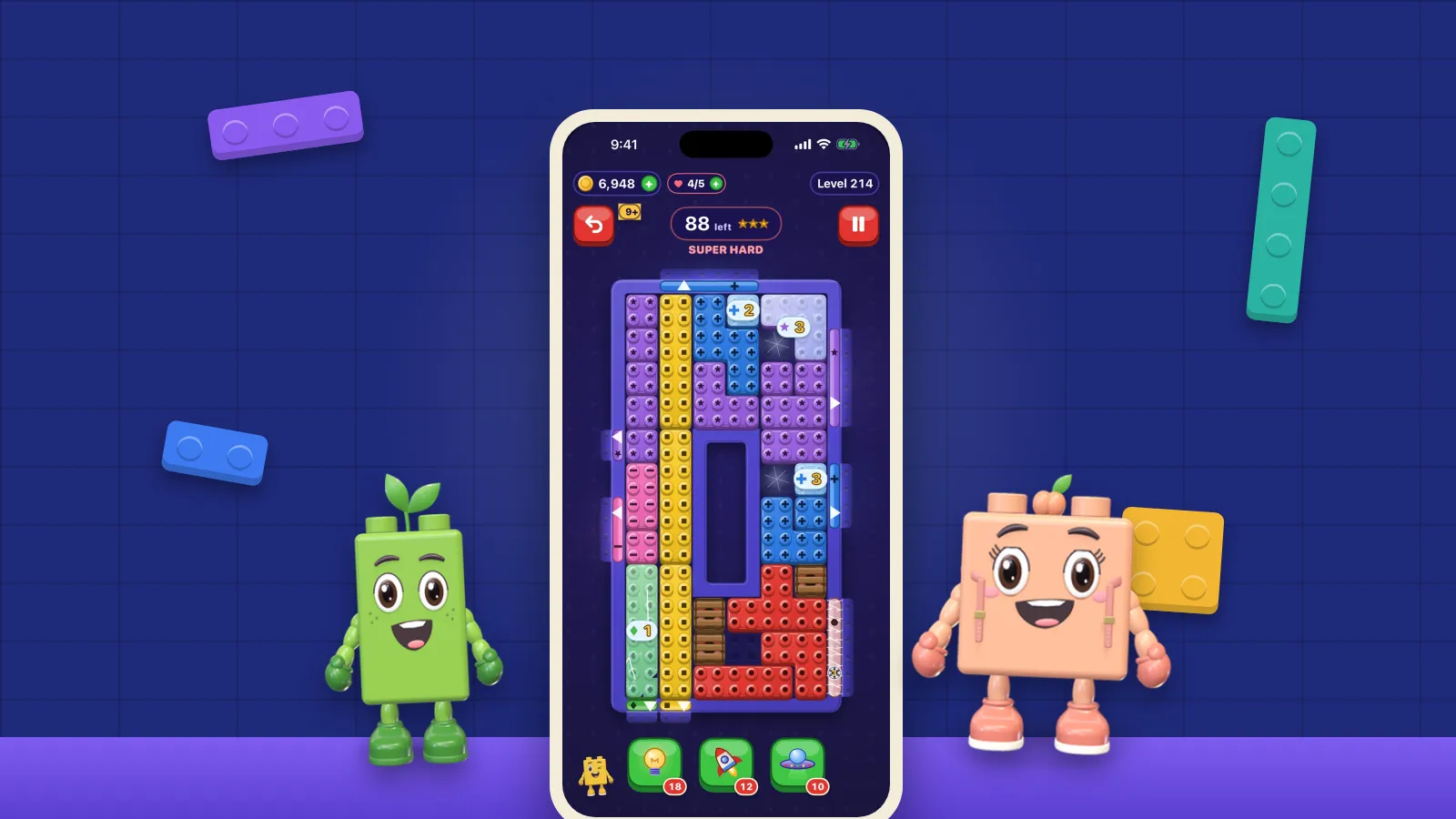
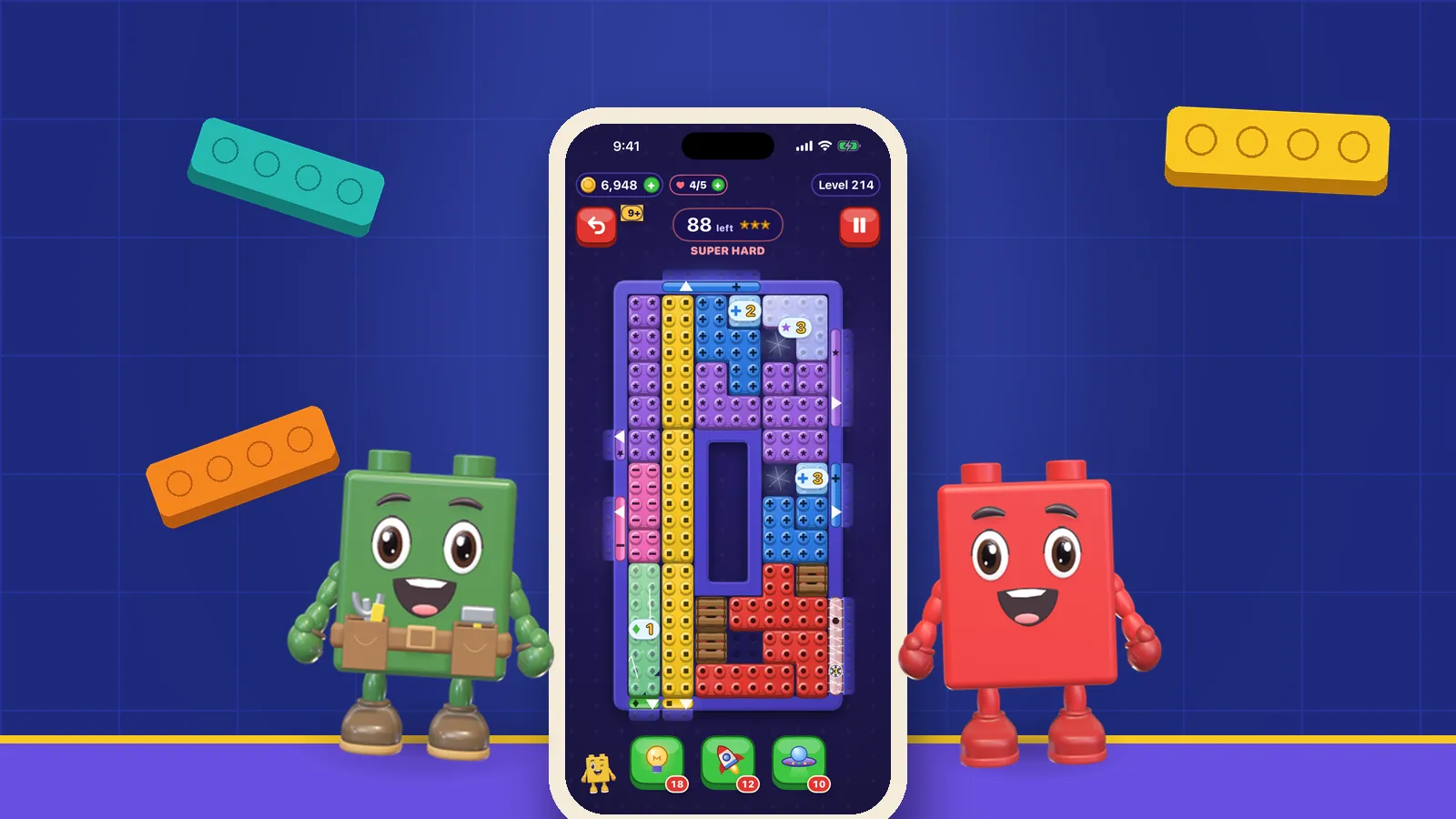
OutBrick’s boards are a good place to watch chunks form, because the mechanic stays constant while the arrangements change: a brick swiped into space stops where you let go, a brick swiped into a neighbour swaps with it, and every brick goes home only through the gate of its own colour. Play a few daily boards on successive days and notice which arrangements start to look like one thing. That noticing is a chunk forming.
Sources5Sala, G., & Gobet, F. (2017). Does far transfer exist? Negative evidence from chess, music, and working memory training. Current Directions in Psychological Science, 26(6), 515–520.
Filed under
Questions, answered
A few useful answers
What is chunking in psychology?
Chunking is grouping several pieces of information into one meaningful unit, such as a familiar arrangement of chess pieces or a named sequence of moves. Because working memory holds only a few items, bigger chunks let you keep more in mind at once.
How do chess masters remember whole boards?
They recognise familiar groups of pieces rather than individual pieces. In classic experiments, masters recalled far more than beginners from positions in real games, but their advantage was much smaller for random positions.
How can I get better at spotting patterns in puzzles?
Name situations that recur, look back at boards after you clear them, and play similar boards close together so patterns stand out. Later, mix board types so you practise recognising which pattern applies.
Does pattern recognition in games make you smarter in general?
The evidence says no. Reviews of chess, music and working memory training found that the better controlled the study, the smaller the effect on broader thinking skills.
APA 7
References
Where a source is a studio’s own history or a news account rather than a study, the article says so beside the claim.
- Chase, W. G., & Simon, H. A. (1973). Perception in chess. Cognitive Psychology, 4(1), 55–81. doi.org/10.1016/0010-0285(73)90004-2 (opens in a new tab)
- Gobet, F., & Simon, H. A. (1996). Recall of rapidly presented random chess positions is a function of skill. Psychonomic Bulletin & Review, 3(2), 159–163. doi.org/10.3758/BF03212414 (opens in a new tab)
- Reingold, E. M., Charness, N., Pomplun, M., & Stampe, D. M. (2001). Visual span in expert chess players: Evidence from eye movements. Psychological Science, 12(1), 48–55. doi.org/10.1111/1467-9280.00309 (opens in a new tab)
- Gobet, F., Lane, P. C. R., Croker, S., Cheng, P. C.-H., Jones, G., Oliver, I., & Pine, J. M. (2001). Chunking mechanisms in human learning. Trends in Cognitive Sciences, 5(6), 236–243. doi.org/10.1016/S1364-6613(00)01662-4 (opens in a new tab)
- Sala, G., & Gobet, F. (2017). Does far transfer exist? Negative evidence from chess, music, and working memory training. Current Directions in Psychological Science, 26(6), 515–520. doi.org/10.1177/0963721417712760 (opens in a new tab)