Are puzzle games good for your brain? What the research says
Puzzles are often sold as brain training. Here is what the studies actually show about memory, ageing and mood, and what nobody can honestly promise.
Few claims in games are repeated as often as this one: puzzles keep your brain young. It sounds right, and a whole industry was built on it. The research is more interesting and more modest than the marketing. We make a puzzle game, OutBrick, so we have every reason to want the answer to be a loud yes. It is not, and we would rather tell you what the evidence supports than sell you something it does not.
In the 2000s and early 2010s, “brain training” became a product category. Apps and handheld games promised sharper memory, faster thinking and protection against decline, often with a daily score to prove it. The pitch was simple: the brain is a muscle, and puzzles are the gym.
In 2014 the Stanford Center on Longevity and the Max Planck Institute for Human Development published a statement from a group of scientists pushing back. Their conclusion was that the gains from brain games tend to be small, narrow and short-lived, and that there was little evidence they improve everyday abilities or prevent Alzheimer’s disease. The statement was disputed at the time, and a rival letter from other researchers argued that some forms of training do have evidence behind them. The argument itself is a clue: this is not a settled yes.
Two years later the US Federal Trade Commission settled with Lumos Labs, the company behind Lumosity, over advertising that claimed its games improved performance at work and school and could delay age-related decline. The FTC’s finding was about what had been advertised without adequate support, not a scientific verdict that the games do nothing. It did make one thing clear: claims about protecting the brain need evidence, and that evidence was not there.
Sources1Stanford Center on Longevity & Max Planck Institute for Human Development. (2014, October 20). A consensus on the brain training industry from the scientific community.2Federal Trade Commission. (2016, January 5). Lumosity to pay $2 million to settle FTC deceptive advertising charges for its “brain training” program [Press release].
The most thorough look at the question is a 2016 review by Daniel Simons and colleagues in Psychological Science in the Public Interest. They went through the studies that brain-training companies themselves cited. The pattern was consistent: people improved at the tasks they practised, improved less at closely related tasks, and showed little evidence of improvement on different tasks or in everyday thinking.
Researchers call this the difference between near transfer and far transfer. If you play a lot of sliding-block puzzles, you get better at sliding-block puzzles: you spot blockers sooner and plan exits further ahead. That is real learning. What the evidence does not show is that the skill spreads to remembering where you parked or following a complicated conversation.
The review also found that none of the studies it examined met all of the standards the authors set out for good trials. Small samples, weak comparison groups and the chance that people who expect to improve simply try harder on the follow-up test all make positive results harder to trust. That is not a reason to think puzzles are bad for you. It is a reason to be wary of anyone who puts a number on how much younger they will make your brain.
Sources3Simons, D. J., Boot, W. R., Charness, N., Gathercole, S. E., Chabris, C. F., Hambrick, D. Z., & Stine-Morrow, E. A. L. (2016). Do “brain-training” programs work? Psychological Science in the Public Interest, 17(3), 103–186.
Some of the most quoted findings come from the UK PROTECT study. In 2019, Helen Brooker and colleagues reported on more than 19,000 adults aged 50 to 93 who did online cognitive tests and said how often they did word or number puzzles. The more often people said they did puzzles, the better they tended to score, across every measure tested. Those who never did puzzles scored lowest.
It is a large and careful study, and it is still a snapshot. It shows that puzzles and good test scores go together, not which one causes the other. People with sharper thinking may simply enjoy puzzles more and do them more often. Independent experts made exactly this point when the studies were published, and the widely reported claim that puzzlers had brains “eight years younger” came from press coverage rather than from the papers themselves.
Trials, where people are assigned to an activity, are the way to get at cause and effect, and they are rarer. One of the more interesting ones, by Devanand and colleagues in 2022, randomly assigned 107 people with mild cognitive impairment to web-based crosswords or to a suite of computerised brain games for 78 weeks. The crosswords group did slightly better on the main cognitive measure. There was no group that did nothing, so the trial tells us crosswords beat those games, not that either beats ordinary life. It is also a reminder that “computerised brain game” is not automatically the stronger option.
Sources4Brooker, H., Wesnes, K. A., Ballard, C., Hampshire, A., Aarsland, D., Khan, Z., Stenton, R., Megalogeni, M., & Corbett, A. (2019). The relationship between the frequency of number-puzzle use and baseline cognitive function in a large online sample of adults aged 50 and over. International Journal of Geriatric Psychiatry, 34(7), 932–940.5Devanand, D. P., Goldberg, T. E., Qian, M., Rushia, S. N., Sneed, J. R., Andrews, H. F., Nino, I., Phillips, J., Pence, S. T., Linares, A. R., Hellegers, C. A., Michael, A. M., Kerner, N. A., Petrella, J. R., & Doraiswamy, P. M. (2022). Computerized games versus crosswords training in mild cognitive impairment. NEJM Evidence, 1(12), EVIDoa2200121.
The best-known long-running trial is ACTIVE, which enrolled 2,832 older adults in the United States and gave them ten sessions of about an hour each of training in memory, reasoning or speed of processing, with some later boosters. Ten years on, the reasoning and speed groups were still more likely than the control group to be at or above their starting level on those abilities. The memory group’s advantage had faded. Trained participants also reported less difficulty with daily activities, although that was self-reported.
Two points matter here. First, ACTIVE trained specific skills with purpose-built exercises, not casual puzzle games, so its results cannot simply be borrowed by an app. Second, even this well-run trial shows modest, specific effects. Anyone promising broad protection from a few minutes of play a day is claiming far more than the best studies support.
Smaller studies of ordinary puzzle apps are more mixed still. A pilot trial by Urwyler and colleagues had healthy adults play tablet puzzle games for 20 minutes a day and found improvements on one attention measure but no change in overall thinking, mood or quality of life, from a sample of 11 people. That is a feasibility study, not proof either way.
Sources6Rebok, G. W., Ball, K., Guey, L. T., Jones, R. N., Kim, H.-Y., King, J. W., Marsiske, M., Morris, J. N., Tennstedt, S. L., Unverzagt, F. W., & Willis, S. L. (2014). Ten-year effects of the Advanced Cognitive Training for Independent and Vital Elderly cognitive training trial on cognition and everyday functioning in older adults. Journal of the American Geriatrics Society, 62(1), 16–24.7Urwyler, P., Gupta, R. K., Falkner, M., Niklaus, J., Müri, R. M., & Nef, T. (2023). Tablet-based puzzle game intervention for cognitive function and well-being in healthy adults: Pilot feasibility randomized controlled trial. JMIR Aging, 6, e46177.
If puzzles are not a proven brain vitamin, why play them? Because the reasons that hold up are good ones. A puzzle gives you a problem with a clear edge, a small and fair challenge, and the satisfaction of solving it. Short sessions of casual play have been linked to better mood after a demanding task, which we looked at in why a two-minute puzzle can feel like a proper reset. That is a modest claim, and it is enough.
The 2014 scientists’ statement ended with advice that is worth repeating: stay physically active, mentally engaged and socially connected. A puzzle game can be one small part of the second of those, especially one you share with someone. It is not a substitute for the other two, and no game should tell you it is.
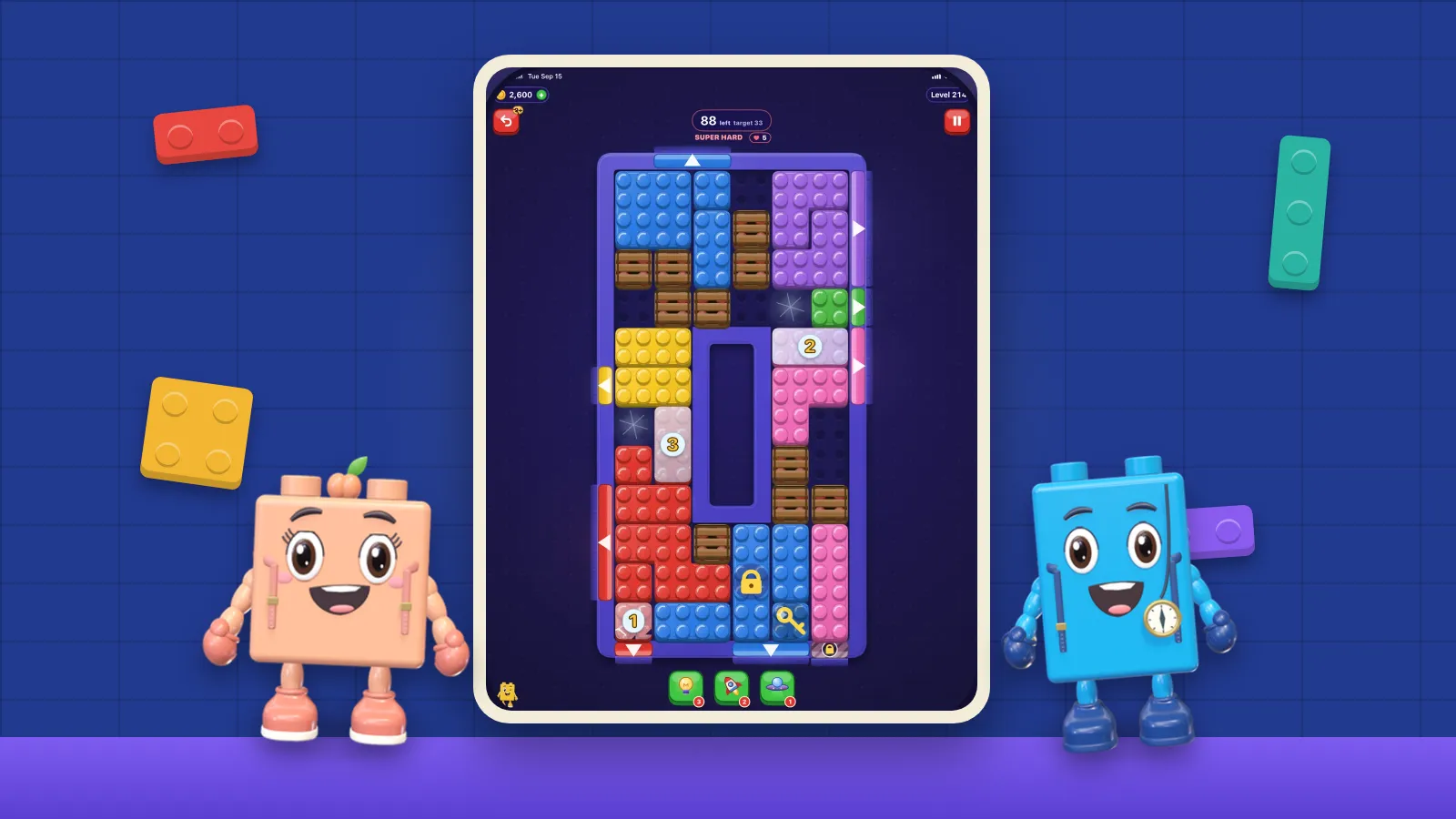
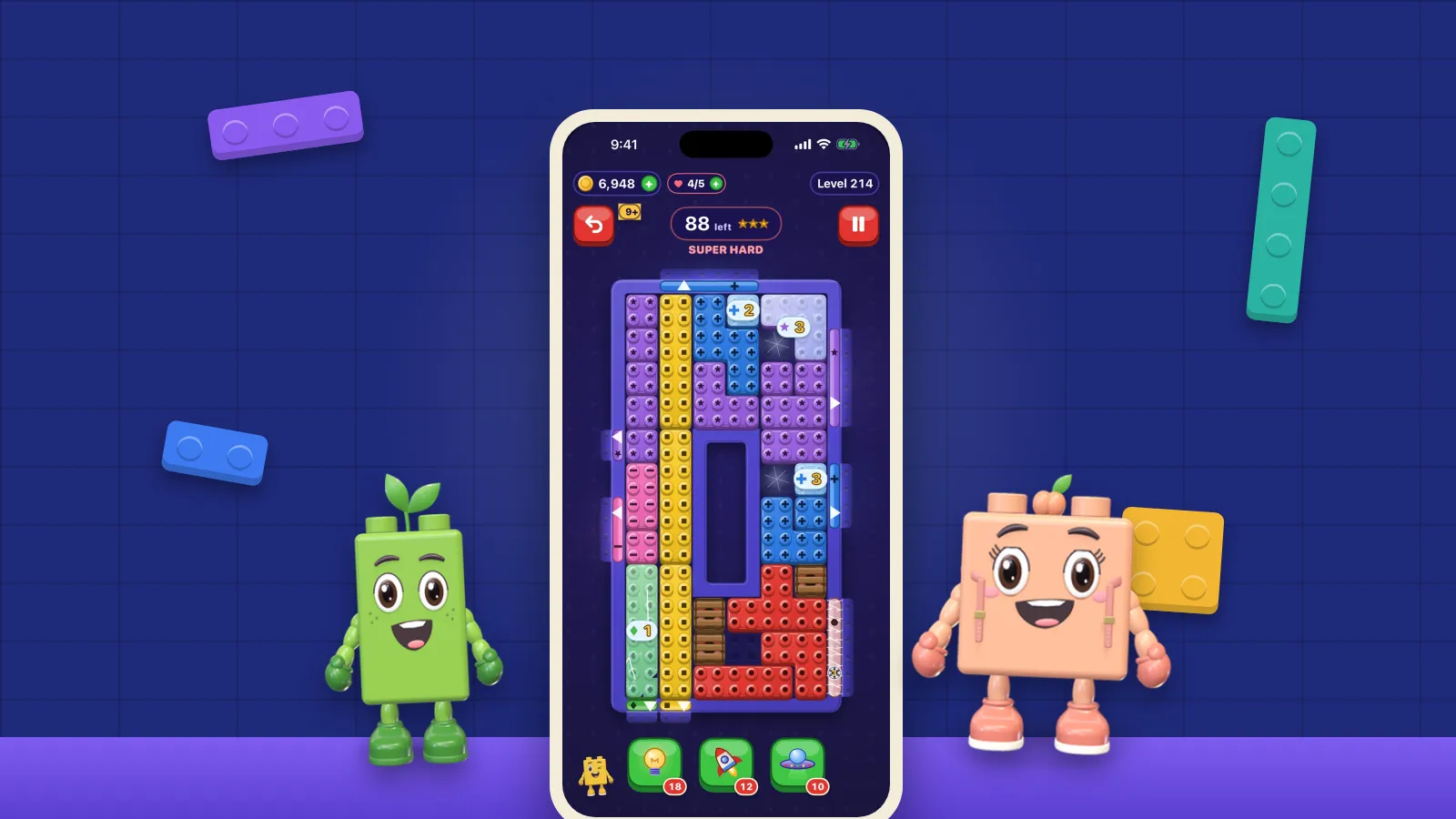
We designed OutBrick with that in mind. It makes no health claims. Its boards are short and solvable, with no clock, so you can think rather than race. If it becomes a small daily pleasure, that is the whole point. If you want to get better at it, that is real learning too, and our guide on how to solve sliding block puzzles will help.
- Be sceptical of any game that promises to make you smarter or prevent decline.
- Choose puzzles because you enjoy them; enjoyment is what keeps a habit going.
- Mix it up: new kinds of problems stretch you more than repeating one you have mastered.
- Keep puzzles alongside movement, sleep and time with other people, not instead of them.
Sources8Rupp, M. A., Sweetman, R., Sosa, A. E., Smither, J. A., & McConnell, D. S. (2017). Searching for affective and cognitive restoration: Examining the restorative effects of casual video game play. Human Factors, 59(7), 1096–1107.
Filed under
Questions, answered
A few useful answers
Do puzzle games improve memory?
They reliably improve your skill at the puzzles you practise. Reviews of brain-training research have found little evidence that those gains carry over to everyday memory or thinking.
Can puzzles prevent dementia?
No study has shown that puzzle games prevent dementia. People who do puzzles often tend to score better on thinking tests, but those studies cannot show that the puzzles caused it. Regulators have acted against brain-training companies that claimed otherwise.
Are crosswords better than brain-training apps?
In one 78-week trial of people with mild cognitive impairment, web-based crosswords did slightly better than a set of computerised brain games on the main cognitive measure. The trial had no no-training group, so it does not show that either beats doing neither.
Is OutBrick a brain-training game?
No. OutBrick is a slide-and-match brick puzzle made to be enjoyed, and it makes no health claims. Its boards are short, solvable and have no clock.
APA 7
References
Where a source is a studio’s own history or a news account rather than a study, the article says so beside the claim.
- Stanford Center on Longevity & Max Planck Institute for Human Development. (2014, October 20). A consensus on the brain training industry from the scientific community. longevity.stanford.edu/a-consensus-on-the-brain-training-industry-from-the-scientific-community-2 (opens in a new tab)
- Federal Trade Commission. (2016, January 5). Lumosity to pay $2 million to settle FTC deceptive advertising charges for its “brain training” program [Press release]. www.ftc.gov/news-events/news/press-releases/2016/01/lumosity-pay-2-million-settle-ftc-deceptive-advertising-charges-its-brain-training-program (opens in a new tab)
- Simons, D. J., Boot, W. R., Charness, N., Gathercole, S. E., Chabris, C. F., Hambrick, D. Z., & Stine-Morrow, E. A. L. (2016). Do “brain-training” programs work? Psychological Science in the Public Interest, 17(3), 103–186. doi.org/10.1177/1529100616661983 (opens in a new tab)
- Brooker, H., Wesnes, K. A., Ballard, C., Hampshire, A., Aarsland, D., Khan, Z., Stenton, R., Megalogeni, M., & Corbett, A. (2019). The relationship between the frequency of number-puzzle use and baseline cognitive function in a large online sample of adults aged 50 and over. International Journal of Geriatric Psychiatry, 34(7), 932–940. doi.org/10.1002/gps.5085 (opens in a new tab)
- Devanand, D. P., Goldberg, T. E., Qian, M., Rushia, S. N., Sneed, J. R., Andrews, H. F., Nino, I., Phillips, J., Pence, S. T., Linares, A. R., Hellegers, C. A., Michael, A. M., Kerner, N. A., Petrella, J. R., & Doraiswamy, P. M. (2022). Computerized games versus crosswords training in mild cognitive impairment. NEJM Evidence, 1(12), EVIDoa2200121. doi.org/10.1056/EVIDoa2200121 (opens in a new tab)
- Rebok, G. W., Ball, K., Guey, L. T., Jones, R. N., Kim, H.-Y., King, J. W., Marsiske, M., Morris, J. N., Tennstedt, S. L., Unverzagt, F. W., & Willis, S. L. (2014). Ten-year effects of the Advanced Cognitive Training for Independent and Vital Elderly cognitive training trial on cognition and everyday functioning in older adults. Journal of the American Geriatrics Society, 62(1), 16–24. doi.org/10.1111/jgs.12607 (opens in a new tab)
- Urwyler, P., Gupta, R. K., Falkner, M., Niklaus, J., Müri, R. M., & Nef, T. (2023). Tablet-based puzzle game intervention for cognitive function and well-being in healthy adults: Pilot feasibility randomized controlled trial. JMIR Aging, 6, e46177. doi.org/10.2196/46177 (opens in a new tab)
- Rupp, M. A., Sweetman, R., Sosa, A. E., Smither, J. A., & McConnell, D. S. (2017). Searching for affective and cognitive restoration: Examining the restorative effects of casual video game play. Human Factors, 59(7), 1096–1107. doi.org/10.1177/0018720817715360 (opens in a new tab)