Choosing calm mobile games for kids: a parent’s guide
Most apps young children play use manipulative design. A research-based checklist for spotting pressure, adverts and lures, and choosing calmer games.
Choosing a game for a child used to mean checking for violence and bad language. On a phone or tablet, the bigger questions are often about design: whether a game pressures a child to keep playing, whether its adverts are disguised as play, whether a friendly character is really a salesperson. Researchers have now studied these patterns in the apps young children actually use, and the findings give parents a practical checklist. Here it is, along with the evidence behind it and an honest look at how our own game measures up.
Radesky and colleagues analysed the apps used by 160 children aged 3 to 5 and coded them for manipulative design, meaning features that serve the app maker’s interests over the child’s. The majority had at least one. They included parasocial relationship pressure, where a character the child likes urges them to keep playing or buy something; fabricated time pressure, such as countdowns and limited-time offers; navigation constraints that make it hard to leave; and attractive lures such as prizes and treasure chests designed to prolong play. Only about 20% of the apps had no manipulative features, and children from lower-income families played apps with more of them.
An earlier study from the same group looked at advertising. Meyer and colleagues examined 135 apps popular with children aged five and under and found some form of advertising in 95% of them. It included adverts that interrupted play, prompts to buy, commercial characters, and in a minority of apps, adverts hidden in the game, disguised as play items or marked with misleading symbols. Advertising appeared in every free app they examined and in most paid ones, and it was just as common in apps labelled educational.
Sources1Radesky, J., Hiniker, A., McLaren, C., Akgun, E., Schaller, A., Weeks, H. M., Campbell, S., & Gearhardt, A. N. (2022). Prevalence and characteristics of manipulative design in mobile applications used by children. JAMA Network Open, 5(6), e2217641.2Meyer, M., Adkins, V., Yuan, N., Weeks, H. M., Chang, Y.-J., & Radesky, J. (2019). Advertising in young children’s apps: A content analysis. Journal of Developmental & Behavioral Pediatrics, 40(1), 32–39.
Screen time headlines focus on hours, but the stronger evidence points to content and context. In a large preregistered study of more than 120,000 English adolescents, Przybylski and Weinstein found that the relationship between screen time and well-being was curved: moderate use was not linked to harm, and the effects at higher levels were small. The study was of teenagers, not toddlers, and it cannot say what any particular app does. But it is a useful corrective to the idea that minutes are the only thing that counts.
For younger children, Hirsh-Pasek and colleagues drew on the science of learning to set out what makes an app genuinely educational: children should be active, engaged without distraction, doing something meaningful, and ideally interacting with other people. When Meyer and colleagues applied that framework to more than a hundred popular “educational” apps, most scored low, and free apps scored lower on engagement because of distracting extras. The label on the store page tells you little.
Sources3Przybylski, A. K., & Weinstein, N. (2017). A large-scale test of the Goldilocks hypothesis: Quantifying the relations between digital-screen use and the mental well-being of adolescents. Psychological Science, 28(2), 204–215.4Hirsh-Pasek, K., Zosh, J. M., Golinkoff, R. M., Gray, J. H., Robb, M. B., & Kaufman, J. (2015). Putting education in “educational” apps: Lessons from the science of learning. Psychological Science in the Public Interest, 16(1), 3–34.5Meyer, M., Zosh, J. M., McLaren, C., Robb, M., McCaffery, H., Golinkoff, R. M., Hirsh-Pasek, K., & Radesky, J. (2021). How educational are “educational” apps for young children? App store content analysis using the Four Pillars of Learning framework. Journal of Children and Media, 15(4), 526–548.
Play the game yourself for ten minutes before your child does, and go through the list below. Very few games will pass everything; what matters is knowing where the pressure is so you can decide whether you are comfortable with it. We describe the pressure points in general terms in what makes a puzzle game relaxing.
- Time pressure: is there a countdown, a “limited-time” offer, or an event that expires?
- Character pressure: does a friendly character look sad, beg or scold when your child stops or refuses to buy?
- Disguised adverts: can your child tell an advert from a game item? Do adverts play without anyone asking for them?
- Lures: are there chests, spins or streaks designed to pull a child back in, and are they linked to purchases?
- Exits: can your child stop at any point without losing something, and is the way out easy to find?
- Purchases: is buying protected behind Ask to Buy or a password, and are prices shown in real money?
- Content: does the game match the age rating, and is there any chat with strangers?
Sources1Radesky, J., Hiniker, A., McLaren, C., Akgun, E., Schaller, A., Weeks, H. M., Campbell, S., & Gearhardt, A. N. (2022). Prevalence and characteristics of manipulative design in mobile applications used by children. JAMA Network Open, 5(6), e2217641.2Meyer, M., Adkins, V., Yuan, N., Weeks, H. M., Chang, Y.-J., & Radesky, J. (2019). Advertising in young children’s apps: A content analysis. Journal of Developmental & Behavioral Pediatrics, 40(1), 32–39.
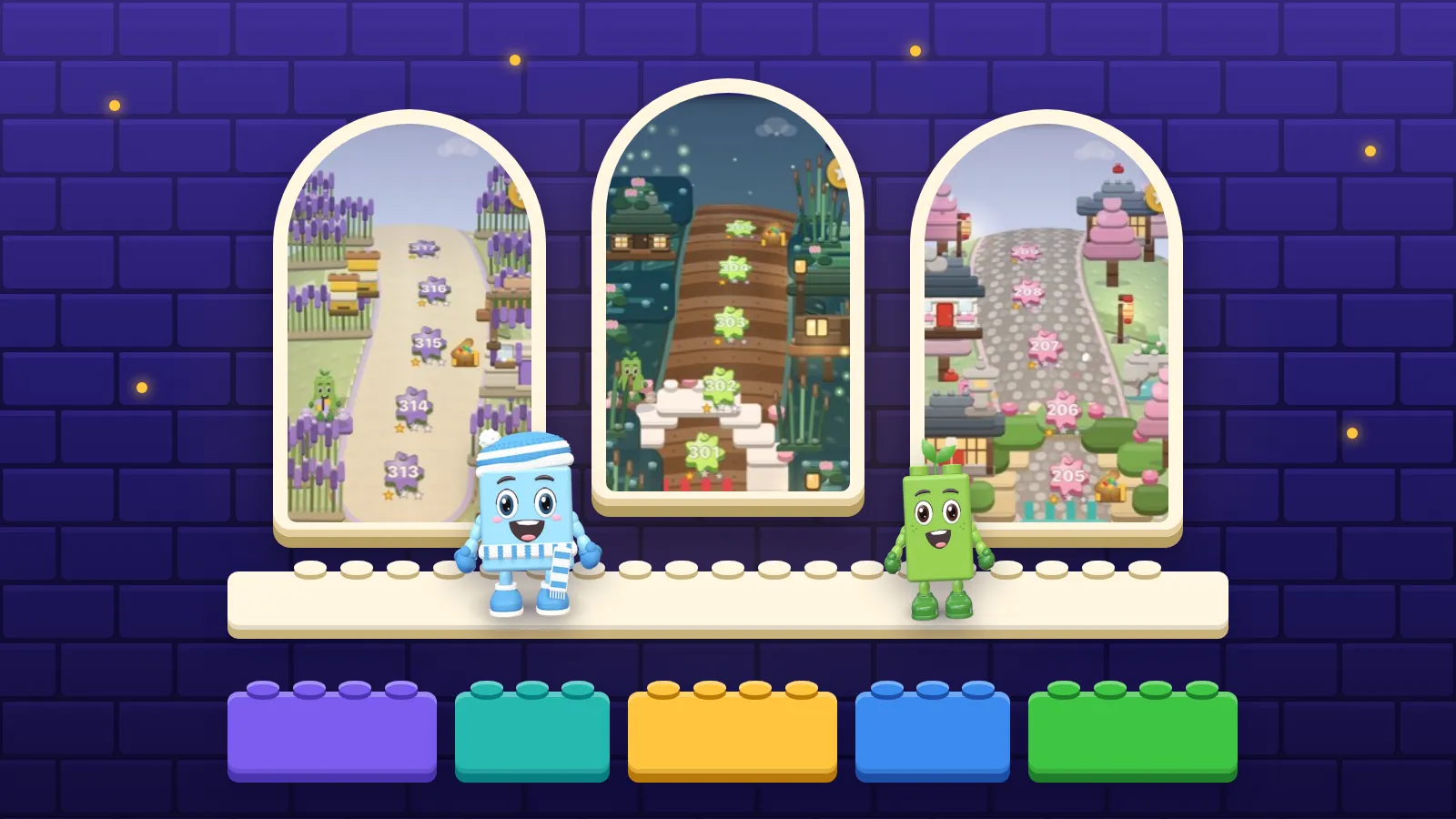
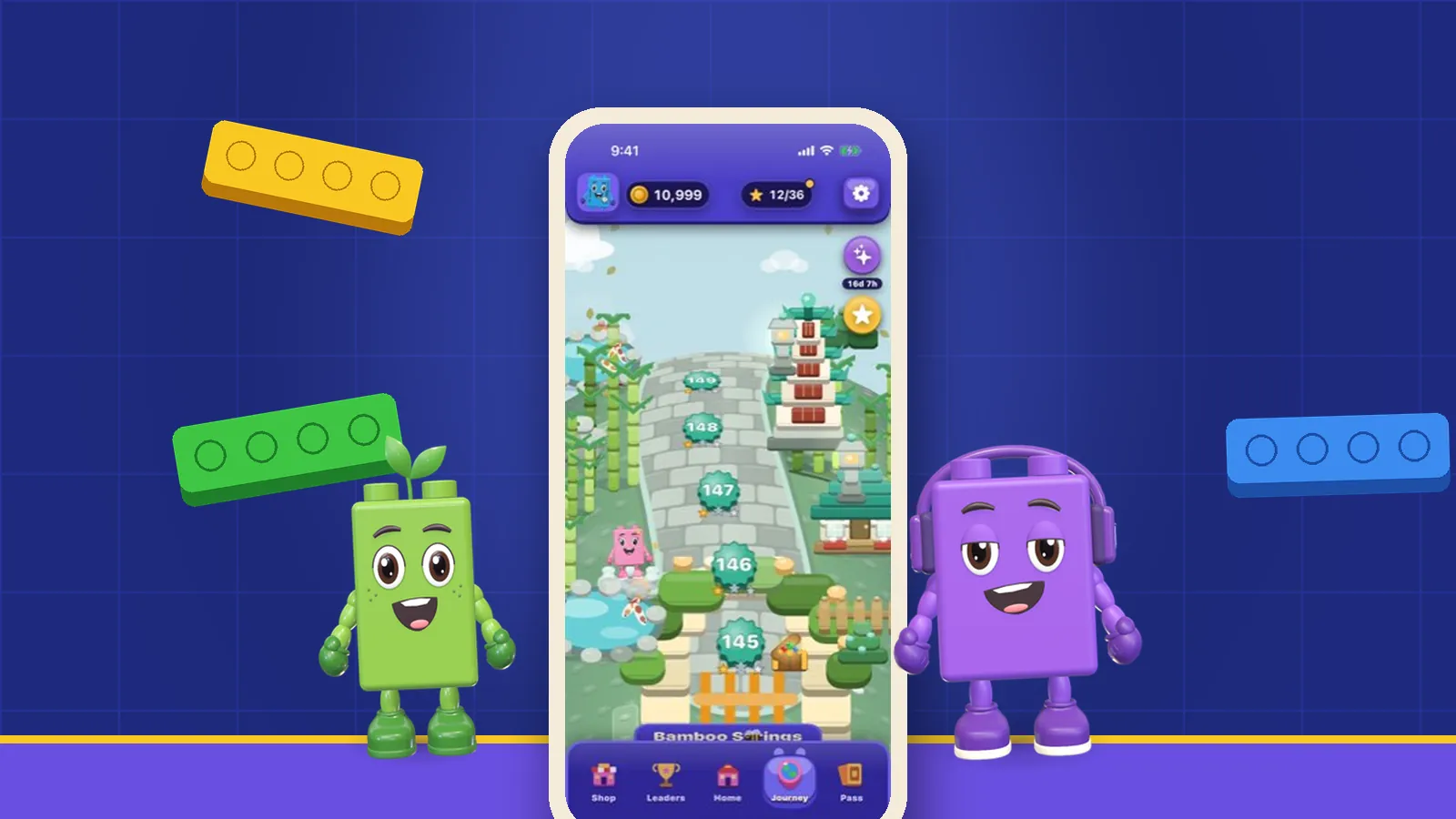
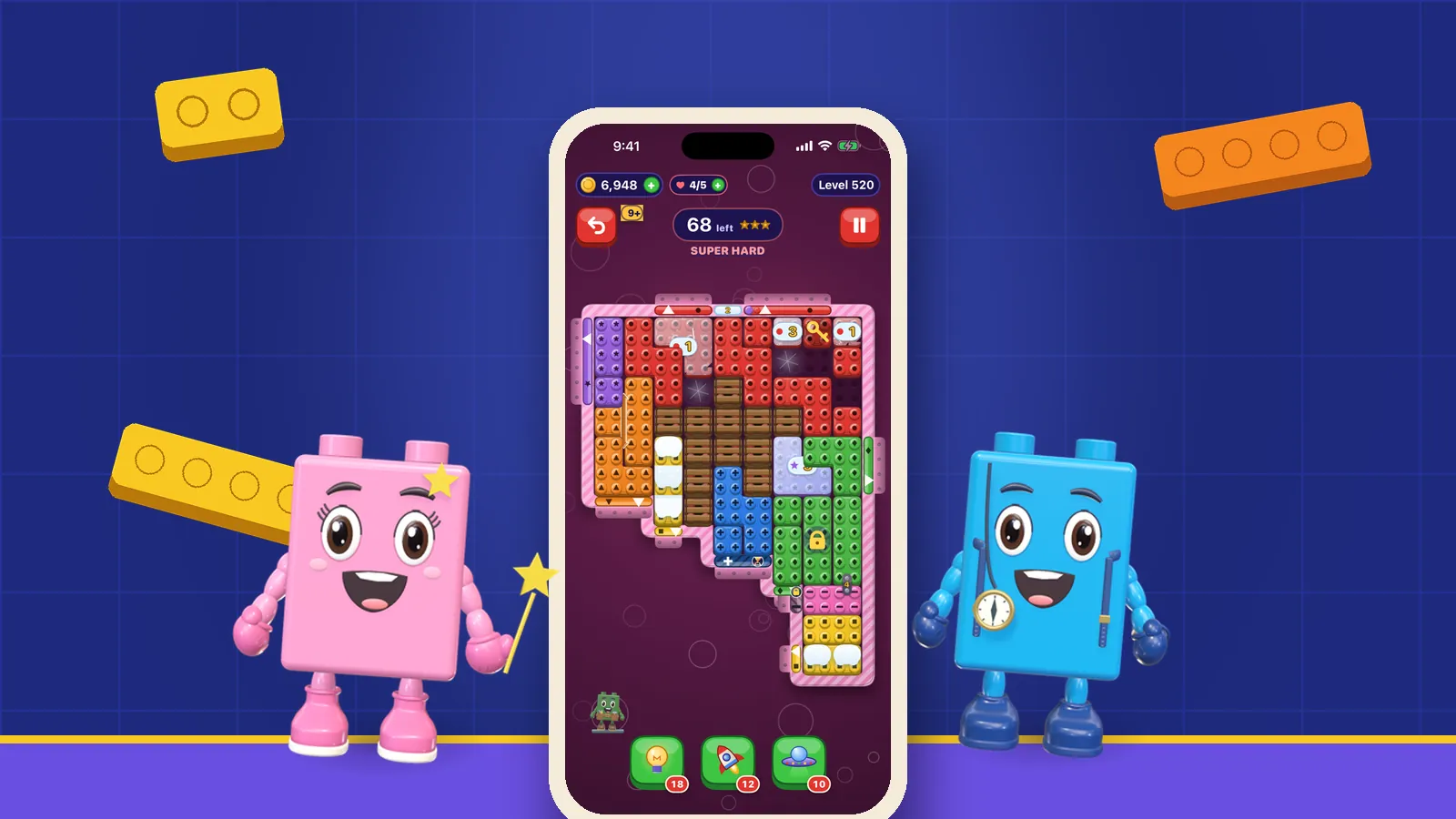
We make OutBrick, so here is how it fares against that list, including the parts a careful parent might question. There is no clock anywhere; every board has a move limit shown before the first move. The nine brick friends speak in text bubbles, with no voices, and there is no public chat. It is rated 4+, and the age rating page sets out why.
OutBrick does have lives and adverts, and we would rather you heard it from us. You hold five lives, and one refills every thirty minutes. The adverts are rewarded videos only, in eight placements, each with its own daily cap and 39 views a day at most, and a video plays only when a player presses a button asking for one; there are no banners, no adverts between levels and none when the app opens. There is a Brick Wheel to spin, which a child may enjoy and a parent may reasonably want to talk about. Optional in-app purchases are handled by Apple, and a one-off Remove Ads purchase stops adverts altogether. The home page sets out exactly what lives, undos and adverts cost. If any of that is not right for your family, that is a fair call.
Most of the harm in the research comes from a child alone with a system built to keep them there. The simplest protection is to be nearby, and sometimes to play too. Talk about why a character is asking for money, or why a chest appeared just as the game got hard; children understand more about persuasion than we expect when it is pointed out. Radesky, Schumacher and Zuckerman made this point early on: what adults do around a young child’s media use matters.
Use the tools on the device as a backstop rather than a substitute. On iPhone and iPad, Screen Time lets you set limits and require permission for purchases through Family Sharing. The American Academy of Pediatrics offers a family media plan that can help you agree the rules together. For games that stretch thinking without the pressure, our look at puzzles and children’s executive function has ideas for playing together.
Sources6Radesky, J. S., Schumacher, J., & Zuckerman, B. (2015). Mobile and interactive media use by young children: The good, the bad, and the unknown. Pediatrics, 135(1), 1–3.
Filed under
Questions, answered
A few useful answers
What is manipulative design in kids’ apps?
Design that serves the app maker over the child, such as characters that pressure children to keep playing or buy, fake countdowns, hard-to-find exits and prizes designed to prolong play. One study found it in about 80% of apps used by 3 to 5 year olds.
How do I tell if a game is calm enough for my child?
Play it yourself first and check for countdowns, adverts that play unasked, characters that guilt your child, lures such as chests and spins, and whether your child can stop at any point without losing something.
Are free games worse for children than paid ones?
Research found advertising in every free children’s app studied and in most paid ones, and free apps scored lower on educational quality because of distracting extras. Paying does not guarantee a calm game, but it often removes some pressure.
Does OutBrick have adverts?
Yes, rewarded videos only, and each plays only when a player presses a button to ask for one. There are no banners or adverts between levels, and Remove Ads switches them off. The home page lists what lives, undos and adverts cost.
APA 7
References
Where a source is a studio’s own history or a news account rather than a study, the article says so beside the claim.
- Radesky, J., Hiniker, A., McLaren, C., Akgun, E., Schaller, A., Weeks, H. M., Campbell, S., & Gearhardt, A. N. (2022). Prevalence and characteristics of manipulative design in mobile applications used by children. JAMA Network Open, 5(6), e2217641. doi.org/10.1001/jamanetworkopen.2022.17641 (opens in a new tab)
- Meyer, M., Adkins, V., Yuan, N., Weeks, H. M., Chang, Y.-J., & Radesky, J. (2019). Advertising in young children’s apps: A content analysis. Journal of Developmental & Behavioral Pediatrics, 40(1), 32–39. doi.org/10.1097/dbp.0000000000000622 (opens in a new tab)
- Przybylski, A. K., & Weinstein, N. (2017). A large-scale test of the Goldilocks hypothesis: Quantifying the relations between digital-screen use and the mental well-being of adolescents. Psychological Science, 28(2), 204–215. doi.org/10.1177/0956797616678438 (opens in a new tab)
- Hirsh-Pasek, K., Zosh, J. M., Golinkoff, R. M., Gray, J. H., Robb, M. B., & Kaufman, J. (2015). Putting education in “educational” apps: Lessons from the science of learning. Psychological Science in the Public Interest, 16(1), 3–34. doi.org/10.1177/1529100615569721 (opens in a new tab)
- Meyer, M., Zosh, J. M., McLaren, C., Robb, M., McCaffery, H., Golinkoff, R. M., Hirsh-Pasek, K., & Radesky, J. (2021). How educational are “educational” apps for young children? App store content analysis using the Four Pillars of Learning framework. Journal of Children and Media, 15(4), 526–548. doi.org/10.1080/17482798.2021.1882516 (opens in a new tab)
- Radesky, J. S., Schumacher, J., & Zuckerman, B. (2015). Mobile and interactive media use by young children: The good, the bad, and the unknown. Pediatrics, 135(1), 1–3. doi.org/10.1542/peds.2014-2251 (opens in a new tab)