Do puzzles build children’s executive function? The evidence
Executive function underpins planning and self-control. What studies say puzzles and games can and cannot do for children, and how to play in ways that help.
Executive function has become one of the most talked-about ideas in child development, and one of the most marketed. Apps, toys and puzzles promise to build it. The research is genuinely encouraging in places and genuinely sobering in others, and parents deserve both halves. Here is what executive function is, what the best evidence says about training it, where puzzles fit, and how to play with a child in ways that are most likely to help.
In Adele Diamond’s widely cited review, executive functions are the mental processes that let us play with ideas, stop to think before acting, meet new challenges, resist temptation and stay focused. She describes three core skills. Inhibitory control is the ability to hold back an impulse and keep attention where it belongs. Working memory is holding information in mind while you use it. Cognitive flexibility is seeing things from another angle and changing course when the situation changes.
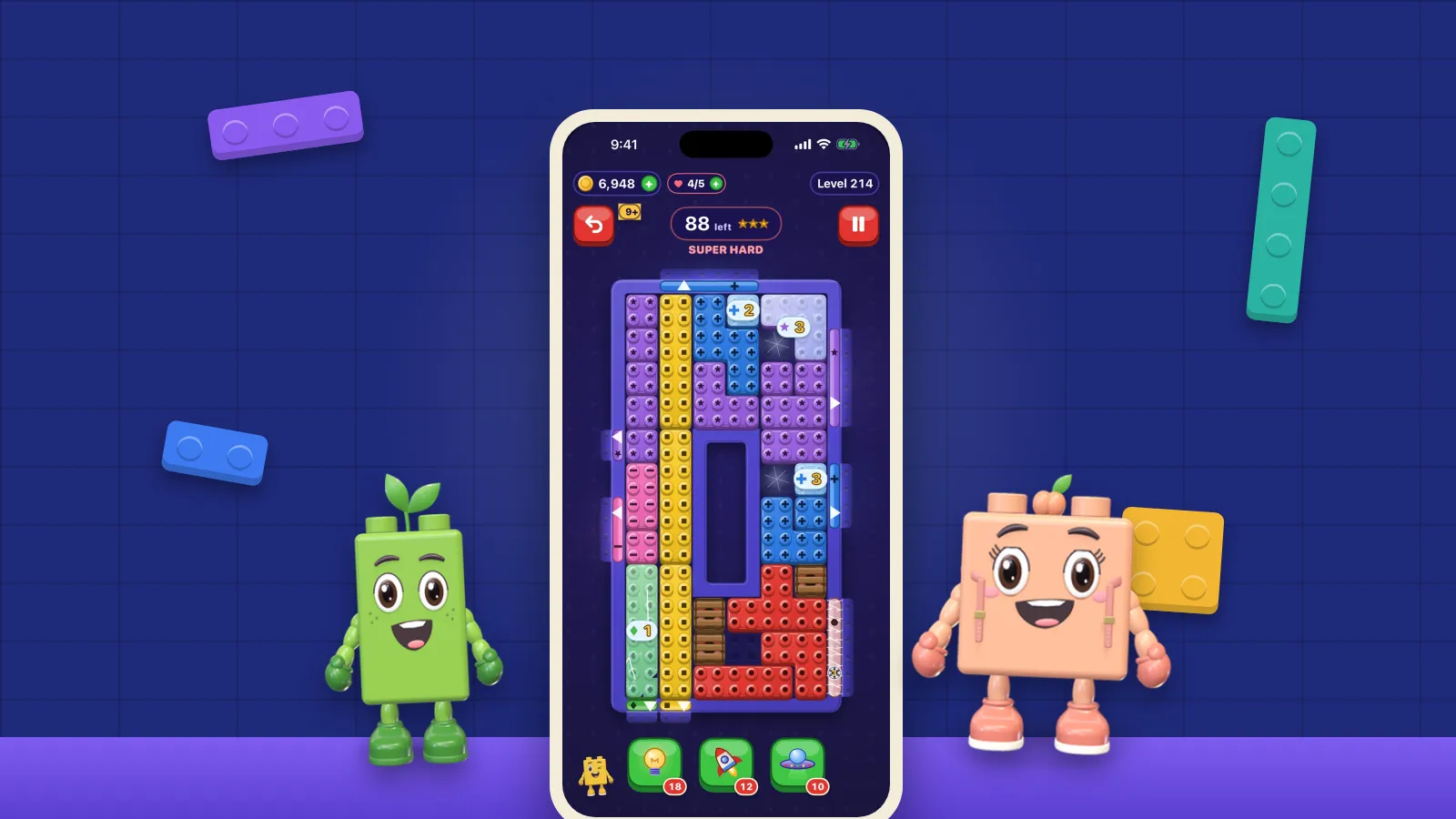
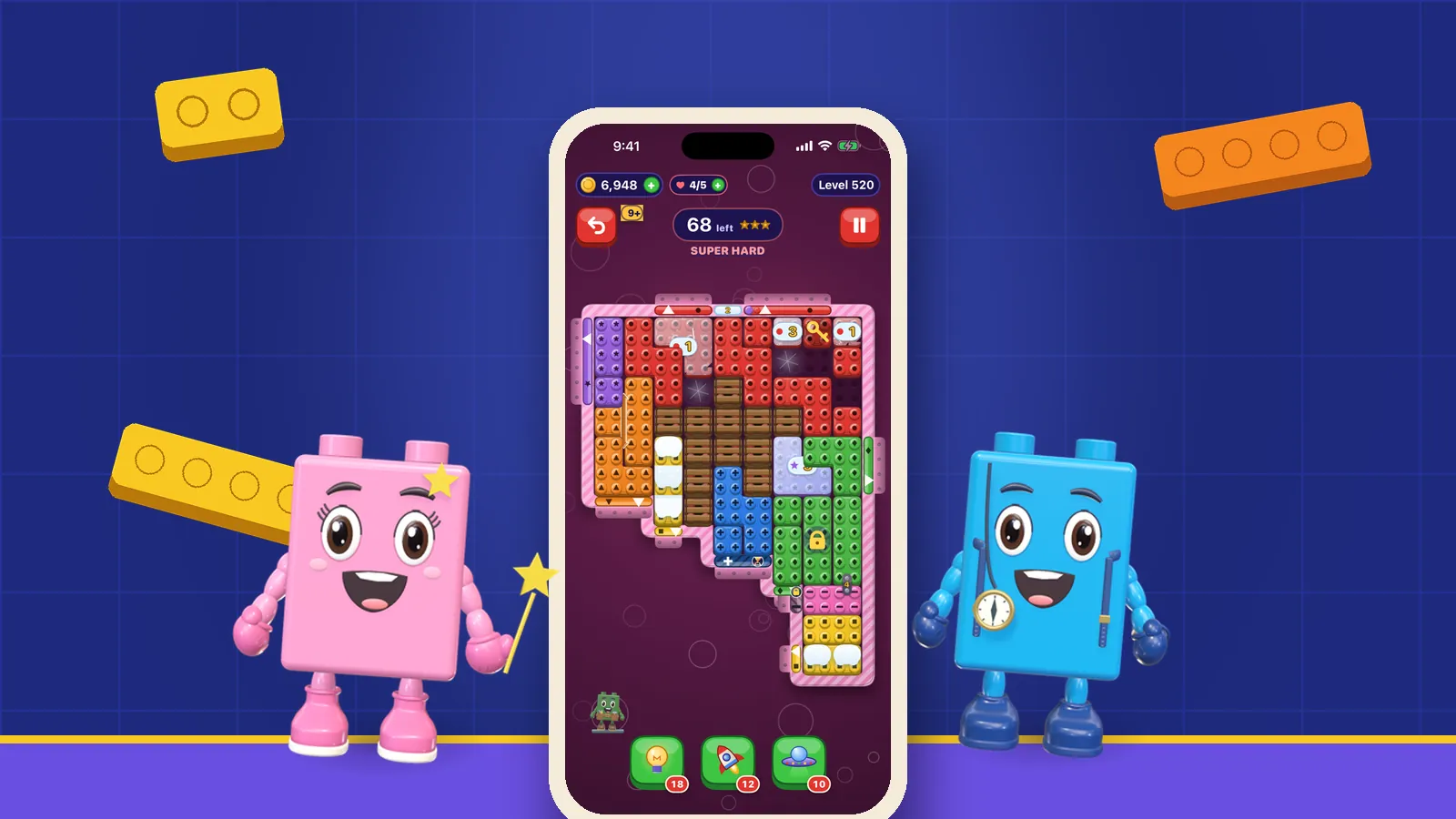
A sliding puzzle exercises all three in miniature. You hold a plan in mind for several moves, you resist the tempting slide that looks good but blocks a gate, and you drop your plan when a brick stops somewhere unexpected. Diamond also stresses that stress, lack of sleep, loneliness and lack of exercise all impair executive function. That is a useful reminder that no puzzle can make up for a tired, anxious child.
These skills develop slowly. Diamond describes a long developmental progression that runs from early childhood well into adolescence, which is one reason expectations for young children should be modest. A four-year-old who slides bricks at random and a seven-year-old who stops to plan two moves ahead are both behaving normally for their age. The gap between them is development, not a deficit a game should be expected to close.
Sources1Diamond, A. (2013). Executive functions. Annual Review of Psychology, 64, 135–168.
In 2011 Diamond and Lee reviewed programmes that had been tested for their effect on executive function in children aged 4 to 12, in the journal Science. A wide range had shown benefits: computerised training, non-computer games, aerobic exercise, martial arts, yoga, mindfulness and some school curricula. What the successful programmes had in common was repeated practice and a challenge that kept increasing as the child improved. Children who started with weaker executive function tended to gain the most.
Two further points in that review are easy to overlook. First, the programmes that addressed children’s emotional and social development, not only their thinking, tended to do better. Second, the benefits were largest on tasks close to what had been practised. That second point turned out to be the crux of the debate that followed.
Sources2Diamond, A., & Lee, K. (2011). Interventions shown to aid executive function development in children 4 to 12 years old. Science, 333(6045), 959–964.
Getting better at a trained task is called near transfer. Getting better at something different, such as reading, arithmetic or general reasoning, is far transfer, and it is what most products promise. Kassai and colleagues pooled the experimental studies on training children’s executive function skills. They found a solid near-transfer effect, with trained skills improving by a moderate amount. But training one component, such as working memory, did not reliably improve the others; the far-transfer effect was small and not statistically significant.
Other meta-analyses point the same way. Melby-Lervåg and Hulme found that working memory training produced short-term gains in working memory itself, with no convincing evidence that it generalised to other skills. Sala and Gobet looked at chess, music and working memory training in children and found that the apparent benefits shrank as study quality rose, concluding that far transfer rarely occurs. Takacs and Kassai, pooling 90 studies of nearly 9,000 children, found that executive function can be fostered in childhood, but found no convincing evidence that the gains lasted at follow-up. They also found that approaches that build these skills implicitly, as part of enjoyable everyday activities, were as effective as explicit drills or more so.
This mirrors the evidence for adults, which we reviewed in are puzzle games good for your brain?
Sources3Kassai, R., Futo, J., Demetrovics, Z., & Takacs, Z. K. (2019). A meta-analysis of the experimental evidence on the near- and far-transfer effects among children’s executive function skills. Psychological Bulletin, 145(2), 165–188.4Melby-Lervåg, M., & Hulme, C. (2013). Is working memory training effective? A meta-analytic review. Developmental Psychology, 49(2), 270–291.5Sala, G., & Gobet, F. (2017). Does far transfer exist? Negative evidence from chess, music, and working memory training. Current Directions in Psychological Science, 26(6), 515–520.6Takacs, Z. K., & Kassai, R. (2019). The efficacy of different interventions to foster children’s executive function skills: A series of meta-analyses. Psychological Bulletin, 145(7), 653–697.
So is there any point? Yes, as long as the expectations are honest. Puzzles are good practice at the skills they use: planning, patience, looking before acting and recovering from a wrong turn. That is worth having for its own sake. There is also some suggestive evidence on spatial skills. Levine and colleagues observed children and their parents at home between the ages of two and four and found that children who played with jigsaw puzzles did better on a spatial transformation task at four and a half, even after accounting for family income, education and how much parents talked. That was an observational study, so it cannot show that the puzzles caused the difference, but it fits with what we know about spatial learning.
The honest position, then, is that puzzles are a good use of play time, not a treatment. A child who enjoys them gets real practice at thinking ahead. A child who is made to do them for their brain is likely to get less from them, and to enjoy them less.
Parents often ask whether screen puzzles are as good as physical ones. The evidence does not settle it. Diamond and Lee’s review included both computerised training and non-computer games among the activities with benefits, and what the successful programmes shared was not the medium but repeated practice with a rising challenge. A jigsaw on the kitchen table and a sliding puzzle on a tablet ask for similar kinds of thinking. What differs more is everything around them: whether an adult is involved, and whether the app is built to hold attention for its own sake.
Sources7Levine, S. C., Ratliff, K. R., Huttenlocher, J., & Cannon, J. (2012). Early puzzle play: A predictor of preschoolers’ spatial transformation skill. Developmental Psychology, 48(2), 530–542.2Diamond, A., & Lee, K. (2011). Interventions shown to aid executive function development in children 4 to 12 years old. Science, 333(6045), 959–964.
The research on what works suggests a few habits. They are all about how you play, not what you buy. OutBrick is rated 4+ and the age rating page explains why; it has a move limit rather than a clock, which lets a child think as long as they need. You can play a board in your browser together before deciding whether it suits your child, and our guide to how to solve sliding block puzzles has strategies you can talk through.
- Play together and think aloud. Ask “what happens if we slide that one?” before anyone moves.
- Aim for hard but possible. The benefit comes from a challenge that grows as the child does.
- Treat a wrong move as information, not failure, and use undo to try another route.
- Use spatial words: above, behind, blocked, turn, edge. Levine’s study suggests the talk around puzzles matters.
- Stop while it is still fun. Enjoyment is not a bonus; it is part of why implicit practice works.
Sources2Diamond, A., & Lee, K. (2011). Interventions shown to aid executive function development in children 4 to 12 years old. Science, 333(6045), 959–964.6Takacs, Z. K., & Kassai, R. (2019). The efficacy of different interventions to foster children’s executive function skills: A series of meta-analyses. Psychological Bulletin, 145(7), 653–697.7Levine, S. C., Ratliff, K. R., Huttenlocher, J., & Cannon, J. (2012). Early puzzle play: A predictor of preschoolers’ spatial transformation skill. Developmental Psychology, 48(2), 530–542.
Filed under
Questions, answered
A few useful answers
What is executive function in children?
Executive function is a set of mental skills that includes working memory, inhibitory control and cognitive flexibility. Together they help children plan, focus, resist impulses and adapt when things change.
Do puzzles improve executive function?
Puzzles give practice at planning and self-control, and practice improves the skills practised. The evidence that this carries over to school subjects or general intelligence is weak, so puzzles are best enjoyed as play rather than prescribed as training.
Are brain training apps good for children?
Meta-analyses find that training improves performance on the trained tasks but rarely transfers to other skills, and gains often fade. Enjoyable everyday activities that stretch children work at least as well.
What age is OutBrick suitable for?
OutBrick is rated 4+ and has no mature content, no clock and no public chat. The age rating page explains the rating, including how its opt-in rewarded videos work.
APA 7
References
Where a source is a studio’s own history or a news account rather than a study, the article says so beside the claim.
- Diamond, A. (2013). Executive functions. Annual Review of Psychology, 64, 135–168. doi.org/10.1146/annurev-psych-113011-143750 (opens in a new tab)
- Diamond, A., & Lee, K. (2011). Interventions shown to aid executive function development in children 4 to 12 years old. Science, 333(6045), 959–964. doi.org/10.1126/science.1204529 (opens in a new tab)
- Kassai, R., Futo, J., Demetrovics, Z., & Takacs, Z. K. (2019). A meta-analysis of the experimental evidence on the near- and far-transfer effects among children’s executive function skills. Psychological Bulletin, 145(2), 165–188. doi.org/10.1037/bul0000180 (opens in a new tab)
- Melby-Lervåg, M., & Hulme, C. (2013). Is working memory training effective? A meta-analytic review. Developmental Psychology, 49(2), 270–291. doi.org/10.1037/a0028228 (opens in a new tab)
- Sala, G., & Gobet, F. (2017). Does far transfer exist? Negative evidence from chess, music, and working memory training. Current Directions in Psychological Science, 26(6), 515–520. doi.org/10.1177/0963721417712760 (opens in a new tab)
- Takacs, Z. K., & Kassai, R. (2019). The efficacy of different interventions to foster children’s executive function skills: A series of meta-analyses. Psychological Bulletin, 145(7), 653–697. doi.org/10.1037/bul0000195 (opens in a new tab)
- Levine, S. C., Ratliff, K. R., Huttenlocher, J., & Cannon, J. (2012). Early puzzle play: A predictor of preschoolers’ spatial transformation skill. Developmental Psychology, 48(2), 530–542. doi.org/10.1037/a0025913 (opens in a new tab)