Gaming before bed: what the research says about sleep
Does a game at night wreck your sleep? What sleep-lab experiments, big surveys and bedtime procrastination research show, and what to try tonight.
It is half past eleven, the lights are off, and you are one board away from sleep. Or three. The worry that a late game is quietly costing you rest is common, and there is real research behind it. There is also a good deal of research that complicates the simple version. The evidence suggests that the length of the session, and what it pushes aside, matters more than the fact that you picked up a game at all.
The cleanest evidence comes from studies that bring people into a sleep laboratory, have them play before their usual bedtime and measure what follows. In one of the first, Weaver and colleagues asked 13 teenage boys who described themselves as night owls to spend 50 minutes before bed either playing an active video game or watching a DVD. After gaming they took a little longer to fall asleep and felt less sleepy, but only slightly. The structure of their sleep, including deep and dream sleep, did not change. The authors concluded that the direct effect of pre-sleep gaming may be more modest than earlier surveys had implied.
Dose seems to matter. King and colleagues had 17 teenage boys play a fast-paced violent game for either 50 or 150 minutes before bed on two separate nights. After the long session, total sleep time fell by about 27 minutes, sleep efficiency fell below 85%, and the boys reported taking around 17 minutes longer to fall asleep. Interestingly, their heart rates were no different between the two nights, which led the authors to suggest that physical arousal may not be the main route by which late play affects sleep.
Both studies are small, both used adolescent boys and both used fast action games. They cannot tell us what a quiet puzzle does to a 40-year-old. What they do suggest is that a normal session before bed is not the same thing as an evening that runs on until midnight.
Sources1Weaver, E., Gradisar, M., Dohnt, H., Lovato, N., & Douglas, P. (2010). The effect of presleep video-game playing on adolescent sleep. Journal of Clinical Sleep Medicine, 6(2), 184–189.2King, D. L., Gradisar, M., Drummond, A., Lovato, N., Wessel, J., Micic, G., Douglas, P., & Delfabbro, P. (2013). The impact of prolonged violent video-gaming on adolescent sleep: An experimental study. Journal of Sleep Research, 22(2), 137–143.
Surveys reach far more people. Exelmans and Van den Bulck interviewed 844 Flemish adults aged 18 to 94. After adjusting for age, sex, education, exercise and stress, those who gamed more reported poorer sleep quality, more fatigue and more insomnia symptoms. Each extra hour of daily gaming went with a bedtime about seven minutes later and a rise time about fourteen minutes later.
A review of 67 studies of children and adolescents by Hale and Guan found that screen time was linked with shorter or later sleep in 90% of them. The authors were careful about the limits: none of that showed cause and effect, screen time and sleep were both measured imperfectly, and few studies looked at what was on the screen.
Size matters too. In a preregistered analysis of more than 50,000 American children, Przybylski found that each hour of screen time was associated with three to eight fewer minutes of sleep a night. Screen time explained less than 2% of the differences in children’s sleep. His conclusion was that the context around screens, such as family routines, mattered more than screen time itself.
There is also a chicken-and-egg problem. Someone who already sleeps badly may reach for a game because they cannot sleep, not the other way round, and a survey taken at one point in time cannot tell the two apart. That does not make the associations meaningless. It means they are a reason to look at your own evenings, not proof that a game is to blame.
Sources3Exelmans, L., & Van den Bulck, J. (2015). Sleep quality is negatively related to video gaming volume in adults. Journal of Sleep Research, 24(2), 189–196.4Hale, L., & Guan, S. (2015). Screen time and sleep among school-aged children and adolescents: A systematic literature review. Sleep Medicine Reviews, 21, 50–58.5Przybylski, A. K. (2019). Digital screen time and pediatric sleep: Evidence from a preregistered cohort study. The Journal of Pediatrics, 205, 218–223.e1.
If a game does not dramatically overexcite the brain, why do late sessions still feel costly? One answer is simple arithmetic. Sleep that does not start cannot happen. Exelmans and Van den Bulck later separated going to bed from trying to sleep in 338 young adults. On average, 39 minutes passed between getting into bed and switching off, and people with a gap of more than an hour were over nine times as likely to be rated poor sleepers as those who went straight to sleep. The survey was a convenience sample, so the numbers are indicative rather than general.
Psychologists have a name for the wider pattern. Kroese and colleagues describe bedtime procrastination as going to bed later than you intended with no outside reason for doing so. In a representative sample of 2,431 Dutch adults it was common, and it helped explain the link between weaker self-regulation and not getting enough sleep. Any activity with no natural ending is well suited to that kind of drift, and many games are built to have no natural ending.
The most useful question is often not “is gaming bad for sleep?” but “did this game end when I meant it to?” The absorption that makes a good game enjoyable, the loss of time that psychologists associate with flow, is exactly what makes that drift easy. For more on noticing the moment to stop, see our piece on when to play and when to put the phone down.
Sources6Exelmans, L., & Van den Bulck, J. (2017). Bedtime, shuteye time and electronic media: Sleep displacement is a two-step process. Journal of Sleep Research, 26(3), 364–370.7Kroese, F. M., Evers, C., Adriaanse, M. A., & de Ridder, D. T. D. (2016). Bedtime procrastination: A self-regulation perspective on sleep insufficiency in the general population. Journal of Health Psychology, 21(5), 853–862.
None of this means you have to give up an evening game. It means choosing the shape of the session before you start. The ideas below follow from the research, although none of them has been tested as a sleep treatment.
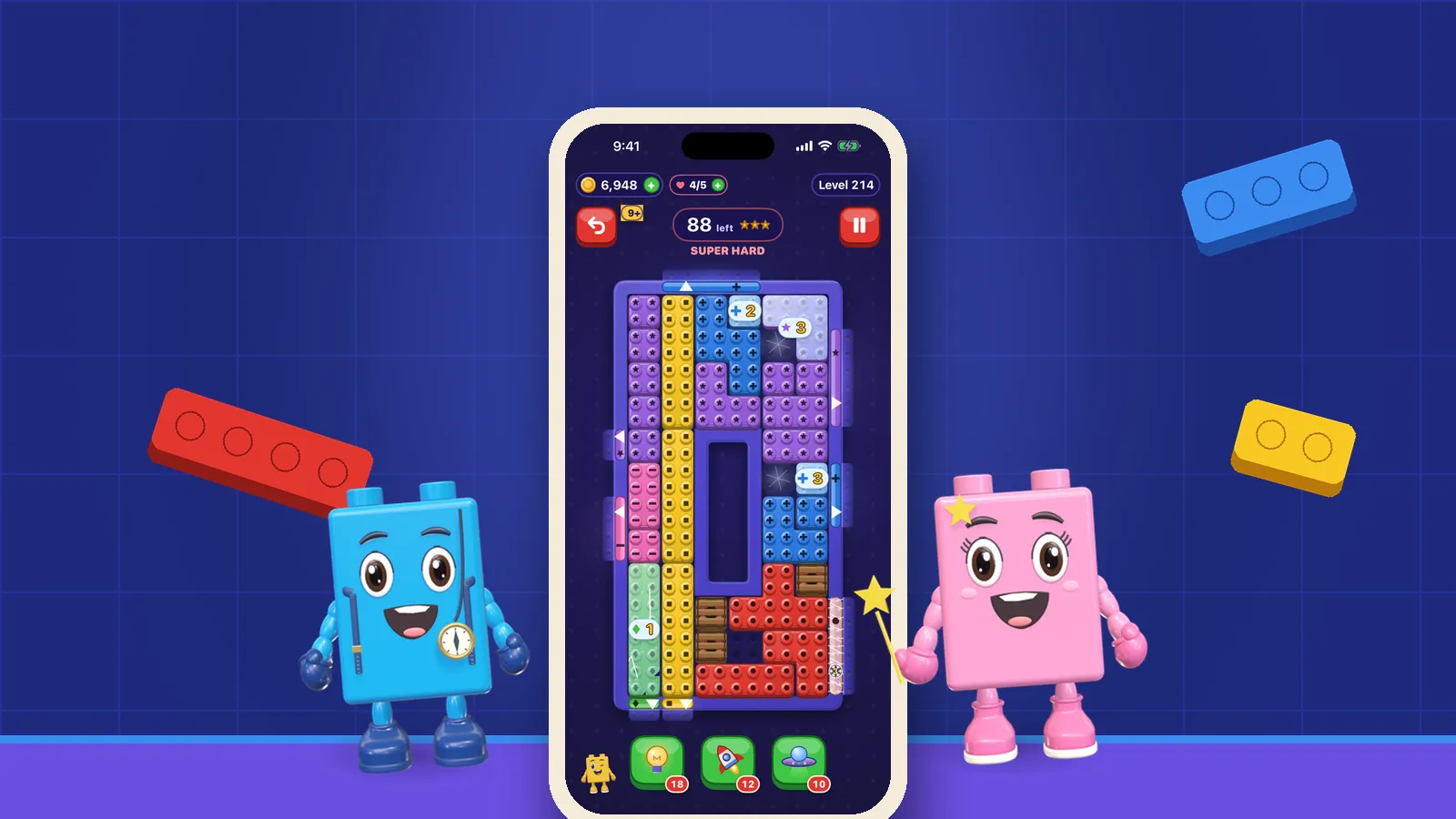
OutBrick is our own example of the shape we aim for. A board has a move limit and never a clock, so nothing speeds up as it gets late, and a clear ends on a card that works as a full stop rather than a countdown to the next level. The daily board is one board and then it is finished. The one thing worth knowing at bedtime is that walking away from a board you have already made a move on counts as a failed attempt and costs one of your lives, so finish the board or stop between boards. The home page sets out what lives, undos and adverts cost.
- Decide on a number of boards or rounds before you start, not a feeling.
- Prefer games with a clear end state over endless modes when it is late.
- Keep long, tense sessions for earlier in the evening; the lab effects grew with length.
- If you notice you are delaying sleep once in bed, move the game out of the bedroom routine rather than trying harder to stop.
- Pick calm over urgent: no timers, no flashing rewards. Our guide to what makes a puzzle game relaxing has a checklist.
Sources2King, D. L., Gradisar, M., Drummond, A., Lovato, N., Wessel, J., Micic, G., Douglas, P., & Delfabbro, P. (2013). The impact of prolonged violent video-gaming on adolescent sleep: An experimental study. Journal of Sleep Research, 22(2), 137–143.7Kroese, F. M., Evers, C., Adriaanse, M. A., & de Ridder, D. T. D. (2016). Bedtime procrastination: A self-regulation perspective on sleep insufficiency in the general population. Journal of Health Psychology, 21(5), 853–862.
Most people who play before bed will not have a sleep problem because of it. If you regularly lie awake, feel unrefreshed or rely on a game to get through the evening, the game may be a symptom rather than the cause. The NHS has practical, non-commercial advice on falling asleep faster and sleeping better, and persistent insomnia is worth raising with a GP.
If you want to see how the same questions apply to screens more broadly, our look at screen time myths covers what the largest studies found.
Filed under
Questions, answered
A few useful answers
Is it bad to play video games before bed?
Not necessarily. Sleep-lab studies found that a normal session before bed delayed sleep only slightly, while a session of two and a half hours cut total sleep by about 27 minutes. Length, and the sleep a session displaces, seem to matter more than playing at all.
How long before bed should I stop gaming?
No study has established a universal cut-off. A practical approach is to decide how many rounds or boards you will play before you start, and to stop at a natural ending rather than when you feel tired.
Are puzzle games better than action games before bed?
Few studies compare genres directly. The experiments that found the clearest effects used fast action games in long sessions, so a short, calm game with a clear end is a reasonable choice, but it has not been proven better for sleep.
What is bedtime procrastination?
Bedtime procrastination means going to bed later than you intended without any outside reason. Research in a large Dutch sample found it common and linked it with getting too little sleep.
APA 7
References
Where a source is a studio’s own history or a news account rather than a study, the article says so beside the claim.
- Weaver, E., Gradisar, M., Dohnt, H., Lovato, N., & Douglas, P. (2010). The effect of presleep video-game playing on adolescent sleep. Journal of Clinical Sleep Medicine, 6(2), 184–189. doi.org/10.5664/jcsm.27769 (opens in a new tab)
- King, D. L., Gradisar, M., Drummond, A., Lovato, N., Wessel, J., Micic, G., Douglas, P., & Delfabbro, P. (2013). The impact of prolonged violent video-gaming on adolescent sleep: An experimental study. Journal of Sleep Research, 22(2), 137–143. doi.org/10.1111/j.1365-2869.2012.01060.x (opens in a new tab)
- Exelmans, L., & Van den Bulck, J. (2015). Sleep quality is negatively related to video gaming volume in adults. Journal of Sleep Research, 24(2), 189–196. doi.org/10.1111/jsr.12255 (opens in a new tab)
- Hale, L., & Guan, S. (2015). Screen time and sleep among school-aged children and adolescents: A systematic literature review. Sleep Medicine Reviews, 21, 50–58. doi.org/10.1016/j.smrv.2014.07.007 (opens in a new tab)
- Przybylski, A. K. (2019). Digital screen time and pediatric sleep: Evidence from a preregistered cohort study. The Journal of Pediatrics, 205, 218–223.e1. doi.org/10.1016/j.jpeds.2018.09.054 (opens in a new tab)
- Exelmans, L., & Van den Bulck, J. (2017). Bedtime, shuteye time and electronic media: Sleep displacement is a two-step process. Journal of Sleep Research, 26(3), 364–370. doi.org/10.1111/jsr.12510 (opens in a new tab)
- Kroese, F. M., Evers, C., Adriaanse, M. A., & de Ridder, D. T. D. (2016). Bedtime procrastination: A self-regulation perspective on sleep insufficiency in the general population. Journal of Health Psychology, 21(5), 853–862. doi.org/10.1177/1359105314540014 (opens in a new tab)