Flow in puzzle games: the zone between bored and overwhelmed
Why the best puzzle sessions feel effortless, what Tetris experiments reveal about flow, and how to find your own sweet spot of challenge.
Most people who play puzzle games know the feeling. The board makes sense, each move leads to the next, and when you look up twenty minutes have gone. Psychologists call it flow. The idea comes from Mihaly Csikszentmihalyi, who studied people absorbed in climbing, chess, surgery and art and found they described the same state in strikingly similar words. Games are one of the most reliable places to find it, and puzzle games offer a particularly clear view of how it works.
Csikszentmihalyi described flow through a set of features that tend to arrive together. To study them properly, researchers needed a way to measure the state, and one of the most widely used tools came from sport. Jackson and Marsh built the Flow State Scale from interviews with elite athletes and earlier flow research, then tested it with 394 athletes. The final questionnaire has nine parts, each with four items.
Statistical tests supported the nine scales, and a single overall flow factor linked them together. Read as a list, the dimensions are also a good description of a satisfying puzzle session.
- A balance between the challenge in front of you and your skill
- Action and awareness merging, so you stop thinking about what you are doing
- Clear goals and unambiguous feedback
- Concentration on the task at hand and a sense of control
- Losing self-consciousness and losing track of time
- An autotelic experience: doing the thing is its own reward
Sources1Jackson, S. A., & Marsh, H. W. (1996). Development and validation of a scale to measure optimal experience: The Flow State Scale. Journal of Sport and Exercise Psychology, 18(1), 17–35.
The first item on that list, challenge matched to skill, is the one people usually mean by “the zone”. For a long time the evidence was mostly correlational: people reported more flow when they felt balanced. Keller and Bless set out to test it experimentally, using a paradigm in which a task’s demands were either held too low, adjusted continuously to each person’s skill, or pushed beyond it. Matching demands to skill caused more flow, and people with a strong habit of acting rather than dwelling were most sensitive to the manipulation.
Tetris has become a favourite tool for this work. Harmat and colleagues had 77 people play it at three levels: easy, optimal and difficult. The optimal level produced the highest flow, the most positive mood and the strongest sense of effortless attention. Players reporting more flow also breathed more deeply, a sign of a more relaxed physiological state. The researchers had also predicted that flow would quieten the front of the brain; their brain measurements found no sign of that.
In other words, the sweet spot is not a fixed difficulty. It is a relationship between a particular task and a particular person, which is why the same level can bore one player and defeat another.
Sources2Keller, J., & Bless, H. (2008). Flow and regulatory compatibility: An experimental approach to the flow model of intrinsic motivation. Personality and Social Psychology Bulletin, 34(2), 196–209.3Harmat, L., de Manzano, Ö., Theorell, T., Högman, L., Fischer, H., & Ullén, F. (2015). Physiological correlates of the flow experience during computer game playing. International Journal of Psychophysiology, 97(1), 1–7.
Flow is not a switch that turns on whenever difficulty is right. Fullagar and colleagues followed 27 student musicians through a semester of rehearsing for a recital. The more a passage’s challenge matched their perceived skill, the more flow they reported. But skill level changed the picture, and flow and performance anxiety behaved like opposites: when one was high, the other was low. A matched challenge in a situation that feels threatening may produce nerves rather than absorption.
For players, that is a useful reminder that pressure from outside the puzzle can crowd out flow even when the puzzle itself is well pitched. A timer, a pop-up or a sense that failure will cost you something can move you from absorbed to anxious without the board changing at all. We explored that difference in what makes a puzzle game calm.
Sources4Fullagar, C. J., Knight, P. A., & Sovern, H. S. (2013). Challenge/skill balance, flow, and performance anxiety. Applied Psychology, 62(2), 236–259.
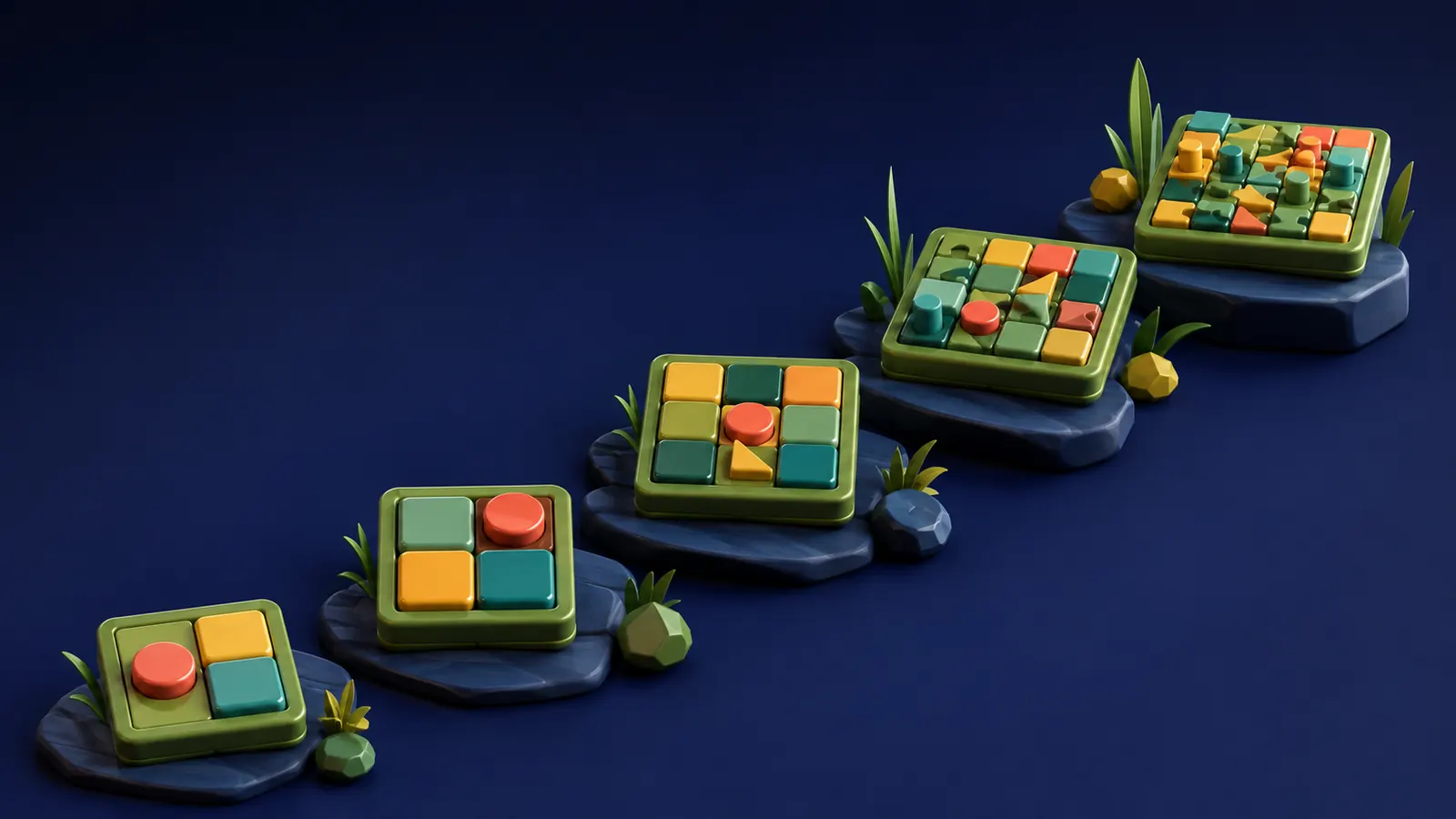
Sweetser and Wyeth turned flow into a checklist for game designers. Their GameFlow model has eight elements: concentration, challenge, player skills, control, clear goals, feedback, immersion and social interaction. In an initial test, reviewers using the criteria could distinguish a well-rated strategy game from a poorly rated one and explain why. It is a design framework rather than proof that any game produces flow, but it captures why puzzle games are so good at it. The goal is visible, the feedback is immediate, and the next challenge is only one move away.
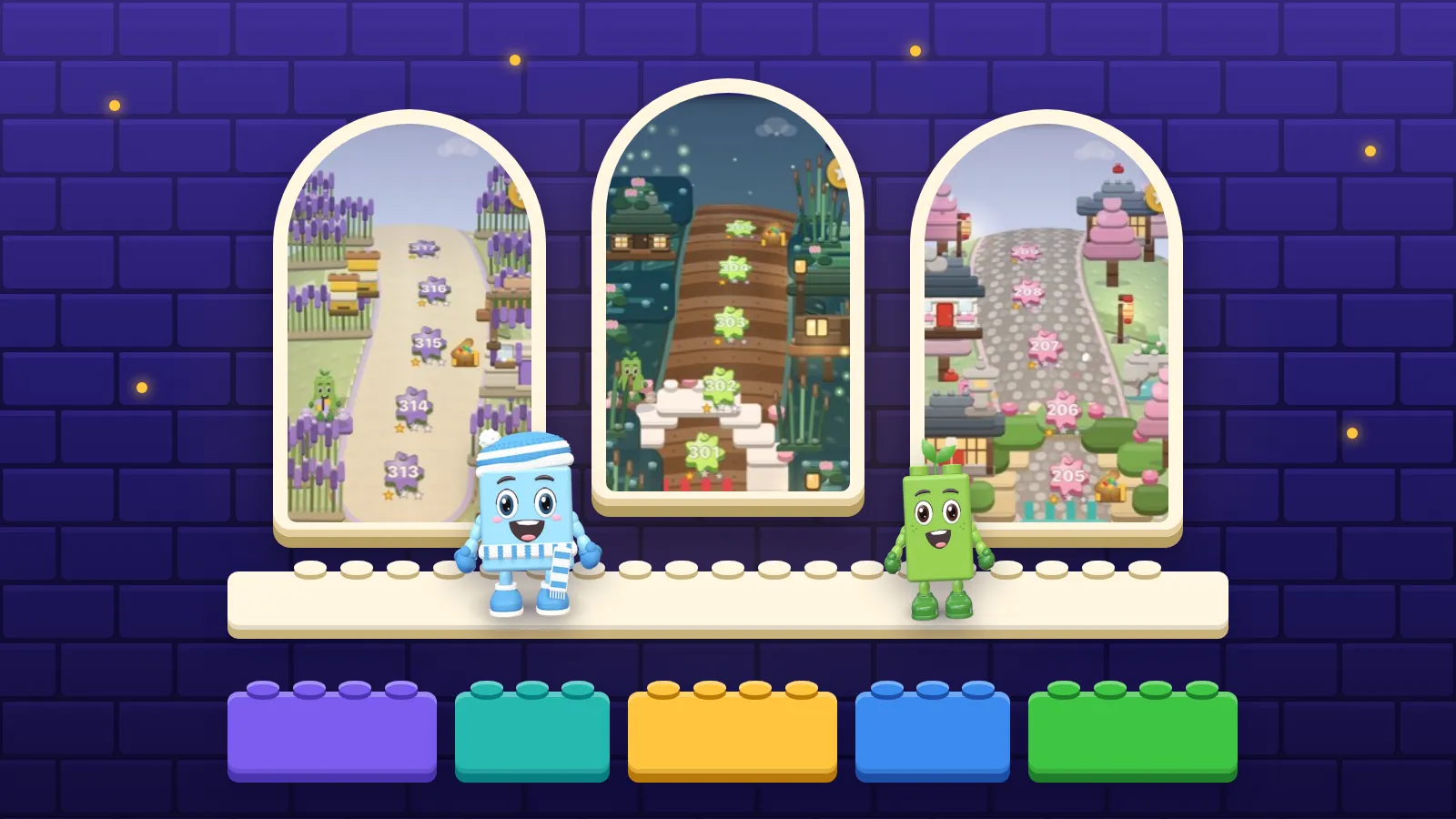
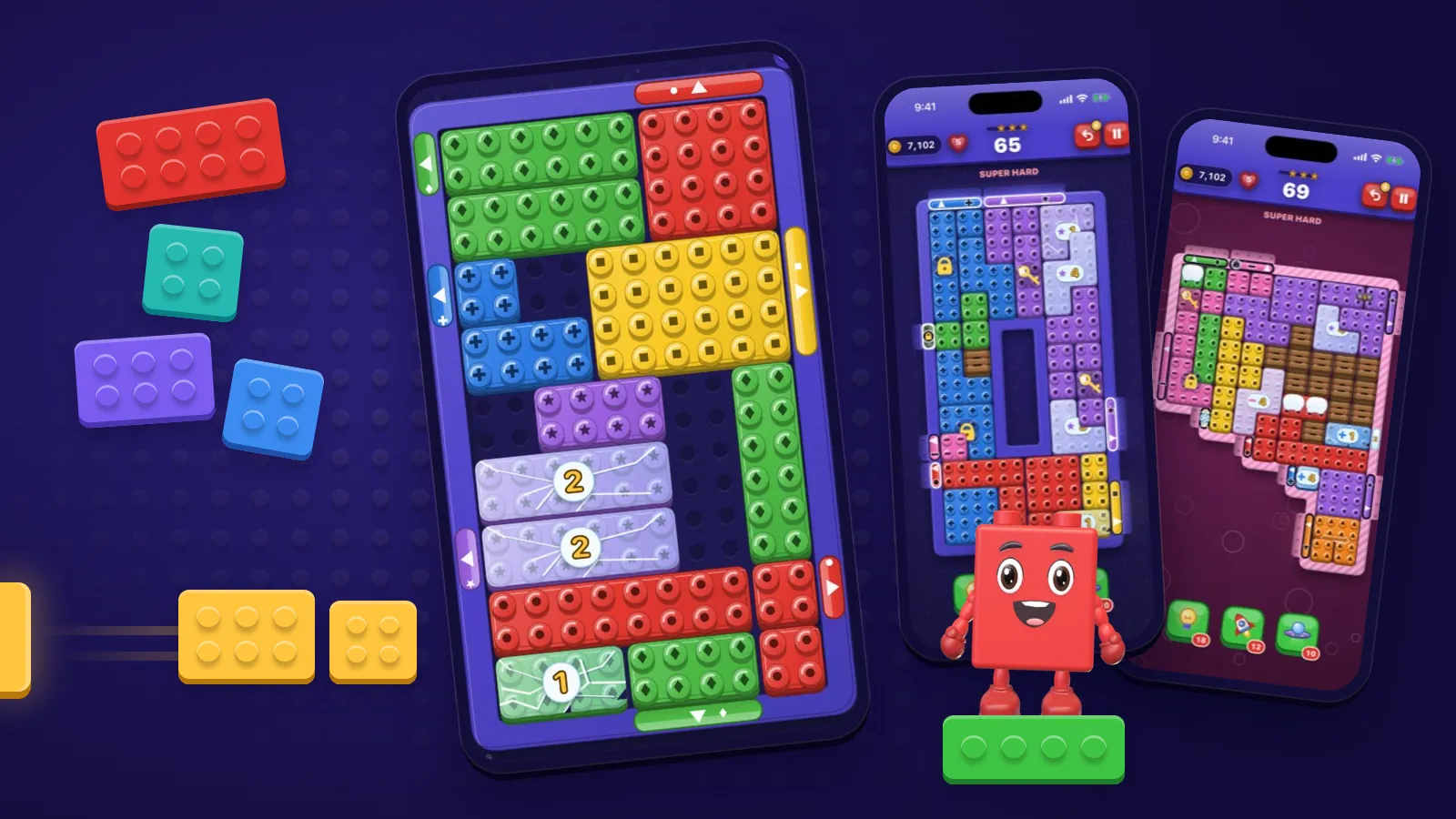
OutBrick is built around those features. A board shows its goals and move limit from the first tap, every slide and swap has a readable result, and there is never a clock. The first undo on every board is free, which protects the sense of control when an experiment goes wrong. Later boards add crates, ice, locks, moss and counted gates, so the challenge grows as your skill does. We wrote about the thinking behind that pacing in how to build a kinder difficulty curve.
Puzzle games also have a rhythm of their own that pure action games do not. Flow in a sliding or sorting puzzle tends to come in waves: a quiet stretch of reading the board, a moment when the route becomes clear, then a run of moves that feel almost automatic as the plan plays out. The reading phase can feel less like flow than the execution, but it is what makes the execution satisfying. Players who learn to read boards faster, for example by spotting which brick is blocking a gate, spend more of each board in the easy-flowing part. Our colour sort puzzle tips are largely about that skill.
Sources5Sweetser, P., & Wyeth, P. (2005). GameFlow: A model for evaluating player enjoyment in games. Computers in Entertainment, 3(3), 3.
You can tune a game towards flow yourself. The simplest signals are boredom and frustration: if your mind wanders, raise the challenge; if you feel stuck and tense, lower it for a while.
One caution. The loss of time awareness that makes flow pleasant is also why a session can quietly run long. Deciding when you will stop before you start protects both the flow and the evening. Our piece on gaming before bed looks at what that drift costs.
- Bored? Aim for a stricter personal target, such as clearing every board with as many moves to spare as you can.
- Overwhelmed? Replay an earlier board or use undo to test ideas instead of guessing.
- Remove outside pressure: silence notifications and avoid timed modes if they make you tense.
- Try a single board to test the feeling: play one in your browser.
Sources3Harmat, L., de Manzano, Ö., Theorell, T., Högman, L., Fischer, H., & Ullén, F. (2015). Physiological correlates of the flow experience during computer game playing. International Journal of Psychophysiology, 97(1), 1–7.4Fullagar, C. J., Knight, P. A., & Sovern, H. S. (2013). Challenge/skill balance, flow, and performance anxiety. Applied Psychology, 62(2), 236–259.
Filed under
Questions, answered
A few useful answers
What is flow in video games?
Flow is a state of deep, enjoyable absorption in which you concentrate fully, feel in control and lose track of time. It tends to appear when a game’s challenge closely matches your skill and the goals and feedback are clear.
Can you get into flow playing puzzle games?
Yes. In an experiment with Tetris, players reported the most flow at a difficulty matched to their skill, compared with easier and harder versions. Puzzle games suit flow because goals are visible and feedback is immediate.
Is flow the same as being addicted to a game?
No. Flow is a temporary state of absorption, not a pattern of lost control. Because flow makes time pass quickly, though, it is worth deciding when to stop before you start.
Why does a timer break my concentration?
Research with musicians found that flow and performance anxiety behave like opposites. Pressure from outside the task, such as a countdown, can turn absorption into tension even when the puzzle itself is well matched to your skill.
APA 7
References
Where a source is a studio’s own history or a news account rather than a study, the article says so beside the claim.
- Jackson, S. A., & Marsh, H. W. (1996). Development and validation of a scale to measure optimal experience: The Flow State Scale. Journal of Sport and Exercise Psychology, 18(1), 17–35. doi.org/10.1123/jsep.18.1.17 (opens in a new tab)
- Keller, J., & Bless, H. (2008). Flow and regulatory compatibility: An experimental approach to the flow model of intrinsic motivation. Personality and Social Psychology Bulletin, 34(2), 196–209. doi.org/10.1177/0146167207310026 (opens in a new tab)
- Harmat, L., de Manzano, Ö., Theorell, T., Högman, L., Fischer, H., & Ullén, F. (2015). Physiological correlates of the flow experience during computer game playing. International Journal of Psychophysiology, 97(1), 1–7. doi.org/10.1016/j.ijpsycho.2015.05.001 (opens in a new tab)
- Fullagar, C. J., Knight, P. A., & Sovern, H. S. (2013). Challenge/skill balance, flow, and performance anxiety. Applied Psychology, 62(2), 236–259. doi.org/10.1111/j.1464-0597.2012.00494.x (opens in a new tab)
- Sweetser, P., & Wyeth, P. (2005). GameFlow: A model for evaluating player enjoyment in games. Computers in Entertainment, 3(3), 3. doi.org/10.1145/1077246.1077253 (opens in a new tab)