Sensory-friendly games: calm design for neurodivergent players
Many autistic and neurodivergent players are sensitive to sound, light and surprise. What research says, and how predictable, quiet, low-pressure design helps.
For many autistic people, and for many others who process the senses differently, the modern game is a lot. Music that cannot be turned down separately, sudden sound effects, flashing celebrations, a notification that arrives mid-thought, a menu that changes without warning. None of these is designed to exclude anyone, and all of them can. This piece looks at what research says about sensory differences and gaming, and at the design choices that make a game predictable, quiet and low-pressure without making it dull.
Ben-Sasson and colleagues updated their meta-analysis of sensory symptoms in autism in 2019, pooling 55 questionnaire studies covering more than 4,600 autistic people. Compared with typically developing peers, autistic people reported much more over-responsiveness (finding sounds, lights or textures overwhelming), under-responsiveness (not noticing some sensations) and sensation seeking. The differences were large, but the results also varied a lot between studies and people, which is a reminder that there is no single autistic sensory profile.
Sensory sensitivity is not confined to people with a diagnosis. Robertson and Simmons surveyed 212 adults from the general population and found a strong link between the number of autistic traits a person reported and how often they experienced sensory processing difficulties. Designing for sensory comfort is therefore not a niche concern. It helps a wide range of players, including people with migraine, anxiety or simple fatigue at the end of a long day.
Sources1Ben-Sasson, A., Gal, E., Fluss, R., Katz-Zetler, N., & Cermak, S. A. (2019). Update of a meta-analysis of sensory symptoms in ASD: A new decade of research. Journal of Autism and Developmental Disorders, 49(12), 4974–4996.2Robertson, A. E., & Simmons, D. R. (2013). The relationship between sensory sensitivity and autistic traits in the general population. Journal of Autism and Developmental Disorders, 43(4), 775–784.
Words matter here, and there is no single answer. Kenny and colleagues asked more than 3,400 members of the UK autism community which terms they preferred. “Autism” and “on the autism spectrum” were broadly accepted. “Autistic” was endorsed by many autistic adults and families but fewer professionals, while “person with autism” was more popular with professionals than with autistic adults. There was no universally preferred term. In this piece we mostly say autistic people, following many autistic adults’ preference, and neurodivergent for the wider group, while recognising that individuals choose differently.
We also avoid medical framing. Sensory differences are part of how some people experience the world, not something a game should try to fix. The National Autistic Society’s guide to sensory differences is a good plain-language introduction.
Sources3Kenny, L., Hattersley, C., Molins, B., Buckley, C., Povey, C., & Pellicano, E. (2016). Which terms should be used to describe autism? Perspectives from the UK autism community. Autism, 20(4), 442–462.
Much early research on autism and video games focused on risk. When Mazurek, Engelhardt and Clark asked autistic adults directly, a fuller picture emerged. Games were an important and enjoyable part of many participants’ lives, valued for entertainment, relaxation and stress relief, and for social connection, alongside some concerns about time spent playing. Ringland’s ethnographic study of a Minecraft community set up for autistic children showed how a carefully run virtual world could give children a comfortable place to play with peers, and argued that such spaces are no less real than a playground.
Spiel and Gerling reviewed 66 research papers on games for neurodivergent players and were critical of the field. Most games were built for children, designed top-down, aimed at education or therapy, and shaped by a medical model of disability rather than by what neurodivergent players themselves enjoy. Their conclusion is a good one for any designer: build games that neurodivergent people want to play, and give them control, rather than games that try to change them.
That also means taking seriously the social side of play that many autistic players value, and the pressures that can come with it. Competitive modes, public leaderboards and chat with strangers suit some players and overwhelm others. A game can offer them without pushing them, so that a player who wants a quiet, solitary puzzle never has to wade through social prompts to find it.
Sources4Mazurek, M. O., Engelhardt, C. R., & Clark, K. E. (2015). Video games from the perspective of adults with autism spectrum disorder. Computers in Human Behavior, 51, 122–130.5Ringland, K. E. (2019). A place to play: The (dis)abled embodied experience for autistic children in online spaces. In Proceedings of the 2019 CHI Conference on Human Factors in Computing Systems (pp. 1–14). ACM.6Spiel, K., & Gerling, K. (2021). The purpose of play: How HCI games research fails neurodivergent populations. ACM Transactions on Computer-Human Interaction, 28(2), 1–40.
The common thread is control. People differ in which sensations they find difficult, so the goal is not a single “quiet mode” but the ability to turn each channel up, down or off, and a game that behaves the same way every time.
Predictability deserves special attention because games so often trade on surprise. A sudden event can be delightful for one player and distressing for another. The answer is not to remove all novelty, but to signal it: tell the player a new mechanic is coming, let them preview it, and keep the rules of the world stable once they are learned. Routine can be a pleasure in its own right, which is part of the appeal of a daily board that arrives at the same time in the same form every day.
- Separate controls for music, sound effects and haptics, each of which can be turned off completely.
- Respect the system’s Reduce Motion setting, and never flash large areas of the screen.
- Predictable feedback: the same action always produces the same sound, animation and result.
- No surprises: no pop-ups mid-play, no sudden loud sounds, and warning before anything new appears.
- Pause and stop at any time without losing anything, and no clock pushing the player on.
- Clear, literal instructions that can be found again, and consistent menus that do not reorganise themselves.
- Rewards and celebrations that are short, and that can be toned down.
Sources1Ben-Sasson, A., Gal, E., Fluss, R., Katz-Zetler, N., & Cermak, S. A. (2019). Update of a meta-analysis of sensory symptoms in ASD: A new decade of research. Journal of Autism and Developmental Disorders, 49(12), 4974–4996.6Spiel, K., & Gerling, K. (2021). The purpose of play: How HCI games research fails neurodivergent populations. ACM Transactions on Computer-Human Interaction, 28(2), 1–40.
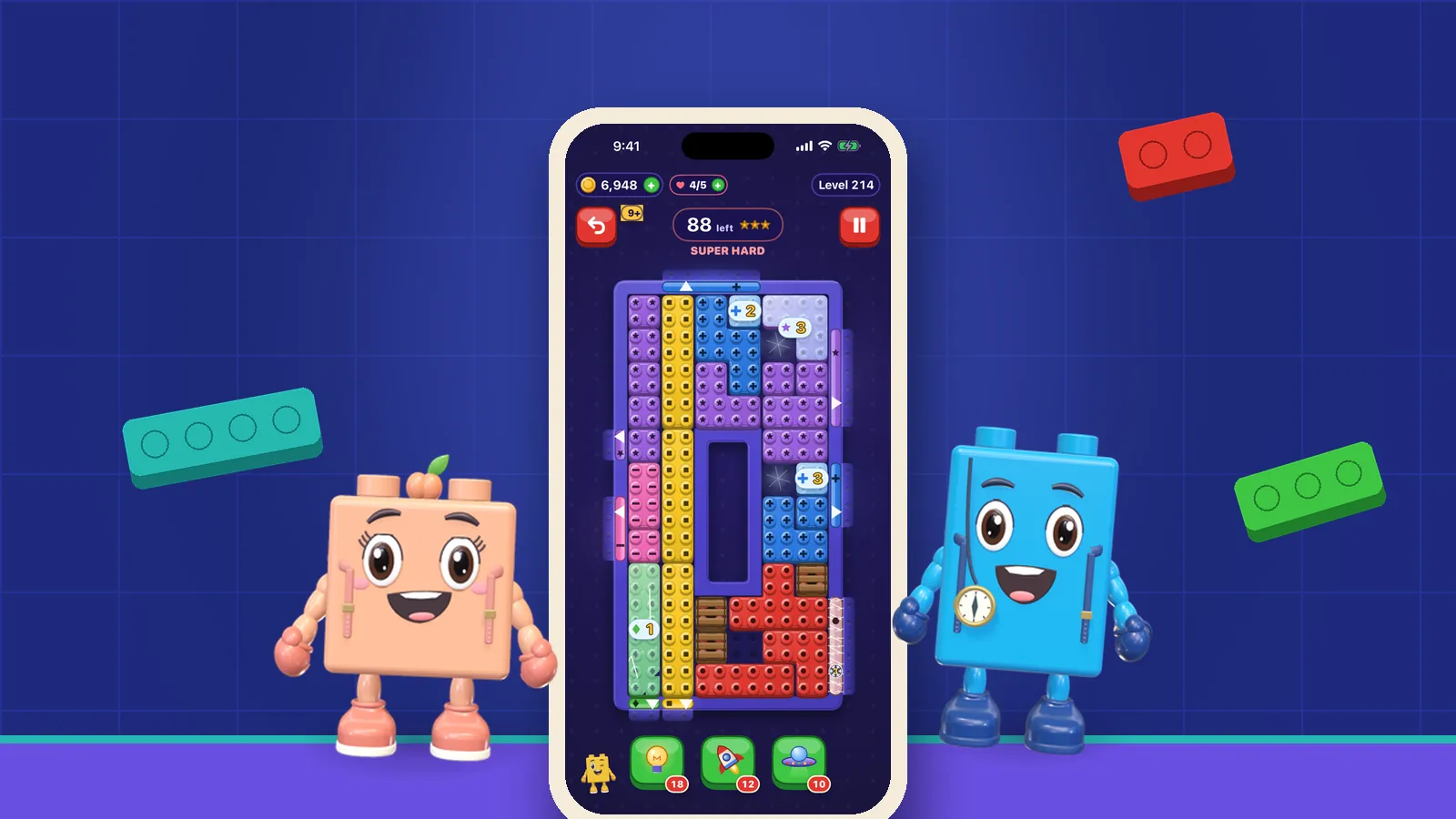
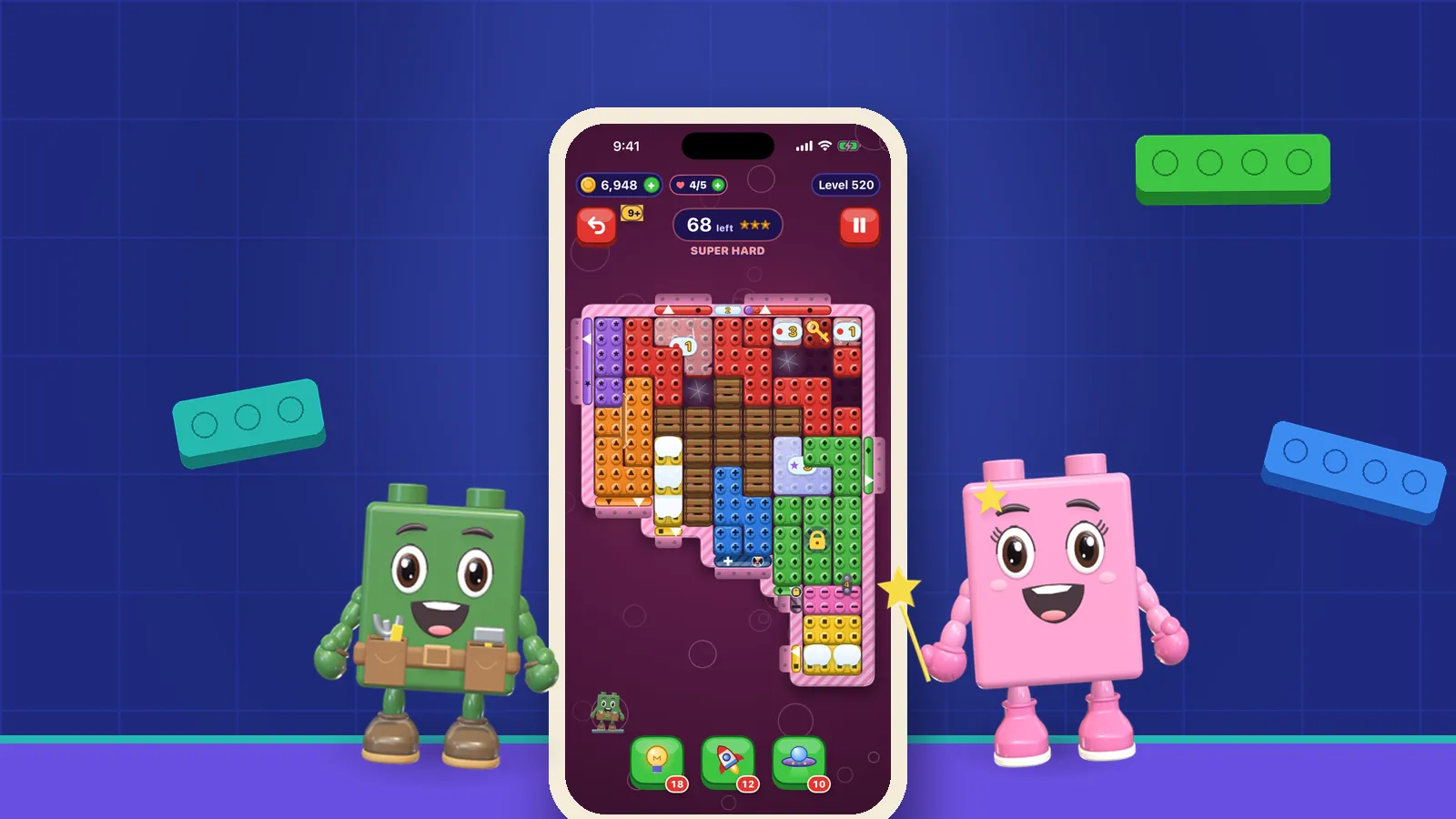
We did not design OutBrick for any one group, but many of these principles are ones we care about. Sound, music, haptics and notifications can each be switched off in Settings. Reduce Motion is honoured everywhere, cutting parallax, confetti and spring-heavy transitions. The nine brick friends speak in text bubbles, never voices, so the game can be completely silent. There is no clock: every board shows its move limit before the first move, and a slide always behaves the same way, stopping where you let go. Nothing interrupts a board, and adverts are rewarded videos that only play when a player presses a button asking for one.
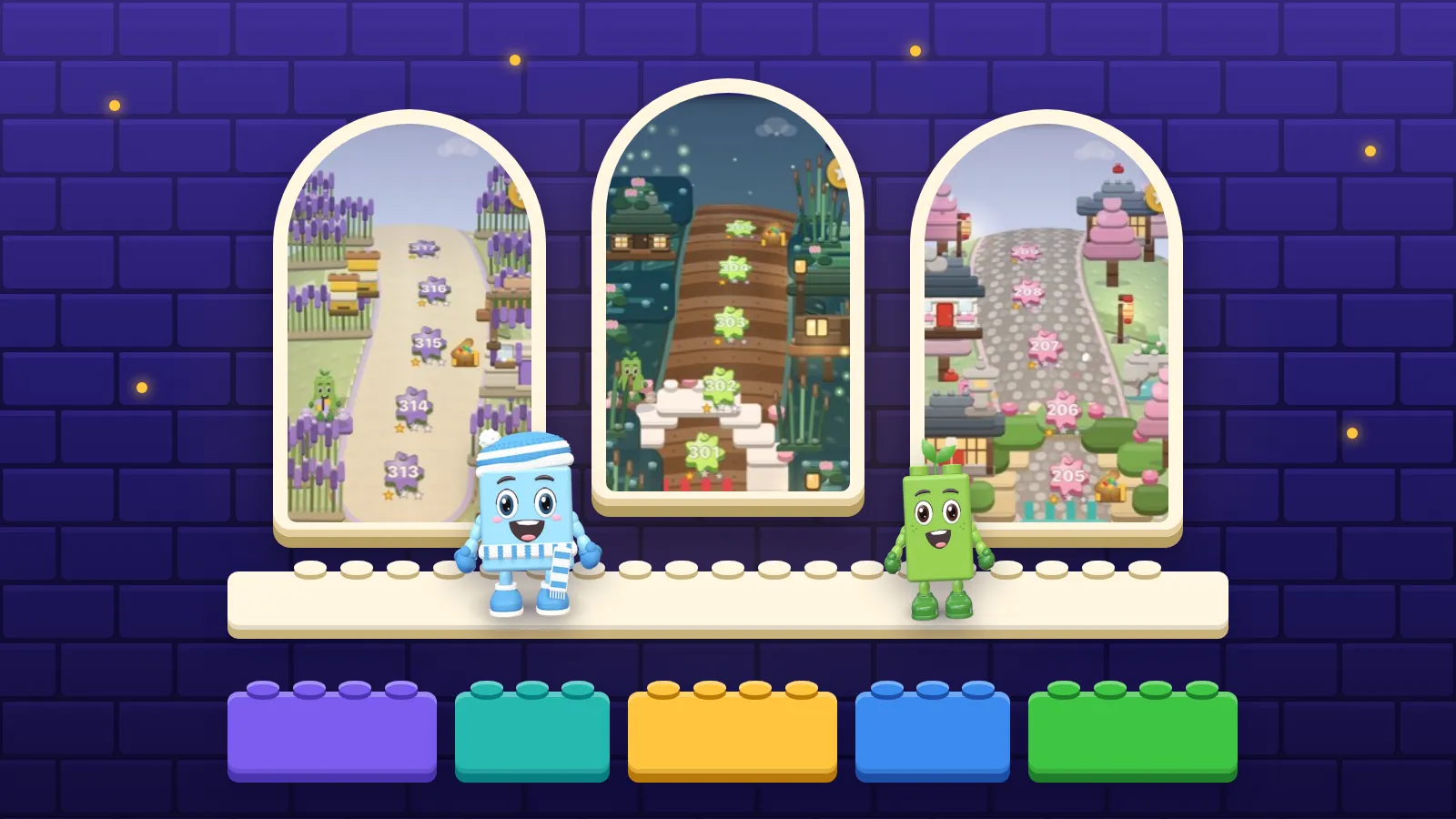
Some players may find parts of the game busy, such as the celebrations or the Journey map, and we would like to know. The accessibility page explains how to reach us. For more on calm design, see what makes a puzzle game relaxing and why Reduce Motion matters, and for knowing when to put a game down, when to play and when to pause.
Filed under
Questions, answered
A few useful answers
What makes a game sensory-friendly?
Separate controls for music, sound effects and vibration, respect for Reduce Motion, predictable feedback, no sudden sounds or pop-ups, and the freedom to pause or stop at any time without losing progress.
Are video games good for autistic people?
Research with autistic adults finds games are often a valued source of enjoyment, relaxation and social connection. As for anyone, the right games and a healthy balance matter more than games in general.
Which iPhone settings help players who are sensitive to sound and light?
Reduce Motion under Accessibility, Motion softens animation in apps that honour it, Focus modes hold back notifications while you play, and system haptics can be turned off under Sounds & Haptics. Then check each game’s own audio and effects settings.
Can OutBrick be played silently?
Yes. Sound, music, haptics and notifications can each be switched off in Settings, and the brick friends speak only in text bubbles, so the game can be played in complete silence.
APA 7
References
Where a source is a studio’s own history or a news account rather than a study, the article says so beside the claim.
- Ben-Sasson, A., Gal, E., Fluss, R., Katz-Zetler, N., & Cermak, S. A. (2019). Update of a meta-analysis of sensory symptoms in ASD: A new decade of research. Journal of Autism and Developmental Disorders, 49(12), 4974–4996. doi.org/10.1007/s10803-019-04180-0 (opens in a new tab)
- Robertson, A. E., & Simmons, D. R. (2013). The relationship between sensory sensitivity and autistic traits in the general population. Journal of Autism and Developmental Disorders, 43(4), 775–784. doi.org/10.1007/s10803-012-1608-7 (opens in a new tab)
- Kenny, L., Hattersley, C., Molins, B., Buckley, C., Povey, C., & Pellicano, E. (2016). Which terms should be used to describe autism? Perspectives from the UK autism community. Autism, 20(4), 442–462. doi.org/10.1177/1362361315588200 (opens in a new tab)
- Mazurek, M. O., Engelhardt, C. R., & Clark, K. E. (2015). Video games from the perspective of adults with autism spectrum disorder. Computers in Human Behavior, 51, 122–130. doi.org/10.1016/j.chb.2015.04.062 (opens in a new tab)
- Ringland, K. E. (2019). A place to play: The (dis)abled embodied experience for autistic children in online spaces. In Proceedings of the 2019 CHI Conference on Human Factors in Computing Systems (pp. 1–14). ACM. doi.org/10.1145/3290605.3300518 (opens in a new tab)
- Spiel, K., & Gerling, K. (2021). The purpose of play: How HCI games research fails neurodivergent populations. ACM Transactions on Computer-Human Interaction, 28(2), 1–40. doi.org/10.1145/3432245 (opens in a new tab)