Is gaming good or bad for your mood? What diary studies show
In-game mood reports, logged play time and a console lottery: what the newest studies say about gaming and mood, and why hours matter less than fit.
For years, the question of whether games make people happier or unhappier was answered with surveys that asked players to guess how much they played and how they had felt lately. Both guesses are unreliable, so it is no surprise the answers disagreed. In the past five years, researchers have started working with game companies to log actual play, and asking players about their mood in the moment, sometimes in the middle of a session. The picture that emerges is more reassuring than the old fears and more modest than the old promises.
Two measurement problems have dogged research on games and mood. The first is that people are poor at estimating their own screen time, a problem we cover in screen time myths. The second is that asking “how have you felt over the past month?” blurs together good days and bad, and whatever the game did disappears into the average.
Newer studies tackle both. Telemetry from game companies records when and how long people actually play. Experience sampling, sometimes called a diary method, asks people how they feel at many moments across days or weeks, so researchers can compare the same person when playing and not playing, or at the start and middle of a session. Neither method proves cause and effect, but together they are a big step up from a single questionnaire.
The most detailed look at mood during play comes from PowerWash Simulator, a calm game about cleaning things with a pressure washer. Vuorre and colleagues worked with the developer to ask players about their mood at intervals inside the game, collecting 162,325 reports from 67,328 sessions by 8,695 players.
On average, players reported slightly better mood during play than at the start of a session, a gain of about 3 points on a 100-point scale. The researchers estimated that around 72% of similar players would experience this lift, and that most of it arrived within the first 15 minutes. The authors are careful: one game, its own players, and no way to say whether the game caused the change or would have done the same in other games. It is still a rare look at mood measured during play rather than remembered afterwards.
Sources1Vuorre, M., Ballou, N., Hakman, T., Magnusson, K., & Przybylski, A. K. (2024). Affective uplift during video game play: A naturalistic case study. Games: Research and Practice, 2(3), 1–14.
If short sessions nudge mood upwards, do more hours mean more well-being, or less? Johannes, Vuorre and Przybylski combined logged play from Plants vs. Zombies: Battle for Neighborville and Animal Crossing: New Horizons with player surveys. They found a small positive relation between play time and players’ affective well-being. Players’ motivations and the needs a game satisfied were related to well-being in their own right.
A larger follow-up by Vuorre and colleagues linked six weeks of logged play from 38,935 players, supplied by seven game publishers, with three waves of well-being surveys. It found little to no evidence that play time affected well-being, while motivations again seemed to matter. A registered report by Ballou and colleagues tracked 414 Xbox players across all their games for 12 weeks and found no practically meaningful link in either direction between play time and well-being.
Most recently, Ballou and colleagues studied 703 casual adult Nintendo Switch players across 150 games and more than 140,000 hours of play. Play time did not predict life satisfaction, mood, depressive symptoms or general well-being, at timescales from an hour to a year. What did predict well-being was gaming life fit: how well players felt games sat alongside the rest of their lives.
Taken together, these studies are unusually strong by the standards of the field: large samples, logged rather than guessed play time, several games and, in one case, a preregistered plan. They do not mean games affect nobody. They mean that for most players the number of hours is not where the story is. A person who plays three hours on a Sunday with friends and a person who plays three hours at night to avoid thinking about something are doing different things, and a time total cannot tell them apart.
Sources2Johannes, N., Vuorre, M., & Przybylski, A. K. (2021). Video game play is positively correlated with well-being. Royal Society Open Science, 8(2), 202049.3Vuorre, M., Johannes, N., Magnusson, K., & Przybylski, A. K. (2022). Time spent playing video games is unlikely to impact well-being. Royal Society Open Science, 9(7), 220411.4Ballou, N., Sewall, C. J. R., Ratcliffe, J., Zendle, D., Tokarchuk, L., & Deterding, S. (2024). Registered report evidence suggests no relationship between objectively tracked video game playtime and well-being over 3 months. Technology, Mind, and Behavior, 5(1), 28–42.5Ballou, N., Vuorre, M., Hakman, T., Magnusson, K., & Przybylski, A. K. (2025). Perceived value of video games, but not hours played, predicts mental well-being in casual adult Nintendo players. Royal Society Open Science, 12(3), 241174.
Observational data can never fully rule out that happier people simply play differently. Egami and colleagues found an unusual way round that. During the pandemic, demand for game consoles in Japan was so high that retailers sold them by lottery, so whether someone got a console was partly down to chance. Analysing survey data from 97,602 people with methods designed for cause-and-effect questions, they found that owning a console, and the extra play that came with it, reduced psychological distress and improved life satisfaction.
The effects differed by console and by group, with one console showing smaller benefits for adolescents and women and the other larger benefits for adolescents. The study took place during an unusual period of isolation, when games may have filled a gap that would not exist in ordinary times. Even so, it is some of the strongest evidence yet that gaming, on average, is not bad for mood.
Sources6Egami, H., Rahman, M. S., Yamamoto, T., Egami, C., & Wakabayashi, T. (2024). Causal effect of video gaming on mental well-being in Japan 2020–2022. Nature Human Behaviour, 8(10), 1943–1956.
A review by Halbrook, O’Donnell and Msetfi argued that the effects of games on well-being depend on the player’s motivation, the social context, the content of the game and what else is going on in their life. The newer data fit that view. Playing is usually a small positive in the moment and neutral in the long run. The differences between people come from why and how they play, not from a number of hours.
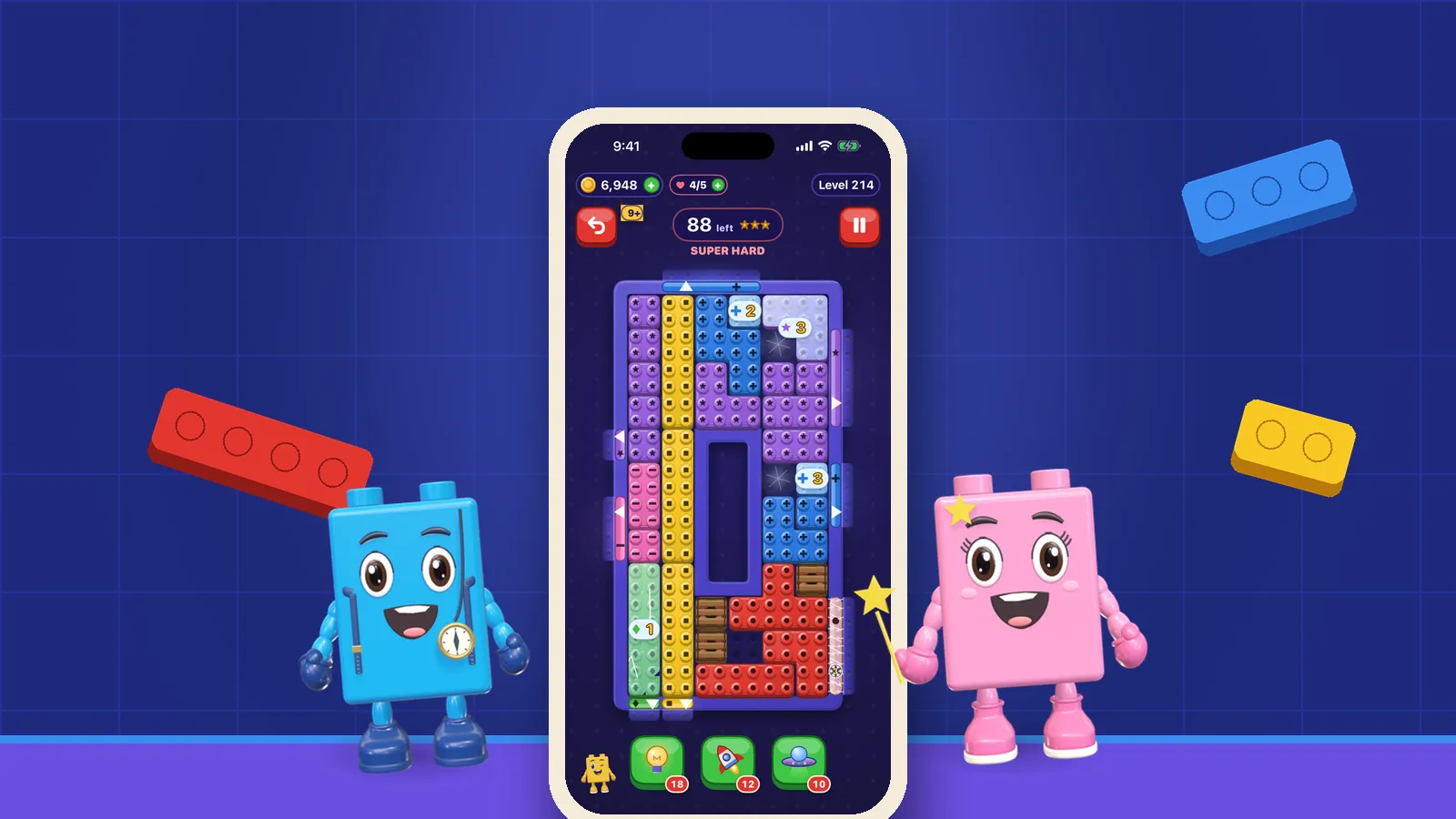
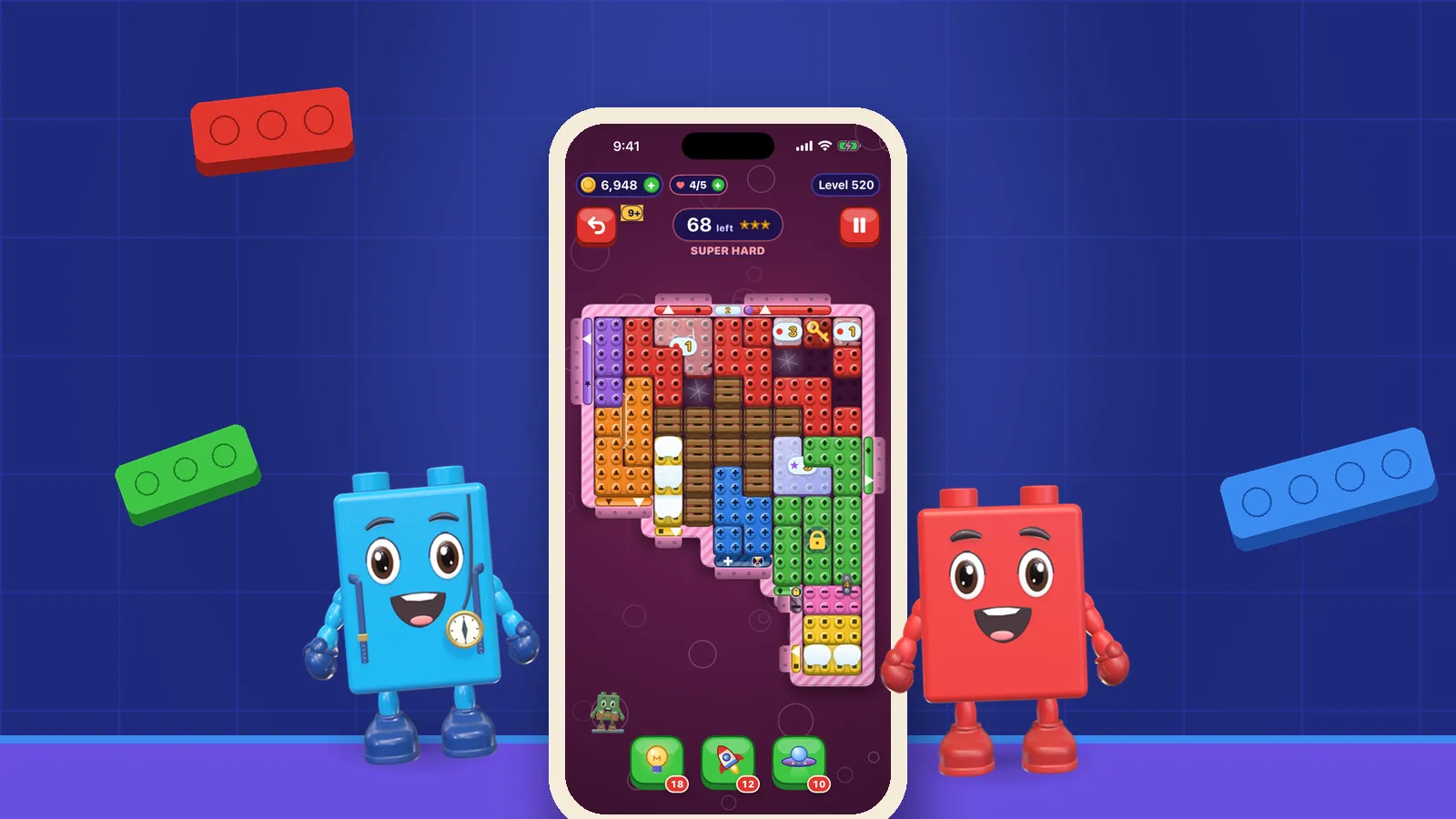
That is the idea behind designing for the life players actually have, and it is why OutBrick makes no promises about your mood. The small in-session lift found in PowerWash Simulator also fits what we know about playing to unwind after work: a short, absorbing game can be a pleasant way to change gear, not a treatment. We aim for a game that is pleasant to spend ten minutes with and easy to put down. The same logic applies to any game: try a daily board or a board in your browser and notice how you feel before and after, rather than trusting a headline either way.
- Check your mood before and after playing, a small experiment of your own.
- Ask whether games fit well alongside sleep, work and people, not how many hours you log.
- If you notice you mostly play to escape feeling bad, and it no longer helps, talk to someone you trust.
Sources7Halbrook, Y. J., O’Donnell, A. T., & Msetfi, R. M. (2019). When and how video games can be good: A review of the positive effects of video games on well-being. Perspectives on Psychological Science, 14(6), 1096–1104.5Ballou, N., Vuorre, M., Hakman, T., Magnusson, K., & Przybylski, A. K. (2025). Perceived value of video games, but not hours played, predicts mental well-being in casual adult Nintendo players. Royal Society Open Science, 12(3), 241174.
Filed under
Questions, answered
A few useful answers
Does playing video games improve your mood?
Usually a little, in the moment. In more than 160,000 in-game mood reports from PowerWash Simulator players, mood during play was slightly higher than at the start of sessions, with most of the lift in the first 15 minutes.
Is more gaming worse for mental health?
Studies using logged play time have found little or no link between hours played and well-being for most players. How play fits into the rest of life appears to matter more than the amount.
What is gaming life fit?
Gaming life fit describes how well players feel games sit alongside the rest of their lives. In a study of 703 Nintendo Switch players, it predicted well-being, while hours played did not.
Can video games make you feel worse?
They can for some people and situations, which averages can hide. If you mostly play to escape bad feelings and it no longer helps, or play crowds out sleep and people, it is worth changing the balance or talking to someone.
APA 7
References
Where a source is a studio’s own history or a news account rather than a study, the article says so beside the claim.
- Vuorre, M., Ballou, N., Hakman, T., Magnusson, K., & Przybylski, A. K. (2024). Affective uplift during video game play: A naturalistic case study. Games: Research and Practice, 2(3), 1–14. doi.org/10.1145/3659464 (opens in a new tab)
- Johannes, N., Vuorre, M., & Przybylski, A. K. (2021). Video game play is positively correlated with well-being. Royal Society Open Science, 8(2), 202049. doi.org/10.1098/rsos.202049 (opens in a new tab)
- Vuorre, M., Johannes, N., Magnusson, K., & Przybylski, A. K. (2022). Time spent playing video games is unlikely to impact well-being. Royal Society Open Science, 9(7), 220411. doi.org/10.1098/rsos.220411 (opens in a new tab)
- Ballou, N., Sewall, C. J. R., Ratcliffe, J., Zendle, D., Tokarchuk, L., & Deterding, S. (2024). Registered report evidence suggests no relationship between objectively tracked video game playtime and well-being over 3 months. Technology, Mind, and Behavior, 5(1), 28–42. doi.org/10.1037/tmb0000124 (opens in a new tab)
- Ballou, N., Vuorre, M., Hakman, T., Magnusson, K., & Przybylski, A. K. (2025). Perceived value of video games, but not hours played, predicts mental well-being in casual adult Nintendo players. Royal Society Open Science, 12(3), 241174. doi.org/10.1098/rsos.241174 (opens in a new tab)
- Egami, H., Rahman, M. S., Yamamoto, T., Egami, C., & Wakabayashi, T. (2024). Causal effect of video gaming on mental well-being in Japan 2020–2022. Nature Human Behaviour, 8(10), 1943–1956. doi.org/10.1038/s41562-024-01948-y (opens in a new tab)
- Halbrook, Y. J., O’Donnell, A. T., & Msetfi, R. M. (2019). When and how video games can be good: A review of the positive effects of video games on well-being. Perspectives on Psychological Science, 14(6), 1096–1104. doi.org/10.1177/1745691619863807 (opens in a new tab)