Can puzzle games improve spatial skills? What studies show
Spatial skills can be trained, but games are a narrower route than often claimed. What the meta-analyses say about spatial training, Tetris and transfer.
Spatial thinking, the ability to picture objects, turn them in your head and reason about where things fit, matters well beyond puzzles. It predicts success in science, engineering and mathematics, and for a long time it was treated as something you either had or did not. Research over the past few decades has changed that picture: spatial skills respond to practice. Whether puzzle games are a good way to get that practice is a more careful question, and the honest answer comes in two halves.
The landmark study is a 2013 meta-analysis by David Uttal, Nora Newcombe and colleagues, who pooled 217 studies of spatial training, from school courses and video games to repeated practice on spatial tests. On average, training improved spatial performance by nearly half a standard deviation compared with control groups, a moderate effect. The gains did not fade with longer delays between training and testing, and they carried over to spatial tasks that had not been trained directly.
The authors also sorted spatial skills along two dimensions: whether a task concerns a single object or the relations between several, and whether things stay still or move. That kind of map is useful for asking which spatial skill a particular game actually exercises, since practice on one kind of task is not guaranteed to help another.
That mattered because spatial ability strongly predicts who enters and succeeds in science, technology, engineering and mathematics. If it can be trained, it is not a fixed gate, and the authors argued that spatially rich education could pay real dividends.
Notice what the finding covers. Spatial training improved spatial skills. It did not claim to improve memory, attention or intelligence in general, and the transfer it found was to other spatial tasks, not to everything.
Sources1Uttal, D. H., Meadow, N. G., Tipton, E., Hand, L. L., Alden, A. R., Warren, C., & Newcombe, N. S. (2013). The malleability of spatial skills: A meta-analysis of training studies. Psychological Bulletin, 139(2), 352–402.
Tetris has been a favourite test case for decades, and the results point in both directions, which is informative in itself. Melissa Terlecki, Nora Newcombe and Michelle Little had university students either take a mental rotation test repeatedly or play Tetris over a period of weeks. Both groups improved a great deal, and the gains held several months later. Tetris players improved faster at first, and their gains transferred to other spatial tasks more than repeated testing did, an advantage that was still there months later.
Valerie Sims and Richard Mayer found something more sobering. Skilled Tetris players were better than non-players at mentally rotating shapes that looked like Tetris pieces, but not on other spatial tests. When non-players were given 12 hours of Tetris practice, they gained no more on spatial tests than a matched control group. The authors concluded that spatial expertise from the game was highly specific to the game.
Both findings can be true. The studies used different amounts of play, different tests and different people. What they agree on is that the closer a test is to the game, the more likely a gain is to show up.
Sources2Terlecki, M. S., Newcombe, N. S., & Little, M. (2008). Durable and generalized effects of spatial experience on mental rotation: Gender differences in growth patterns. Applied Cognitive Psychology, 22(7), 996–1013.3Sims, V. K., & Mayer, R. E. (2002). Domain specificity of spatial expertise: The case of video game players. Applied Cognitive Psychology, 16(1), 97–115.
The widest look at games and thinking is a 2018 set of meta-analyses by Giovanni Sala, K. Semir Tatlidil and Fernand Gobet, covering several hundred comparisons. They asked whether skill at video games correlates with cognitive ability, whether players differ from non-players, and whether training on games improves cognitive ability. They found small or null effects in all three, and no evidence that playing video games causes better cognitive ability.
That does not contradict the spatial training research so much as mark its edge. Practising a spatial task can make you better at spatial tasks like it. The hope that a game will make you broadly sharper is the part that keeps failing careful tests, a pattern we traced in are puzzle games good for your brain?
Sources4Sala, G., Tatlidil, K. S., & Gobet, F. (2018). Video game training does not enhance cognitive ability: A comprehensive meta-analytic investigation. Psychological Bulletin, 144(2), 111–139.
Some of the most interesting evidence comes from early childhood. Susan Levine and colleagues visited 53 families at home every four months while the children were between two and four years old. Children who were seen playing with jigsaw puzzles did better on a task involving mentally moving and rotating shapes at four and a half, even after accounting for parents’ education, income and how much they talked. Among children who played with puzzles, more frequent play predicted better scores.
The study is observational, so it cannot show that the puzzles caused the difference; families who do puzzles may differ in other ways. The researchers also found that the quality of puzzle play, including how hard the puzzles were and how much parents talked about shape and space, was higher for boys than for girls. It is a promising lead, not a prescription.
Sources5Levine, S. C., Ratliff, K. R., Huttenlocher, J., & Cannon, J. (2012). Early puzzle play: A predictor of preschoolers’ spatial transformation skill. Developmental Psychology, 48(2), 530–542.
Put together, the evidence supports a modest, honest claim. Moving and turning shapes in your head is a skill, and puzzles that ask for it give you practice at it. You will get better at the puzzle, and you may get better at spatial tasks that resemble it. Anyone promising more than that is ahead of the research.
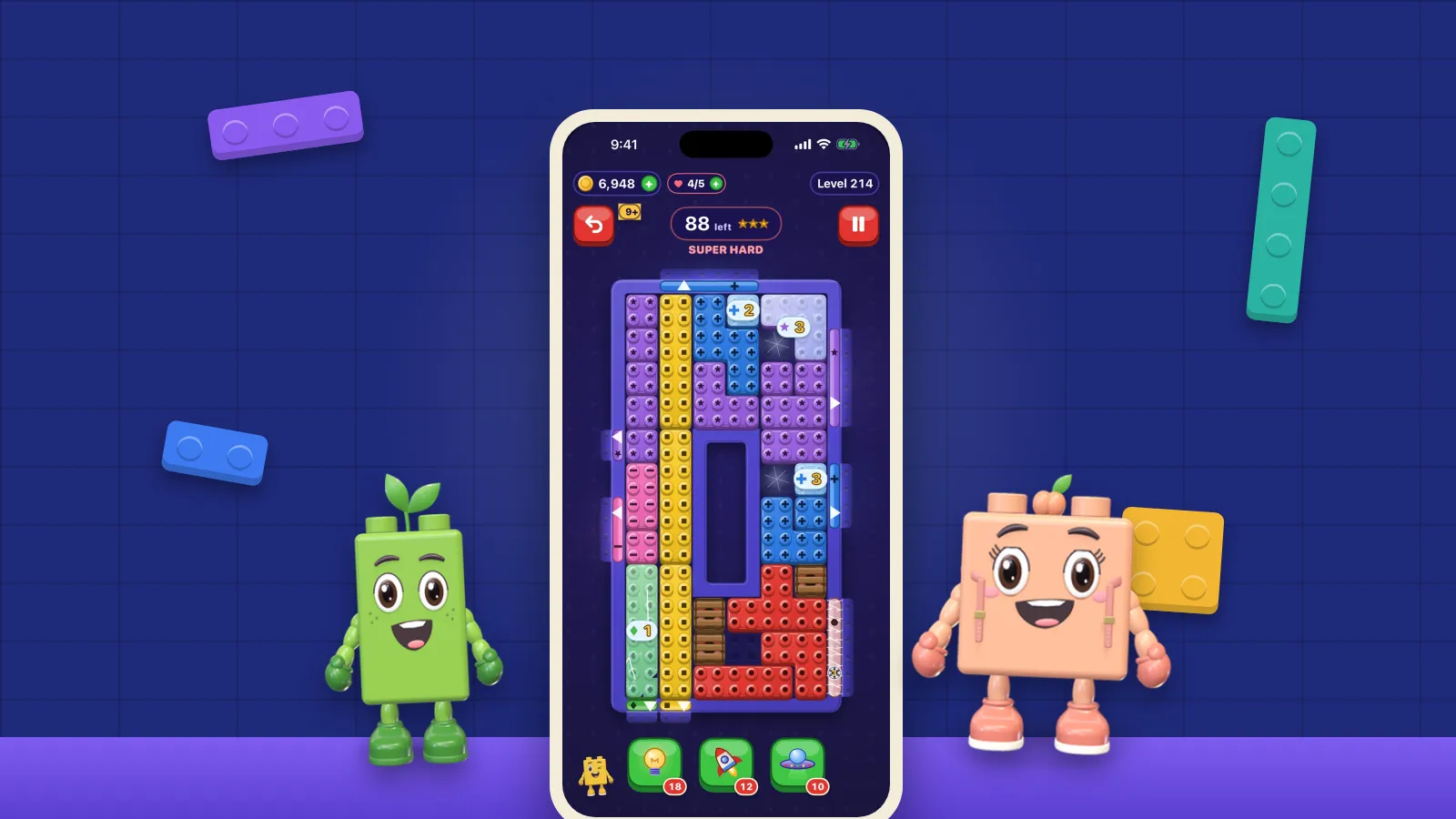
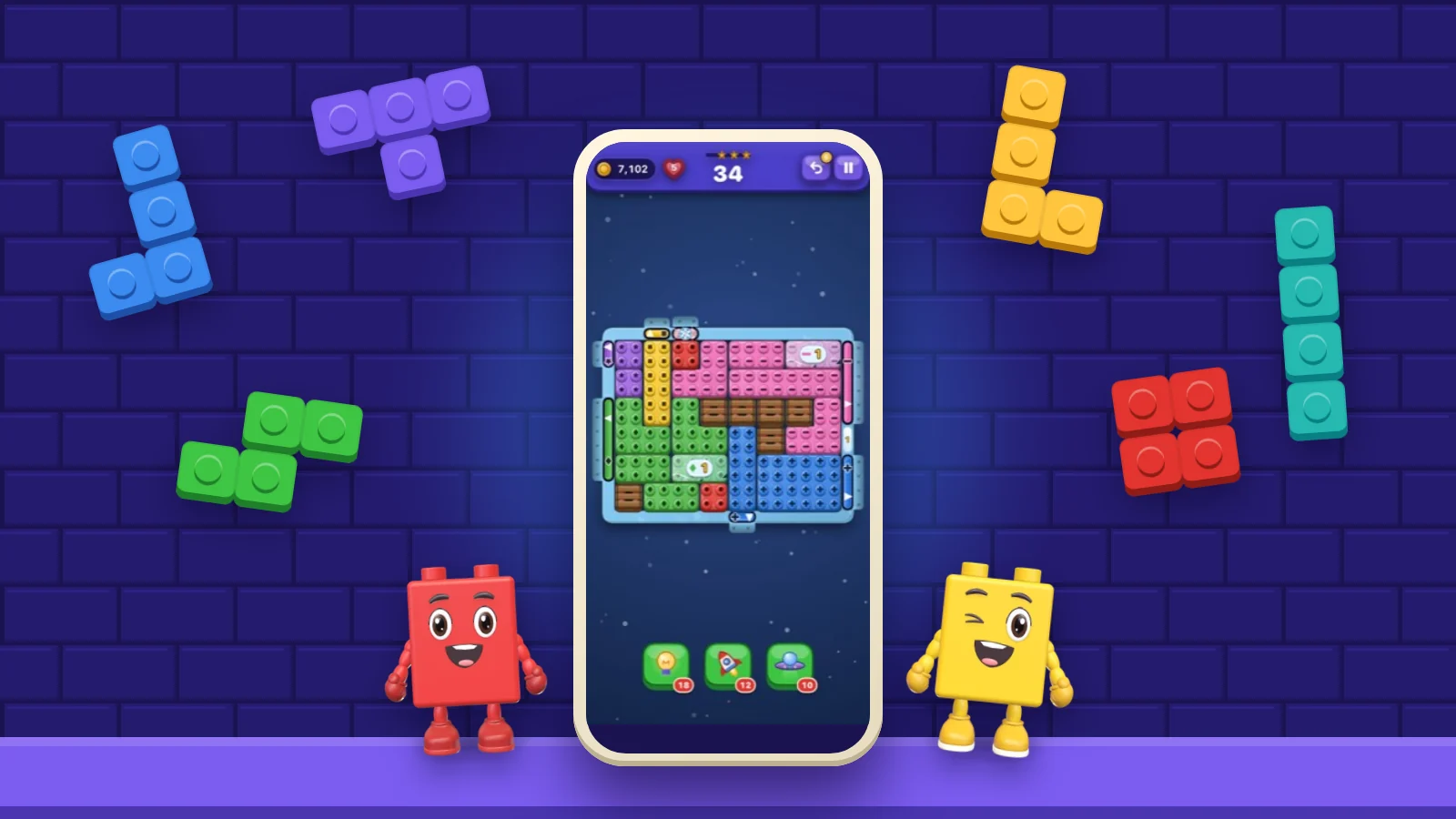
Sliding-brick puzzles like OutBrick lean on a particular spatial skill: seeing where a brick can slide or swap, what it will line up with, and how that changes the space around it. That is closer to reasoning about paths and obstacles than to rotating shapes, and we know of no study that has tested whether it transfers. We make no such claim for the game. It is a pleasant way to exercise the skill the game itself teaches, and that is enough.
If spatial skill itself is what you are after, the training studies suggest looking for tasks that directly ask you to rotate, fold or navigate, at a level that stretches you. A puzzle game can be part of that mix. It is unlikely to be all of it.
To see which spatial habits a sliding board asks for, try the browser board. Our piece on chunking explains how those habits turn into patterns you read at a glance, and games like Tetris looks at what keeps spatial-fitting games interesting.
Filed under
Questions, answered
A few useful answers
Do puzzle games improve spatial skills?
They can improve the spatial skills the game itself uses, and some studies show gains on related spatial tests. Evidence that games improve broader cognitive ability is weak.
Does playing Tetris improve mental rotation?
Studies disagree. One found that Tetris training improved mental rotation with lasting transfer to other spatial tasks; another found skilled players were better only with Tetris-like shapes, and that 12 hours of play gave no extra gain.
Can spatial ability be trained?
Yes. A meta-analysis of 217 studies found that spatial training improves spatial skills by a moderate amount, with gains that last and extend to spatial tasks that were not trained.
Are jigsaw puzzles good for children’s spatial skills?
In one study, children who played with puzzles at home did better on a later spatial task. The study was observational, so it cannot prove that the puzzles caused the difference.
APA 7
References
Where a source is a studio’s own history or a news account rather than a study, the article says so beside the claim.
- Uttal, D. H., Meadow, N. G., Tipton, E., Hand, L. L., Alden, A. R., Warren, C., & Newcombe, N. S. (2013). The malleability of spatial skills: A meta-analysis of training studies. Psychological Bulletin, 139(2), 352–402. doi.org/10.1037/a0028446 (opens in a new tab)
- Terlecki, M. S., Newcombe, N. S., & Little, M. (2008). Durable and generalized effects of spatial experience on mental rotation: Gender differences in growth patterns. Applied Cognitive Psychology, 22(7), 996–1013. doi.org/10.1002/acp.1420 (opens in a new tab)
- Sims, V. K., & Mayer, R. E. (2002). Domain specificity of spatial expertise: The case of video game players. Applied Cognitive Psychology, 16(1), 97–115. doi.org/10.1002/acp.759 (opens in a new tab)
- Sala, G., Tatlidil, K. S., & Gobet, F. (2018). Video game training does not enhance cognitive ability: A comprehensive meta-analytic investigation. Psychological Bulletin, 144(2), 111–139. doi.org/10.1037/bul0000139 (opens in a new tab)
- Levine, S. C., Ratliff, K. R., Huttenlocher, J., & Cannon, J. (2012). Early puzzle play: A predictor of preschoolers’ spatial transformation skill. Developmental Psychology, 48(2), 530–542. doi.org/10.1037/a0025913 (opens in a new tab)