

Stardew Valley and the craft of gentle progress
A success story about patient craft, visible progress, and why a game can feel generous without becoming frictionless.
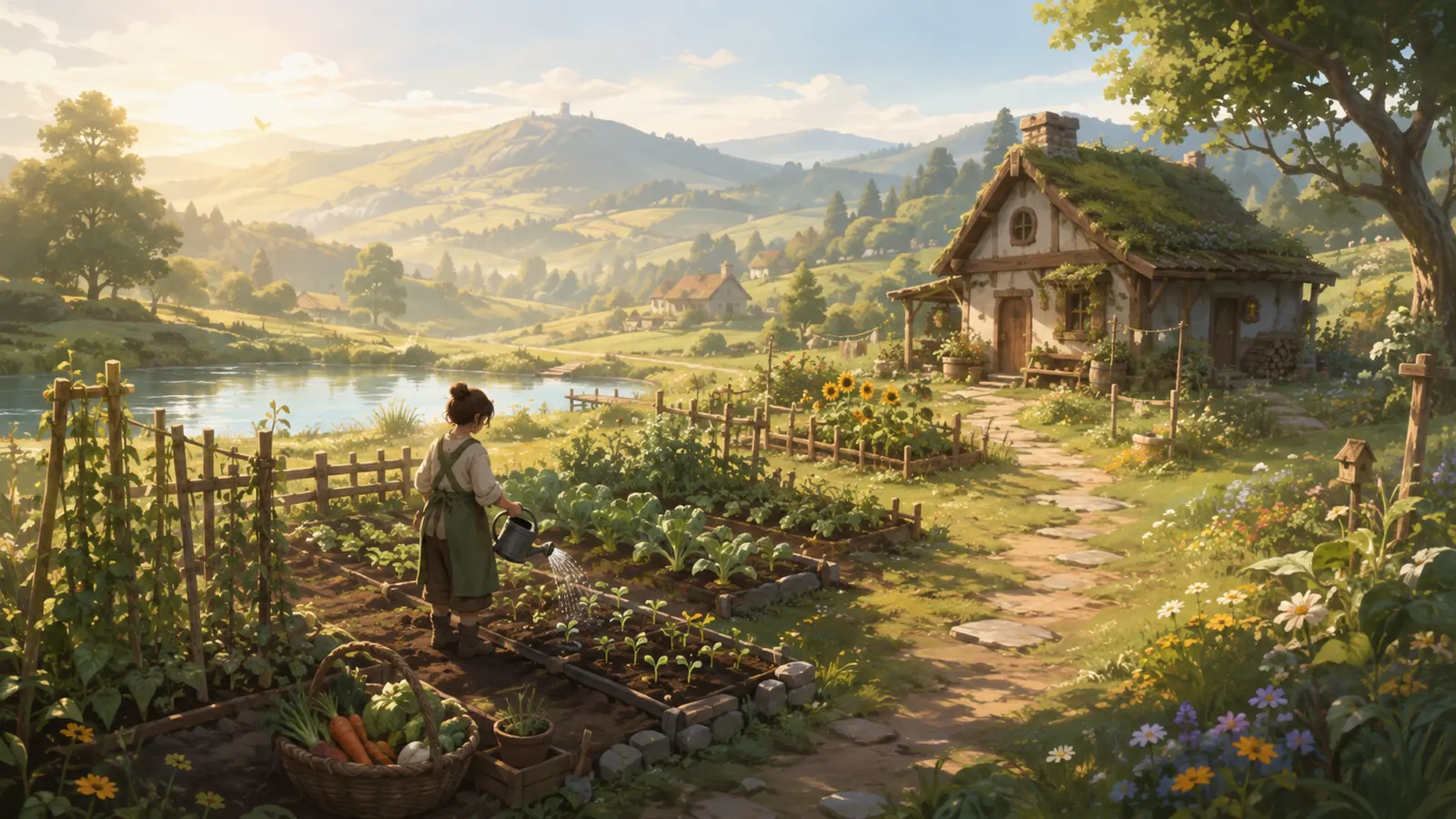
Cozy play is less a genre checklist than a relationship with time. The player can see what they are growing, choose the pace of the next task, and feel that returning is a pleasure rather than a debt.
Stardew Valley often feels effortless to enter, but its welcome is the result of sustained craft. In a clarification about the game’s development, creator Eric Barone wrote that he was the only person to work on Stardew Valley during its four-and-a-half-year development, with the publisher contributing only to multiplayer networking. That is a first-person account, so it should be read as a creator statement rather than a complete production history, but it makes the scale of the solo experiment clear.
The lesson for a small studio is not “work alone.” It is that a warm player experience can be built from thousands of deliberate, legible decisions. A soft landing is still a technical and editorial achievement.
Sources1Barone, E. (2018, May 30). Clarification on the relationship between Chucklefish and Stardew Valley. Stardew Valley.
Gentle progress has a visible shape. A seed becomes a plant, a room becomes yours, a path opens, or a familiar routine gains one new possibility. The player does not need a reward explosion to understand that their attention mattered.
That clarity connects with the motivational model of competence and autonomy: players want to feel capable, and they want their actions to belong to them. The research does not say that every cozy system creates well-being. It gives designers a useful vocabulary for why authored progress can feel satisfying.
Sources2Przybylski, A. K., Rigby, C. S., & Ryan, R. M. (2010). A motivational model of video game engagement. Review of General Psychology, 14(2), 154–166.3Ballou, N., Vuorre, M., Hakman, T., Magnusson, K., & Przybylski, A. K. (2025). Perceived value of video games, but not hours played, predicts mental well-being in casual adult Nintendo players. Royal Society Open Science, 12(3).
A game becomes flat when “cozy” means that nothing can surprise or resist the player. The better version keeps some friction: a season changes, a resource is finite, a neighbour has a schedule, or a puzzle asks you to look again. The friction is meaningful because the game gives you time and tools to respond.
For OutBrick, that means a board can be kind without being solved for you. The rules stay firm, the move limit is real, the answer is earned, and the free first undo keeps an experiment from becoming a punishment. The player gets a small problem with a clear edge, not a blank screen disguised as relaxation.
- Make progress visible without making it noisy
- Let a return session begin with recognition
- Keep enough resistance for choices to matter
- Use recovery tools to protect curiosity
Sources2Przybylski, A. K., Rigby, C. S., & Ryan, R. M. (2010). A motivational model of video game engagement. Review of General Psychology, 14(2), 154–166.4Vuorre, M., Johannes, N., Magnusson, K., & Przybylski, A. K. (2022). Time spent playing video games is unlikely to impact well-being. Royal Society Open Science, 9(7), 220411.
The strongest cozy games do not only design the first session. They design the feeling of opening the game after a busy week. A player can remember the world, see one inviting next step, and decide whether today is a two-minute visit or a longer stay.
That is the part OutBrick wants to make its own: a board that meets you where you are, a village on the Journey that is still standing where you left it, and progress that stays yours, in your own iCloud, on every device you sign in to.
Sources3Ballou, N., Vuorre, M., Hakman, T., Magnusson, K., & Przybylski, A. K. (2025). Perceived value of video games, but not hours played, predicts mental well-being in casual adult Nintendo players. Royal Society Open Science, 12(3).4Vuorre, M., Johannes, N., Magnusson, K., & Przybylski, A. K. (2022). Time spent playing video games is unlikely to impact well-being. Royal Society Open Science, 9(7), 220411.
Filed under
APA 7
References
Where a source is a studio’s own history or a news account rather than a study, the article says so beside the claim.
- Barone, E. (2018, May 30). Clarification on the relationship between Chucklefish and Stardew Valley. Stardew Valley. www.stardewvalley.net/clarification-on-the-relationship-between-chucklefish-and-stardew-valley (opens in a new tab)
- Przybylski, A. K., Rigby, C. S., & Ryan, R. M. (2010). A motivational model of video game engagement. Review of General Psychology, 14(2), 154–166. doi.org/10.1037/a0019440 (opens in a new tab)
- Ballou, N., Vuorre, M., Hakman, T., Magnusson, K., & Przybylski, A. K. (2025). Perceived value of video games, but not hours played, predicts mental well-being in casual adult Nintendo players. Royal Society Open Science, 12(3). doi.org/10.1098/rsos.241174 (opens in a new tab)
- Vuorre, M., Johannes, N., Magnusson, K., & Przybylski, A. K. (2022). Time spent playing video games is unlikely to impact well-being. Royal Society Open Science, 9(7), 220411. doi.org/10.1098/rsos.220411 (opens in a new tab)